New

The Environmental Atlas maps are available in the new Map Application

Current language: English

04.10 Berlin Climate Modelling – Climate Analyse Maps 2022

Maps

Preview

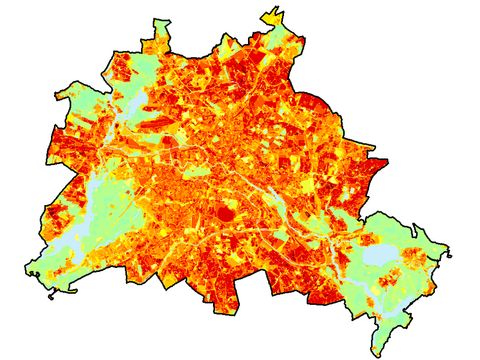
04.10.8 Surface Temperature (2 pm and 4 am)

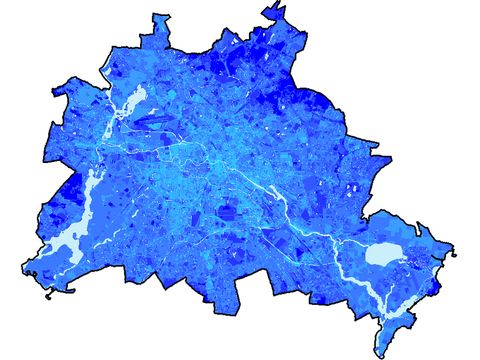
Surface temperatures are shaped mainly by surface colour and land use structure. Lighter surfaces reflect more solar radiation, while darker surfaces convert solar radiation into heat. Depending on the material, this heat is stored during the day and released back into the near-ground air layer at night. 04.10.8 Surface Temperature (2 pm and 4 am)

Preview

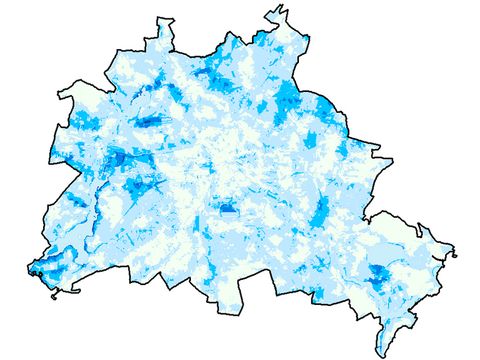
04.10.4 Nocturnal Cooling Rate between 10 pm and 4 am

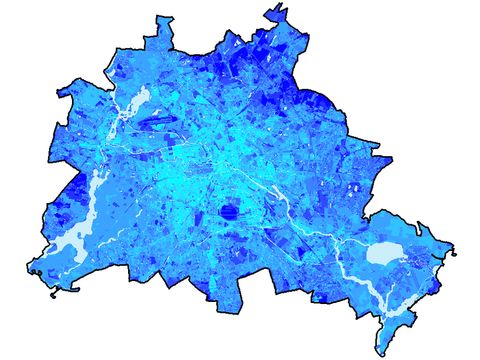
The map illustrates how temperatures drop across different grid cells between 10 pm and 4 am on a clear summer night. The extent of nocturnal cooling is closely tied to the thermal properties of various surfaces without building structures, particularly their heat flux. 04.10.4 Nocturnal Cooling Rate between 10 pm and 4 am

Preview

04.10.5 Physiological Equivalent Temperature (PET) (2 pm)

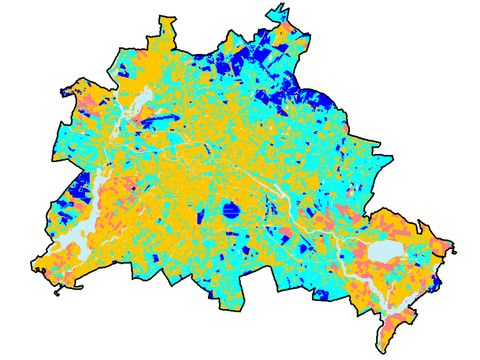
Both the UTCI and PET are based on a human heat balance model, incorporating key factors like solar radiation, air temperature, and humidity. Both indices link absolute values to levels of physiological stress. PET places more emphasis on the direct effects of temperature and humidity on human comfort. 04.10.5 Physiological Equivalent Temperature (PET) (2 pm)

Preview

04.10.9 Evaluation Index Universal Thermal Climate Index (UTCI) (2 pm)

Both the UTCI and PET are based on a human heat balance model, incorporating key factors like solar radiation, air temperature, and humidity. Both indices link absolute values to levels of physiological stress. The UTCI was developed to provide insights under different climatic conditions. 04.10.9 Evaluation Index Universal Thermal Climate Index (UTCI) (2 pm)

Preview

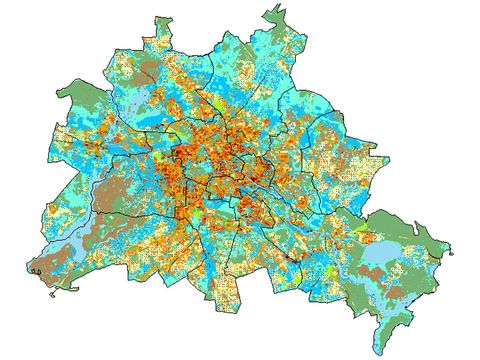
04.10.7 Climate Analysis Map

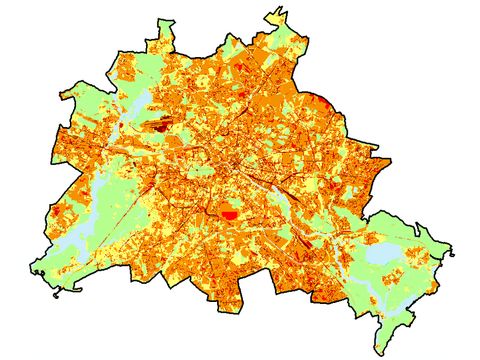
The Climate Analysis Map presents the current state of the urban climate. It illustrates the extent of urban overheating, the compensatory effects of cold-air-generating green and open spaces, and the spatial relationships between compensation areas and impact areas. 04.10.7 Climate Analysis Map

Contact

Leilah Haag