Technischer Fehler bei Online-Beantragungen

Bitte beachten Sie unsere Mitteilung, wenn Sie in der Zeit vom 11.03.2026 bis 16.03.2026 eine der folgenden Dienstleistungen online beantragt haben: Unterhaltsvorschuss, Kita-Gutschein, Ehe-, Geburts- oder Sterbeurkunde, Wohnberechtigungsschein, Wohngeld, Leistungen nach dem Bildungs- und Teilhabepaket

Tourism

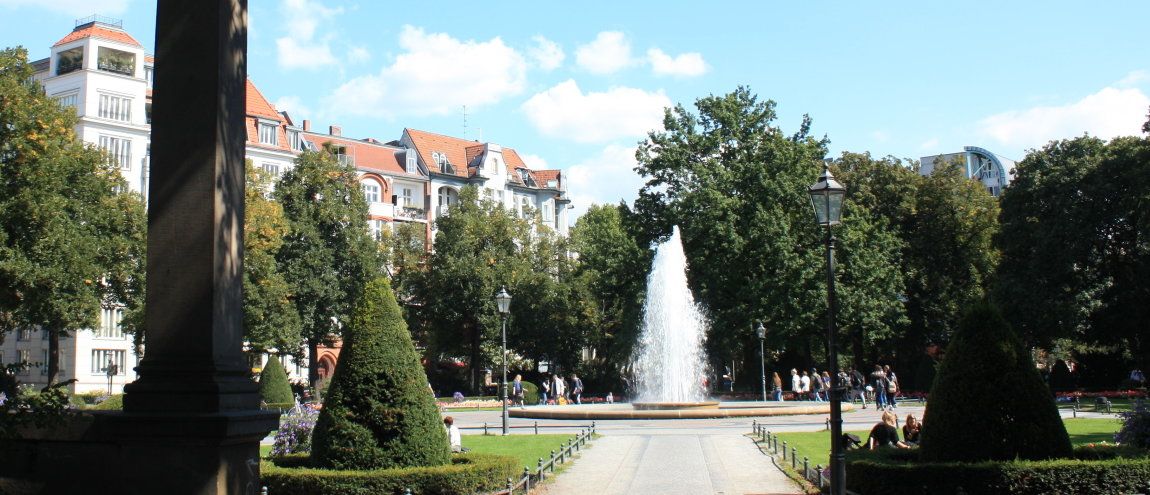
eine Parkanlage mit einem Brunnen

A warm welcome to Tempelhof-Schöneberg!

Berlin is one of the young and creative capitals of Europe. What makes this city so attractive is the special and individual atmosphere in all twelve districts, each with its own flair, history and lifestyle.

With a fascinating blend of old and new, the district of Tepelhof-Schöneberg is imbued with diversity and history. Ranging from the historic Tempelhof fields to the lively neighbourhoods of Schöneberg, this district boasts a unique blend of urban flair and green oases. Discover the vibrant culture, versatile gastronomy and lively community that make Tempelhof-Schöneberg a special place in Berlin. Delve deeper into the multi-faceted world of this district and be enchanted by its beauty.

Current activities and events in Tempelhof-Schöneberg

Experience Berlin barrier-free!

Berlin is a city in transition and we want to be accessible for people with disabilities.

Here we have compiled Information and offers for a barrier-free stay

Tempelhof-Schöneberg at a glance!

Schöneberg

The district’s northernmost neighbourhood is known for its diverse and urban lifestyle. Schöneberg’s diversity ranges from the elegant City West with the Kaufhaus des Westens department stores’ to the bustling shopping mile on Hauptstraße, from the LGBTQ-influenced Nollendorf neighbourhood to the more laid-back Akazienkiez and from the busy Potsdamer Straße to the green Südgelände nature park. Schöneberg Town Hall also marks the scene of an important historical event: It was here that the then US President John F. Kennedy declared himself to be a Berliner. The John-F.-Kennedy-Platz in front of the town hall commemorates this today.
The 78 metre high Insulaner, Berlin’s highest rubble mountain, offers a beautiful view over the district. There are also a number of places of urban interest to explore in Schöneberg. Among these are, for example, the partially preserved Wilhelminian-style buildings in the Bavarian Quarter and the gasometer on the “Rote Insel”, which has been reduced to a metal skeleton. This area, surrounded by railway lines, was named after the resistance of the workers who lived on the site in the face of National Socialism. The listed Ceciliengärten, an urban neighbourhood built in the 1920s, is well worth a visit. This beautiful Art Deco neighbourhood with its numerous Japanese cherry trees is a particular highlight, especially during the cherry blossom season.
Last but not least, there are several interesting museums waiting to be discovered in Schöneberg. These include the small Grosz Museum, the Museum der Unerhörten Dinge and the street art museum Urban Nation: Museum for Urban Contemporary Art. For more information on the urban and cultural history of the Schöneberg district, please visit the Schöneberg Museum.

Friedenau

The smallest district of the Tempelhof-Schöneberg district extends around Friedrich-Wilhelm-Platz and is characterised in its urban layout by a so-called Carstenn figure. This structure, named after Johann Anton Wilhelm von Carstenn, comprises a horseshoe-shaped ring and streets radiating outwards. The fact that the original streetscape is still so well preserved is also attributable to the fact that Friedenau was only rebuilt in the 1870s on the site of a former manor. It was initially a villa neighbourhood, but from 1887 onwards, the number of apartment buildings with four or five floors started to swell. The flats were designed more spaciously than in the typical Berlin tenements. Today, Friedenau is a quiet residential neighbourhood – and at the same time situated in the centre of the city. One of the sights of Friedenau is the imperial oak tree planted in 1879 in honour of Kaiser Wilhelm I in the south-east of the district. Today, however, an oak tree planted in 1883 stands on this spot, as the original imperial oak was damaged excessively by protesters against the socialist laws. The neighbourhood around Friedenau Town Hall, which opened in 1917, also offers a wide variety of walking trails. Here you can discover traditional bookshops, cosy cafés and many interesting little shops.

Tempelhof

The Tempelhof district, which was still an independent district until 2001, is probably best known far beyond the borders of Berlin for its former airport. However, Tempelhof’s history dates back much further, to the Middle Ages. Tempelhof Field itself, where the airport was located from 1923, was a parade and drill ground for the Prussian army in the 18th century. Back in 1883, an unsuccessful flight attempt with a motorless aeroplane took place here and, in 1909, Orville Wright set a world record here while flying a biplane.
However, there is much more to discover in Tempelhof than just the airport steeped in history. In Alt-Tempelhof, for example, there is still a typical village green featuring village-style buildings. Just south of it, in a small park, is the village church of Tempelhof, built in the 13th century and one of the oldest churches in Berlin. The historic Tempelhof harbour, which is also home to a modern shopping centre, is also worth a visit. Another architectural highlight in Tempelhof is the Ullsteinhaus, an imposing brick building with a 77 metre high tower.
Berlin’s airlift, which was used by the Western Allies to provide West Berlin with supplies from the air in 1948 and 1949, is commemorated today by the Platz der Luftbrücke to the north-west of the airport. There is also a widely visible Airlift memorial there, which is popularly known as the “Hungerharke”, in typical Berlin fashion.

Marienfelde

Located in the south-west of the Tempelhof-Schöneberg district, Marienfelde also borders the state of Brandenburg. During the period of German division, the neighbourhood was therefore on the border with the former GDR. For this reason, an emergency reception centre for refugees from the GDR was set up here from 1953. Today there is a memorial site and a museum on the same site. There are traces of the Brandenburg village of Marienfelde, founded by Knights Templar, to be found mainly in the historic town centre. The village church, built from field stones around the beginning or middle of the 13th century, is also located there.
Directly adjacent to the old village green, just behind the old village smithy, is the Marienfelde estate park with its late classicist manor house. What is also worth seeing in the old village centre is the “Bauer Lehmann” farm with its house built in 1844, its stables and free-range eggs. The extensive Marienfelde leisure park, which was created on a pile of landfill from the 1950s to the 1980s, offers recreational opportunities in the countryside.

Mariendorf

In the district of Mariendorf, you will be greeted with an idyllic village setting alongside suburban flair. Mariendorf is known beyond the borders of the capital, above all for the listed trotting track in the south of the district. As the venue for the annual Derby Week, which takes place on the last weekend in July and the first weekend in August, the trotting track has dominated national horse racing since it opened in 1913.
Moving from one Mariendorf green space to the next: The Volkspark Mariendorf has served as a recreational oasis in the centre of the district since its opening in 1931. Amongst rose and shrub gardens, fountains and the flower pond, there is also an artificial toboggan run in the centre of the park, which is ideal for sledging in winter and as a vantage point over the district in summer.
Berlin’s second oldest village church, which is 800 years old, is located in the immediate vicinity. It bears witness to the rural origins of the former village of Mariendorf. A church bell that was cast in 1480 still heralds the church service today. The church was renovated after the end of the Second World War and the half-timbered spire, together with the top, ball and weather vane, is still original from 1737. A bear on the weather vane is a reminder that the city of Berlin has been the patron of the church since 1435.

Lichtenrade

Lichtenrade, in the very south of the district and partly surrounded by Brandenburg, also dates back to a medieval village. In contrast to Marienfelde or Tempelhof, however, Lichtenrade was not founded by the Knights Templar. Here too, the historic village green can still be seen in the townscape. However, the district is also characterised by modern high-rise buildings from the 1960s and 1970s. The village church in Lichtenrade dates back to the 14th century, with an idyllic village pond right next to it. Other notable churches in the district are the Protestant Dietrich Bonhoeffer Church and the former Catholic Church of the Holy Martyrs of Africa.
The former malthouse is also a prominent attraction in Lichtenrade. This was built in the 1890s and originally belonged to the Schöneberger Schlossbrauerei brewery. After the First World War, however, the building was no longer used for malting brewing grain but for storing food reserves. Last but not least, a memorial in Bornhagenweg commemorates a dark chapter in Lichtenrad’s history: In National Socialist times, Lichtenrade was home to a branch of the Sachsenhausen concentration camp.

Kieztouren

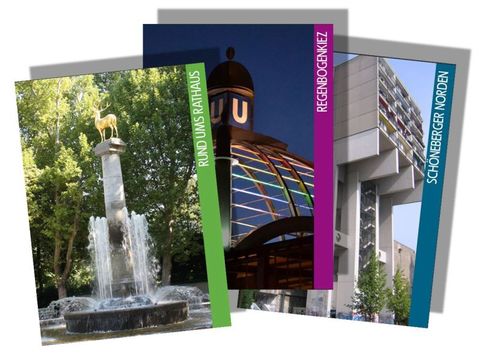
On three neighborhood tours, we introduce you to three completely different sides of Schöneberg; all of them are a piece of real Berlin. No matter whether you like the unkempt urban city culture in the north of Schöneberg or the liberal and cosmopolitan togetherness in the gay and lesbian neighborhood around Nollendorfplatz, or whether you like to go on a historical journey of discovery around Schöneberg Town Hall and Bayerischer Platz followed by relaxation and discovery in the individual Akazienkiez: You’ll love it in Schöneberg!

We have designed our tours so that you can easily combine them with each other.

Cover der drei Kieztouren

Get to know our district in moving pictures!

The short films show tourist destinations off the beaten track in Berlin. They combine historically relevant points, architectural features, cultural highlights and practical insider tips.

Visit the World of Tempelhof-Schöneberg

Video

Formats: video/youtube

4262berlin

Video

Formats: video/youtube

The story of the movie

Schöneberg town hall. A cleaning trolley is pushed through a long corridor, cool sneakers walk behind it, almost prancing. A school class gathers in the large entrance hall for a historical tour of the building, all obviously not very motivated. Cleaner Michael is just about to clear away the garbage when he notices two pupils who are clearly interested in everything other than the town hall and are doing cool moves. He wordlessly tells them to follow him. The three of them steal away and Michael quickly becomes their tour guide through the district. A race against time begins as one of the students in the group notices that the boys are missing. While the class is guided through the town hall, the boys experience cool places in the district at speed and have a lot of fun. They run, dance and fly through the district, because they are perfect dancers and parcourers. At the end of the tour, they rejoin the group, dutifully finish the tour and Michael continues with his work as if nothing had happened…

Hidden Tracks

Video

Formats: video/youtube

"Dit is Tempelhof-Schöneberg"

Video

Formats: video/youtube

Film-projektor der einen Film projeziert

Film locations in the district

When it comes to distinctive film sets, you certainly do not have to look too far in Tempelhof-Schöneberg. Over the past decades, numerous eye-catching buildings in the district have been selected as film sets for both German productions and Hollywood blockbusters. These include, of course, the world-famous Schöneberg Town Hall. Tempelhof Airport has also appeared repeatedly as the setting for film scenes, be it Indiana Jones or The Hunger Games.
Once upon a time Tempelhof-Schöneberg used to be the German Hollywood: Silent films were shot in two large glass studios from as early as 1913, from 1917 to 1964 by the UFA. The productions that were made in Berlin’s Union-Film Studio include “Der Blaue Engel” (The Blue Angel), one of the earliest sound films shot in Germany from 1930, as well as the 2016 TV film “Ku’damm 56”.
So, if you have worked up an appetite for a film night after looking at all this film history, there are several cinemas to suit your taste in Tempelhof-Schöneberg. The cinemas in this district are anything but ordinary. For example, you can visit the Cosima-Filmtheater, which opened in 1942 and shows arthouse films in a charming atmosphere. The Cinema Bundesallee, on the other hand, was opened in 1919 as a silent film cinema. The Odeon cinema with its elegant 50s design is particularly worth a visit.

Kontakt

Representative for tourism and retail

Helen Herold

(030) 90277-3019
H.Herold@ba-ts.berlin.de

Rathaus Schöneberg
Room 209
John-F.-Kennedy Platz
10825 Berlin