
1869 – 1892
Administration Building and Church
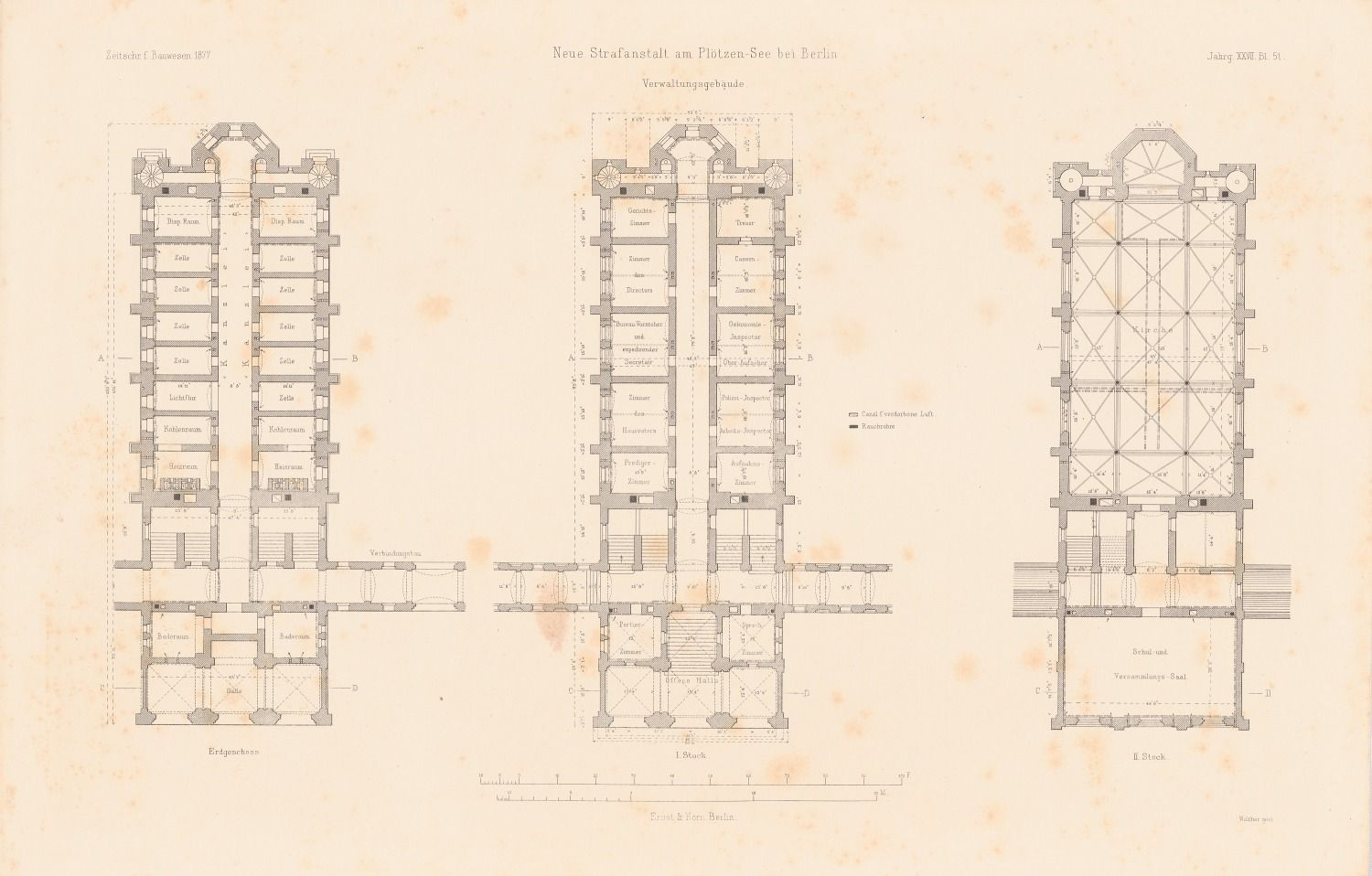
Plötzensee Prison, administration building: floor plan of ground floor and 1st and 2nd floors. From: Atlas zur Zeitschrift für Bauwesen, Jg. 27, 1877
Image: Architekturmuseum der Technischen Universität Berlin, Inv.Nr. ZFB 27,051
-
Construction of the administration building, including a church space with benches seating up to 540 people
-
1961 – 1964
Repair and renovation of the administration rooms and the church area
-
2014
Extensive restoration of the administration building, including the installation of an elevator
-
2015 – 2017
Restoration of the protected church and church tower
It was via this building that all prisoners were admitted, registered, and released. The large chamber was used for official speeches to civil servants and events marking solemn occasions. The church area was intended for the Protestant and Catholic prisoners of prisons I and II.
From 1933 onwards, the judiciary was actively involved in the persecution of political opponents and groups of people deemed “alien to society” and ostracized, and, for racist or ideological reasons, for example “racial hygiene”, were to be excluded from the National Socialist national community, or “Volksgemeinschaft”. Prisons co-operated with police stations by formulating expert opinions and helped to decide who was to be counted among the “incorrigible professional criminals” or “asocial prisoners “. Relatives of victimized groups such as Jews, Sinti and Roma, non-nationals, Jehovah’s Witnesses or those convicted of homosexuality, sexual relations between Aryans and non-Aryans (Rassenschande), or high treason or treason, were reported before their release and handed over to the criminal police and the secret police, the Gestapo.