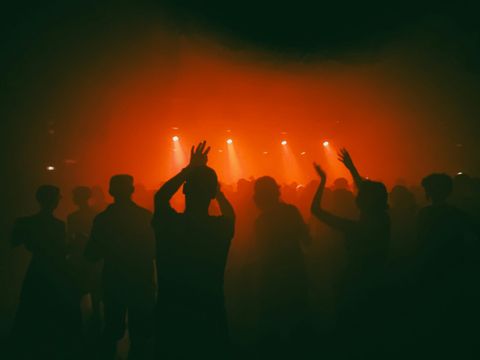
Safe Partying in Berlin

Anyone who is to describe Berlin’s nightlife will probably come up with words like “exciting,” “diverse,” or even “legendary.” To ensure that the word “safe” is also mentioned, Friedrichshain-Kreuzberg Council and Berlin Police have compiled a list of advice and services:

Click here for Berlin Police’s sister site „Safe Partying in Berlin“.

In case of emergency, call:

112 (Fire Department and Ambulance Service)
110 (Police)

LED-Beschilderung am Eingang mit Schriftzug Entrance

Before you start: Have a plan

Planning does not exactly sound like partying and fun. For many, going out also means seeing what the evening brings and letting oneself get carried along by the nightlife. However, good planning and an unforgettable party experience are not mutually exclusive. Instead, having a plan for the night is one of the party basics. What needs to be clarified in advance:

  • Getting around and back: Where exactly are we going? How do I get to the bar, the event, or the club? Most importantly: How do I get back safely?
  • The right community: Whom am I going out with? Do I feel comfortable in my party group? Am I with the right people? Do people of trust know where I am?

Having a plan is especially important when alcohol or other drugs are involved – substances that affect judgment and decision-making.

In addition to having the right plan, responsibility for oneself and others is another party basic, ensuring that everyone has a positive party experience and feels comfortable and safe in nightlife. This means being mindful, looking out for each other, and respecting boundaries.

Eine Gruppe von Menschen, die auf einer Bühne stehen

In a party frenzy: Drug consumption and safer use

The consumption of legal and illegal substances, such as alcohol or party drugs, is part of Berlin’s nightlife. In particular, the use of prohibited substances traded on informal markets (street trade, darknet) carries health risks. There is no such thing as safe or risk-free consumption (safe use). However, there are strategies to make consumption less risky (safer use).

Regardless of how you feel about drug use: Knowledge is always helpful. This is even truer for partygoers who actively choose to use psychoactive substances (especially in the case of mixed use).

The concept of “Drug, Set, Setting” helps people to approach the topic and use substances responsibly and with as little risk as possible. The consumption experience and the associated health risks depend on the substance taken (drug), your own physical and mental state (set), and the external circumstances (setting). “Drug, Set, Setting” provides initial assistance to actively inform oneself before consumption and to make an informed decision either for or against it.

Various services in Berlin provide information on safer use and offer counselling and support on all aspects of drug use in nightlife:

  • Misfit Drug and Addiction Counselling

    The drug counselling service Misfit run by vista gGmbH in Friedrichshain-Kreuzberg provides information on the effects and risks of illegal psychoactive substances and advices on safer-use strategies and consumption skills. Moreover, Misfit also provides information on rehab options and therapy forms, self-help and group programs as well as relapse prevention services. There is also a consultation hour for party drugs. The counselling centre in Friedrichshain-Kreuzberg operates locally and therefore only supports people from this borough. You can find counselling centres at other locations in the city on vista’s website.

    https://vistaberlin.de/konsum-alkohol-medikamente-und-drogen

  • SONAR – Safer Nightlife Berlin

    SONAR Berlin provides information through events, information stands in clubs, and various communication channels on all aspects of (party) drugs, safer use, and harm reduction. The project is a cooperation between Fixpunkt e.V., vista gGmbH and Notdienst Berlin e.V., in collaboration with Eclipse and the Clubcommission.

    https://safer-nightlife.berlin/en/

  • Drugchecking Berlin

    Drugchecking Berlin provides neutral information about psychoactive substances, side effects, and risks. Part of Drugchecking Berlin is the chemical analysis of substances, followed by counselling on harm reduction. The service is anonymous, free of charge, and confidential.

    https://drugchecking.berlin/

  • Party drug consultation, 365 days a year

    Notdienst Berlin e.V. offers a daily party drug consultation. There is also a video and chat service as well as a 24-hour hotline.

    https://drogennotdienst.de/angebote/beratung-und-reha/partydrogen-safer-nightlife/

    Phone: (+49) 030 19237

  • Addiction Counselling Friedrichshain

    Suchtberatung Friedrichshain (Addiction Counselling Friedrichshain) is the alcohol and drug counselling centre in Berlin-Friedrichshain. The service is available for individuals with questions about low-risk consumption, at risk of addiction, or those with dependency (addiction), as well as family members and other close persons.

    https://www.stiftung-spi.de/service/projekte/detail/suchtberatung-frdh

  • Alcohol and Drug Counselling Centre Kreuzberg

    Kreuzberger Alkohol- und Medikamentenberatungsstelle (Alcohol and Drug Counselling Centre Kreuzberg) is a service provided by Diakonie and offers confidential conversations as well as non-binding and free assistance. Anonymous counselling is also available on request.

    https://www.diakonie-stadtmitte.de/suchthilfe/beratungsstelle-fuer-alkohol-u-medikamentenabhaengige/ueber-uns

Always call 112 in drug emergencies.

Tanzendes Paar in einem Club

Healthy through the night: Going out and sexual health

Berlin’s nightlife brings many people together. Contacts are made, connections established. For many partygoers, this also includes sexual relationships and experiences – in all their diversity.

Sexual health and partying are inseparably linked. Sexual health means more than the absence of diseases or discomfort; but rather physical, emotional, mental and social well-being in relation to sexuality. It is about ensuring that everyone feels comfortable while partying and can have pleasurable and safe sexual experiences, free from pressure, discrimination, and violence.

Self-determination and consent come first! Only if someone says yes is it consent. Talking about sexuality and taking care of your own sexual health are key. This also includes informing yourself about risks, such as sexually transmitted infections (STIs) or the effects of drugs on sexual experience, as well as methods and tools for safer sex – in line with your own sexual contacts, desires, and personal well-being.

The following information and counselling services in Berlin can help with questions around sexuality and sexual health:

  • Centre for Sexual Health and Family Planning

    There are centres for sexual health and family planning (Zentrum für sexuelle Gesundheit und Familienplanung) in five Berlin boroughs: Charlottenburg-Wilmersdorf, Marzahn-Hellersdorf, Mitte, Steglitz-Zehlendorf, and Friedrichshain-Kreuzberg. The centres offer medical, social, and psychological counselling and assistance in various languages on a wide range of topics, including sexually transmitted infections (STIs, HIV), contraception, (unplanned) pregnancy, and sex work.

    Friedrichshain-Kreuzberg: https://www.berlin.de/ba-friedrichshain-kreuzberg/politik-und-verwaltung/aemter/gesundheitsamt/zentrum-fuer-sexuelle-gesundheit-und-familienplanung/

  • Checkpoint BLN

    Checkpoint BLN is a sexual health centre for gay and bisexual men and their partners as well as trans and inter people (regardless of sexual orientation). Open-minded, straightforward, and community-based. Checkpoint BLN is a cooperation between Berliner Aids-Hilfe e.V., dagnä e.V., and Schwulenberatung Berlin gGmbH.

    https://checkpoint-bln.de/en/

  • Anonymous telephone counselling of Berliner Aids-Hilfe e.V.

    Specially trained volunteers provide advice on infection routes and risks (HIV, hepatitis, other sexually transmitted infections), on protection options and safer sex, and provide information on testing centres and other services related to HIV and AIDS.

    https://www.berlin-aidshilfe.de/angebote/anonyme-telefonberatung/

    Phone: (+49) 030 19411

  • More Information

    You can find more information on sexual health and safer sex on the following websites:

    https://www.aidshilfe.de/safer-sex

    https://www.liebesleben.de/en/

On the sister site „Safe Partying in Berlin“, Berlin Police have compiled information on protection against crimes as well as support services for those affected by sexual violence.

Blick zur Oberbaumbrücke (Molecule Man)

Staying stable: Partying and mental health

Partying in Berlin is dynamic, diverse, and vibrant. Sometimes it can also be (too) much. Loud music, bright lights, and other stimuli. Many people in a small space. The consumption of alcohol, party drugs or other substances. Experiencing or witnessing discrimination and aggression.

Your own mental health, life situation and current condition have a major influence on your party experience. Everyone feels and reacts differently. When different stress factors come together and personal resources are insufficient, partying can sometimes be too much. A psychologically difficult situation can escalate into a psychosocial crisis or even an emergency.

There are a number of psychosocial support services and contact points in Friedrichshain-Kreuzberg and throughout Berlin:

  • Social Psychiatric Services

    Social Psychiatric Services are departments of the councils’ health authorities and offer help and support for adults with mental illnesses, addiction, or mental disabilities.

    Social Psychiatric Service Friedrichhain-Kreuzberg:
    https://www.berlin.de/ba-friedrichshain-kreuzberg/politik-und-verwaltung/aemter/gesundheitsamt/fachbereiche/fb-3-164631.php#SpD

    Social Psychiatric Services of all Berlin boroughs:
    https://www.berlin.de/lb/psychiatrie/hilfe-in-krisen/sozialpsychiatrische-dienste-der-bezirke/

  • Berlin Crisis Service

    Berliner Krisendienst (Berlin Crisis Service) provides fast and professional assistance for issues including psychosocial crises and acute mental and psychiatric emergencies. The advice is free of charge and available 365 days a year around the clock. People in need of assistance can be helped personally, by phone, and in extreme situations on site at nine Berlin locations without an appointment. The consultation can also be carried out anonymously upon request.

    https://www.berliner-krisendienst.de/en/

  • Transit (at Soulspace)

    Transit is a contact and counselling centre for young people between the ages of 18 and 35. Transit supports young people in coping with (mental) crises and is part of the counselling, contact, and treatment initiative “Soulspace.” Help can be accessed free of charge, easily, and anonymously upon request.

    https://ajb-berlin.de/angebote/kontakt-und-beratungsstelle-friedrichshain-kreuzberg-transit/

  • Telefonseelsorge Berlin e.V. (Phone Counselling Berlin)

    Telefonseelsorge Berlin offers a 24/7, anonymous and free of charge helpline for people in acute emotional crises.

    https://telefonseelsorge-berlin.de/

    Phone: (+49) 0800 111 0 111

  • FrauenKrisenTelefon e.V. (Women’s Crises Hotline)

    FrauenKrisenTelefon offers counselling for women* in various crises, ranging from general and chronic life problems to acute emergencies or suicidal crises.

    http://www.frauenkrisentelefon.de/en/home/

    Phone:
    (+49) 030 6154243 (Telephone crises counselling)
    (+49) 030 6157596 (Counselling for female migrants)
    (+49) 0157 311 30 964 (Counselling for female refugees)
    (You can find the office hours on the above-mentioned website.)

  • More Information

    You can find more psychosocial support services in Berlin on the Hilf-Mir.Berlin platform:

    https://www.hilf-mir.berlin/

Tanzende Menge im Club

Nightlife for all: (Anti-) Discrimination

Many bars, clubs, and event venues in Berlin are spaces for free expression. Places outside of everyday life where people, in all their diversity, find self-determination and light-heartedness. However, wherever people come together, social power structures and hierarchies are far from inexistent. Even though a lot is already being done, Berlin’s nightlife is not free from sexism, ableism, racism, antisemitism, LGBTIQ* hostility, and other forms of discrimination.

Discrimination manifests in both unconscious and conscious actions, from derogatory statements and other boundary violations to assaults and (physical) violence. Structures can also discriminate and exclude people based on their gender, age, ability, origin, skin colour, and/or other (also overlapping) dimensions.

For true participation and respectful, solidarity-based interactions in nightlife, everyone shares responsibility. This also means learning about what discrimination is and what risks people face due to its different forms. Those who are aware will also find it easier to challenge discriminatory situations.

Whether a particular situation or action is discriminatory, can best be assessed by those affected. They are the experts in the situation and should decide what kind of support is right for them. This can be friends, awareness structures in clubs, and, depending on the severity of the violation, the police.

Organisations that support and advice in cases of discrimination are:

  • Schwulenberatung Berlin gGmbH

    StandUp, the anti-discrimination counselling centre of Schwulenberatung Berlin, advises and supports gay and bisexual men, trans* and inter* people in cases of discrimination. Free of charge and impartial.

    https://schwulenberatungberlin.de/about-us/

  • LesMigraS

    LesMigraS (in sponsorship of Lesbenberatung Berlin e.V.) offers counselling for Lesbians, Bisexual women, Trans*, Inter*, Non-Binary and Queer people on different topics and living circumstances – free of charge, confidentially, and impartially.

    https://lesmigras.de/en/

  • Sonntags-Club e.V.

    Sonntags-Club offers psychosocial counselling, anti-discrimination counselling, relationship counselling and housing counselling (via QUEERHOME*). The offer is for all people in the LGBTIQA+ spectrum.

    https://sonntags-club.de/beratung.php

  • GLADT e.V.

    GLADT supports and empowers Black LGBTIQ, Indigenous LGBTIQ, LGBTIQ of Colour, and people who experience intersecting forms of discrimination through free psychosocial counselling services. GLADT’s services are impartial, anonymous, and confidential, with solidarity and offered in various languages.

    https://gladt.de/en/

  • OFEK e.V.

    OFEK advises, accompanies, and supports victims, their relatives, and witnesses of anti-semitic incidents and acts of violence. OFEK stands impartially by the side of those seeking advice.

    https://ofek-beratung.de/berlin

  • ReachOut e.V.

    ReachOut is a counselling centre for victims of right-wing and racist violence and threats in Berlin. ReachOut also advises victims of racial profiling and racist police violence.

    https://www.reachoutberlin.de

Contact for website content

Bezirksamt Friedrichshain-Kreuzberg von Berlin
Bezirkliche Planung und Koordinierung – Sozialraumorientierte Planungskoordination
Mail: sozialraum@ba-fk.berlin.de

Bezirksamt Friedrichshain-Kreuzberg von Berlin

Postanschrift

Bezirksamt Friedrichshain-Kreuzberg von Berlin
Postfach 35 07 01
10216 Berlin