Waldsiedlung Zehlendorf (Zehlendorf forest estate) on the Way to Becoming the Seventh Component of the Berlin Modernism Housing Estates UNESCO World Heritage Site

Berlin, 20. July 2026

Berlin is one of the few major cities to be represented multiple times on the UNESCO World Heritage List. At the 48th session of the UNESCO World Heritage Committee, to be held in Busan (Republic of Korea) from 25–27 July the Committee will decide on the proposed extension of the “Berlin Modernism Housing Estates” World Heritage Site by inscribing the Waldsiedlung Zehlendorf as its seventh component. The expected inscription would mark the culmination of an extensive nomination process by the State of Berlin – led by the Supreme Heritage Authority (OD) and the Berlin Heritage Authority (LDA) – has been undergoing since 2021.

Waldsiedlung Zehlendorf (Zehlendorf Forest Estate)

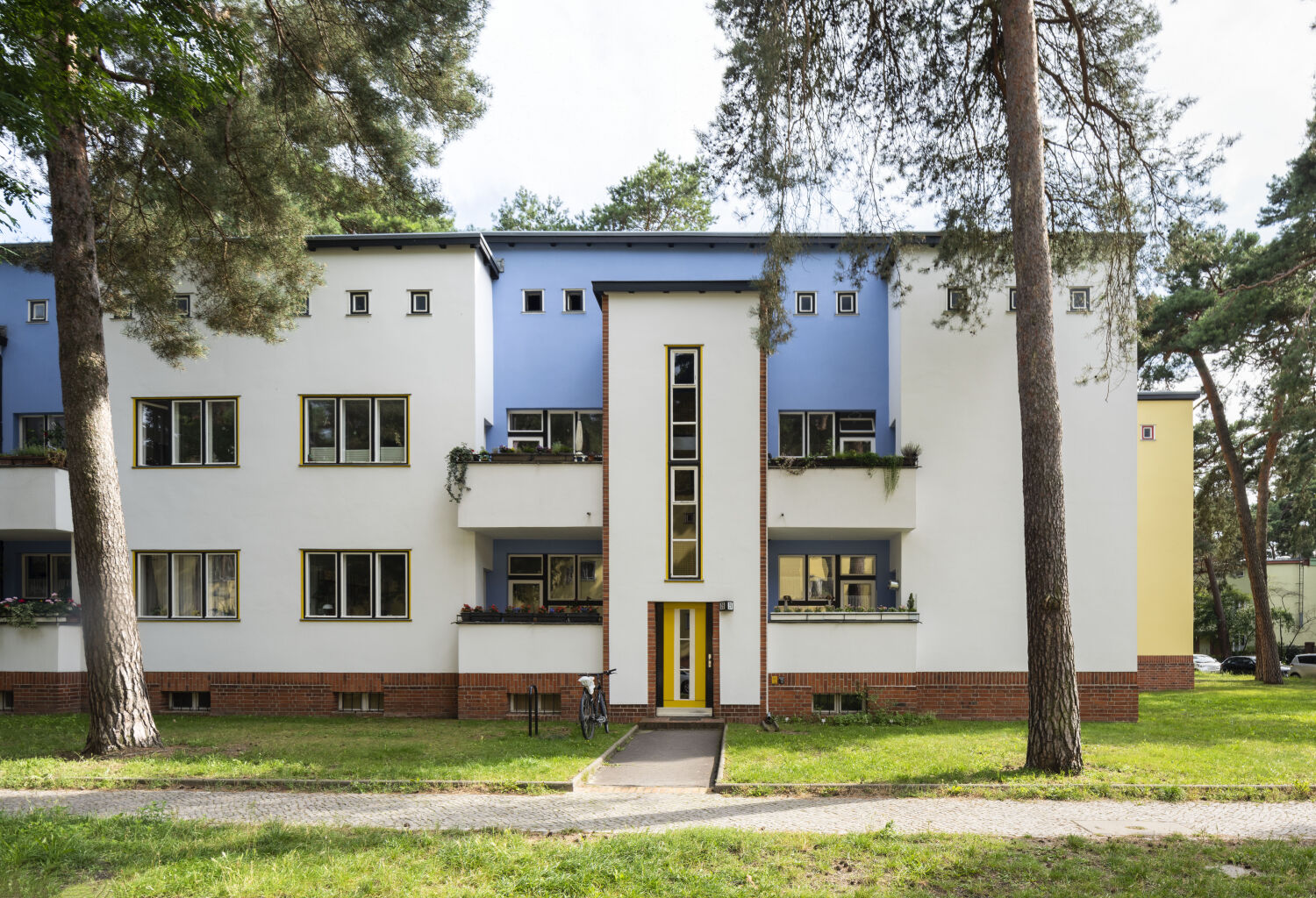
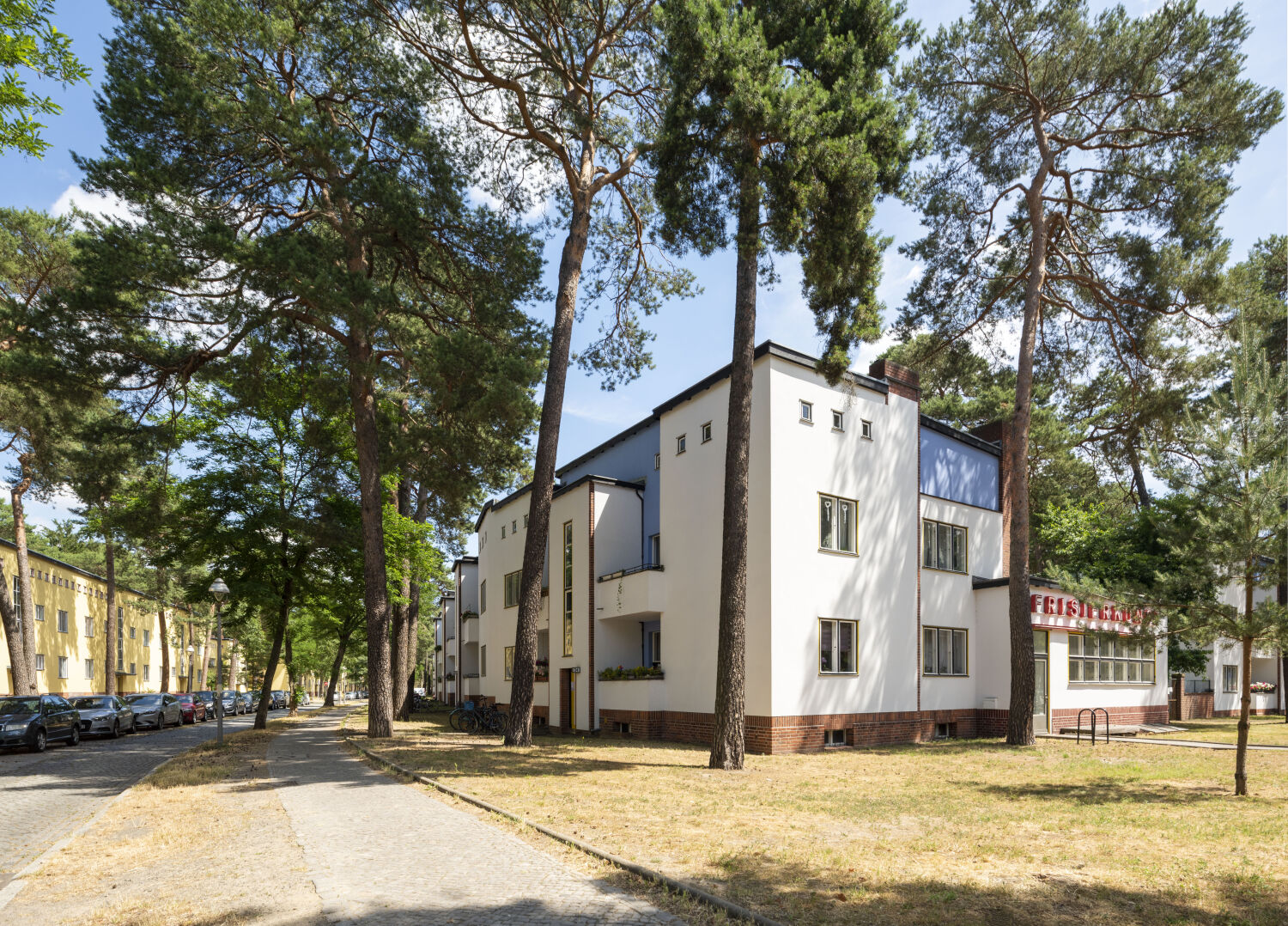
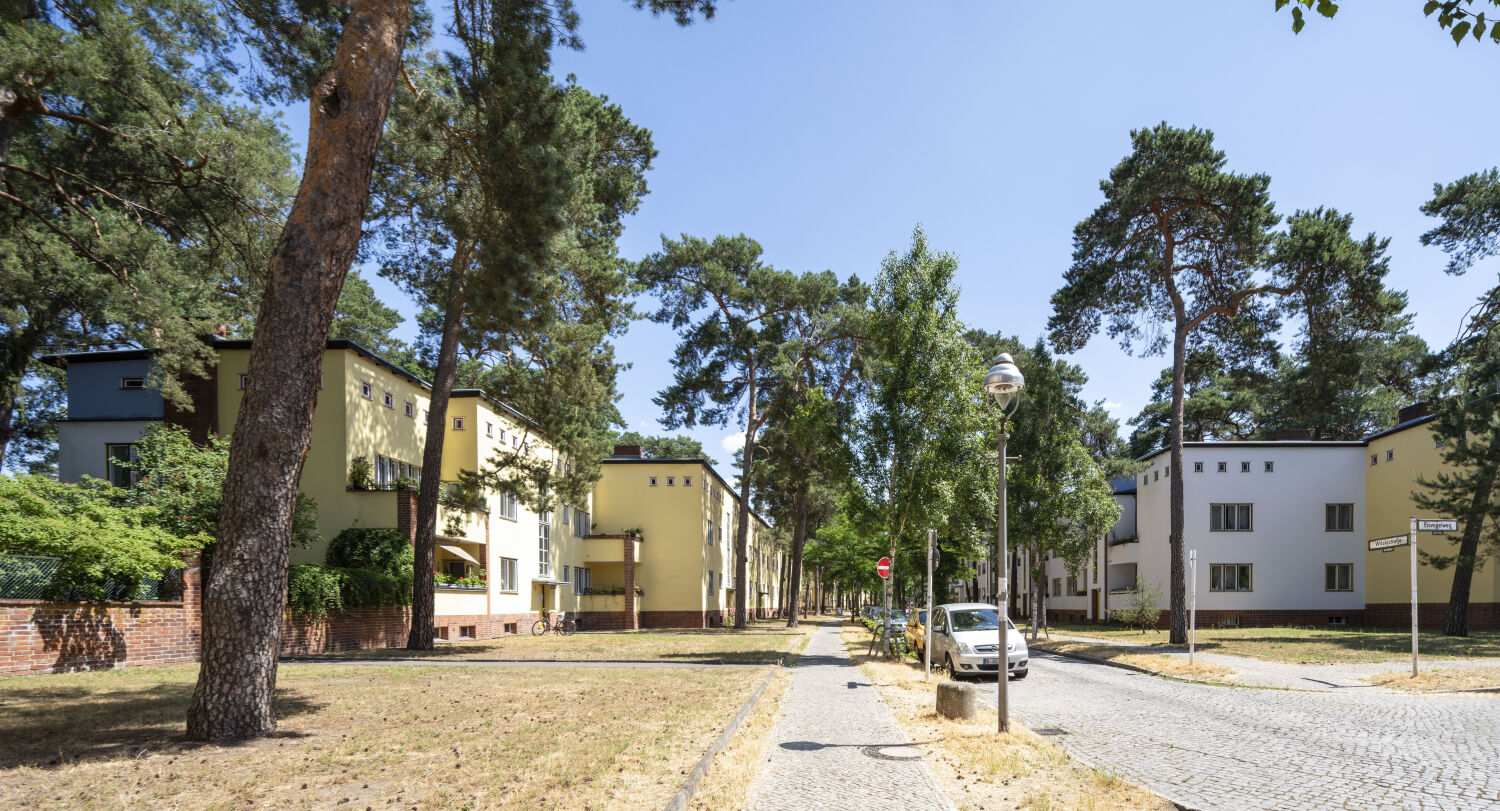
The Waldsiedlung Zehlendorf, also known as the „Onkel-Tom-Siedlung (Uncle Tom Housing Estate)”, is a modernist residential estate style that stretches along the transportation corridor around the “Onkel Toms Hütte” subway station on Line 3 and Argentinische Allee in the Steglitz-Zehlendorf district. Built between 1926 and 1932 for the GEHAG housing cooperative, the estate was designed by architects Bruno Taut, Hugo Häring, and Otto Rudolph Salvisberg. Of the total 1,917 residential units, 1,108 were built as multi-family apartment buildings with up to three stories, and 809 were single-family homes.

The Waldsiedlung was built to provide affordable housing in a healthy, nature-oriented environment. All residents were provided with their own “outdoor living space” and access to numerous common areas. The landscape design by Leberecht Migge and Martha Willings-Göhre was considered as integral to the overall concept as the architecture itself. The result is a harmonious ensemble in which buildings and nature are closely integrated, characterized by continuous flat roofs, a carefully coordinated colour scheme and optimal public transport connections.

The new World Heritage status will not have any immediate impact on resident´s daily life. Rather, the UNESCO World Heritage Site designation should be understood as international recognition of the quality and significance of the housing estate. At the same time, it can help raise awareness of its exceptional value and strengthen resident´s sense of identity with their neighborhood. The participatory processes carried out as part of the nomination have shown that residents have a strong interest in the history of the estate and already identify closely with it. The management plan developed during the nomination process provides a framework for ensuring that residents remain actively involved in the future.
To mark the 100th anniversary of the Waldsiedlung Zehlendorf and its expected inscription as an extension of the “Berlin Modernism Housing Estates” World Heritage Site, the Berlin Heritage Authority (LDA) will host a festival in the estate from August 27–30, 2026.

Further information
about the festival can be found here.
about the Waldsiedlung Zehlendorf can be found here.
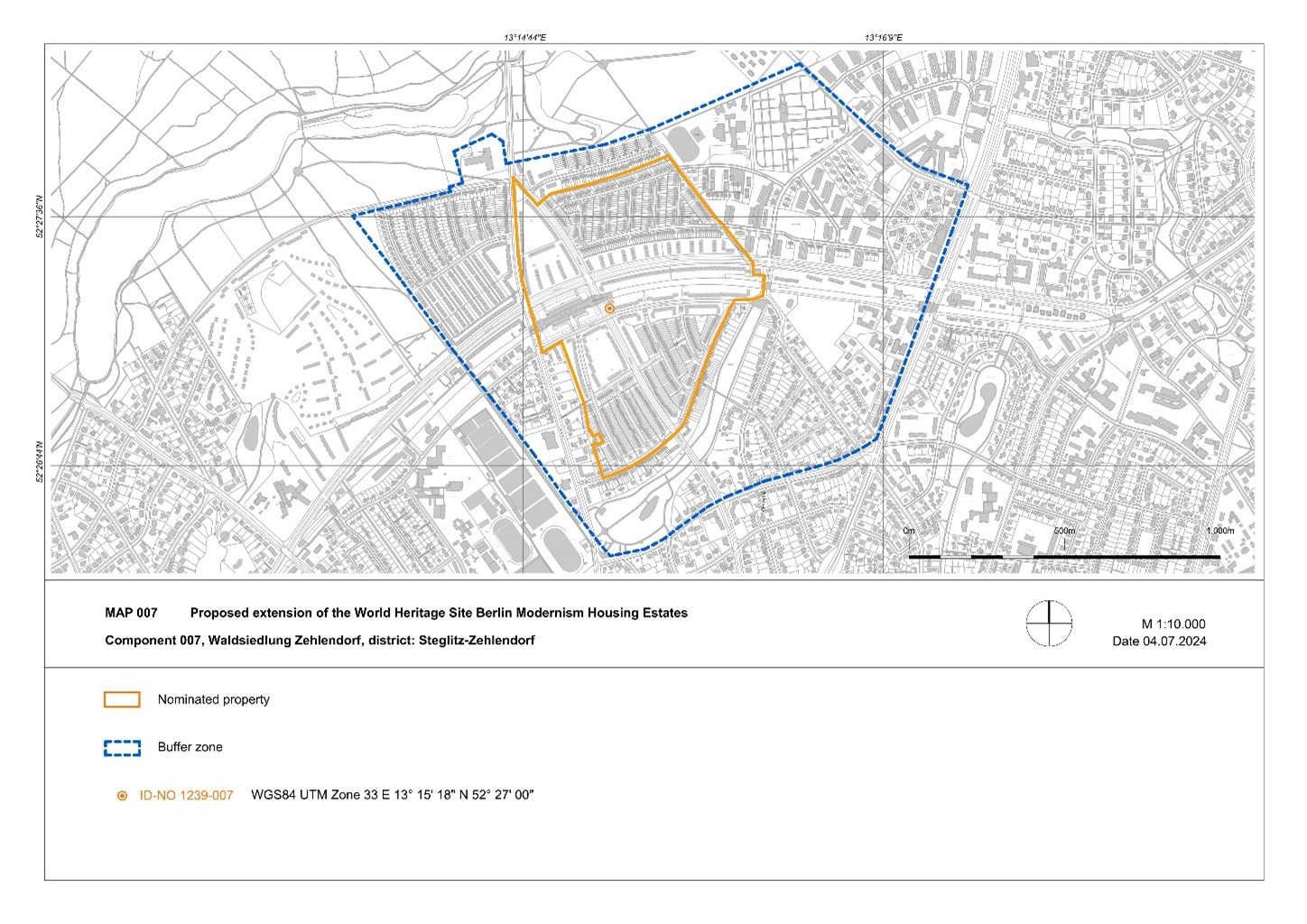
Map of the Proposed Extension “Berlin Modernism Housing Estates”: Waldsiedlung Zehlendorf

Map of the Proposed Extension “Berlin Modernism Housing Estates”: Waldsiedlung Zehlendorf

In the immediate vicinity of a UNESCO World Heritage Site, special quality standards apply to any potential structural changes. For this reason, a so-called buffer zone is established around the World Heritage Site. The purpose of this is to safeguard the site’s quality in terms of its impact and appearance.

Background information on Berlin's World Heritage Site

  • Berlin Modernism Housing Estates

    In 2008, the inscription of the six “Berlin Modernism Housing Estates” on the UNESCO World Heritage List recognized Berlin as a leading centre or architectural landscape and urban planning innovation for modernism during the 1920s.

    The “Berlin Modernism housing estates” currently include

    *the Gartenstadt Falkenberg,
    *the Siedlung Schillerpark,
    *the Großsiedlung Britz,
    *the Wohnstadt Carl Legien,
    *the Weiße Stadt
    *and the Großsiedlung Siemensstadt.

    You can find more information about the Berlin Modernist housing estates here.

  • Architectural History Background

    Following the First World War (1914–1918), Germany faced an enormous housing shortage. Berlin, a rapidly growing industrial metropolis, was particularly affected, with a deficit of at least 130,000 homes. Low-income residents and people seeking work could find housing only in “rent barracks,” where overcrowded and unsanitary conditions were common. The establishment of the Weimar Republic in 1919 marked an important turning point in Berlin’s urban development. Democratic reforms and new electoral laws created the conditions for a more socially oriented approach to urban planning. Three key developments paved the way for the unprecedented wave of housing constructions that began in 1924: first, the establishment of nonprofit housing associations and cooperatives; second, the introduction of a rent tax; and third, the reform of building regulations.

    The “Berlin Modernism Housing Estates” are an outstanding expression of this far-reaching housing reform, which made a significant contribution to improving living conditions in Berlin. Their urban planning, architectural, and landscape design qualities, together with the new housing standards they introduced, became influential models for social housing construction both in Germany and internationally. The leading modernist architects involved in the planning and construction of these housing estates incorporated new design solutions as well as technical and aesthetic innovations.

  • World Heritage Sites in Berlin

    The UNESCO World Heritage Committee, comprising 21 elected States Parties, meets annually to decide on the inscription of new cultural and natural sites on the World Heritage List. It also reviews the state of conservation of sites already inscribed and considers broader strategic issues relating to the implementation of the World Heritage Convention.
    As of June 2026, the World Heritage list comprises 1,248 sites in 170 countries, including 55 in Germany.

    Three of these are located in Berlin itself. Shortly after German reunification, the “Palaces and Parks of Potsdam and Berlin” were inscribed on the World Heritage List. It encompasses more than 2,000 hectares in the state of Berlin and Brandenburg and includes palaces such as Sanssouci Palace, the New Palace, and Glienicke Palace, as well as other outstanding architectural ensembles and a unique garden landscape.

    In 1999, UNESCO inscribed “Museumsinsel (Museum Island)” on the World Heritage List, recognizing the island´s exceptional architectural and urban planning significance. The unique ensemble of museums documents the development of museum architecture and museum concept over the span of two hundred years (1825–1930). Museum Island celebrated its 200th anniversary in 2025, marking 200 years since construction began on the Altes Museum, with anniversary events continuing throughout 2026 until 2030. Further information is available here.

Press information in English

  • Inscription Waldsiedlung Zehlendorf PI English

    PDF-Document (391.8 kB)

Impressions of the Waldsiedlung Zehlendorf

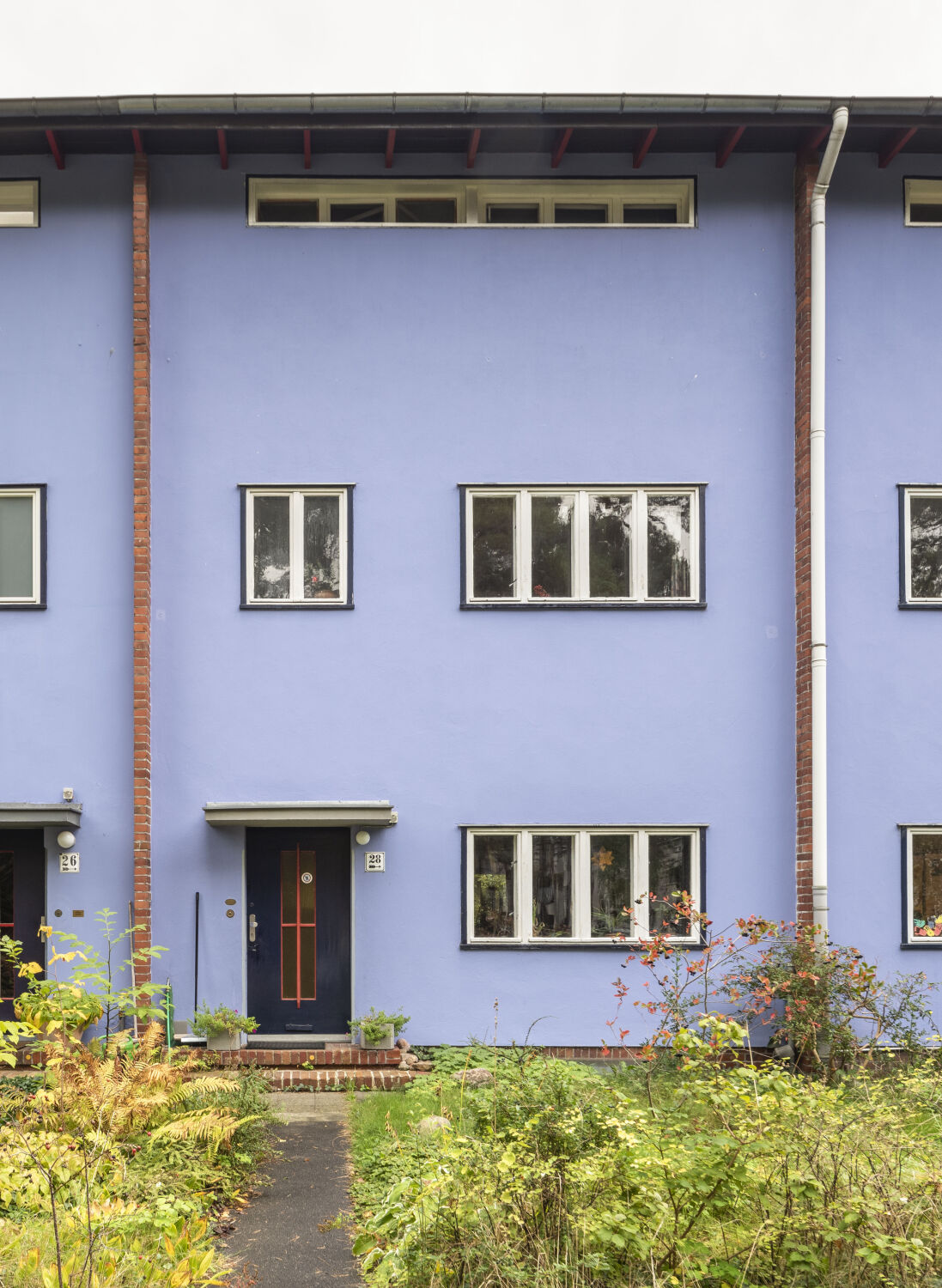
  • Waldsiedlung Zehlendorf, southern construction phase / Im Gestell 28

    Waldsiedlung Zehlendorf, southern construction phase / Im Gestell 28

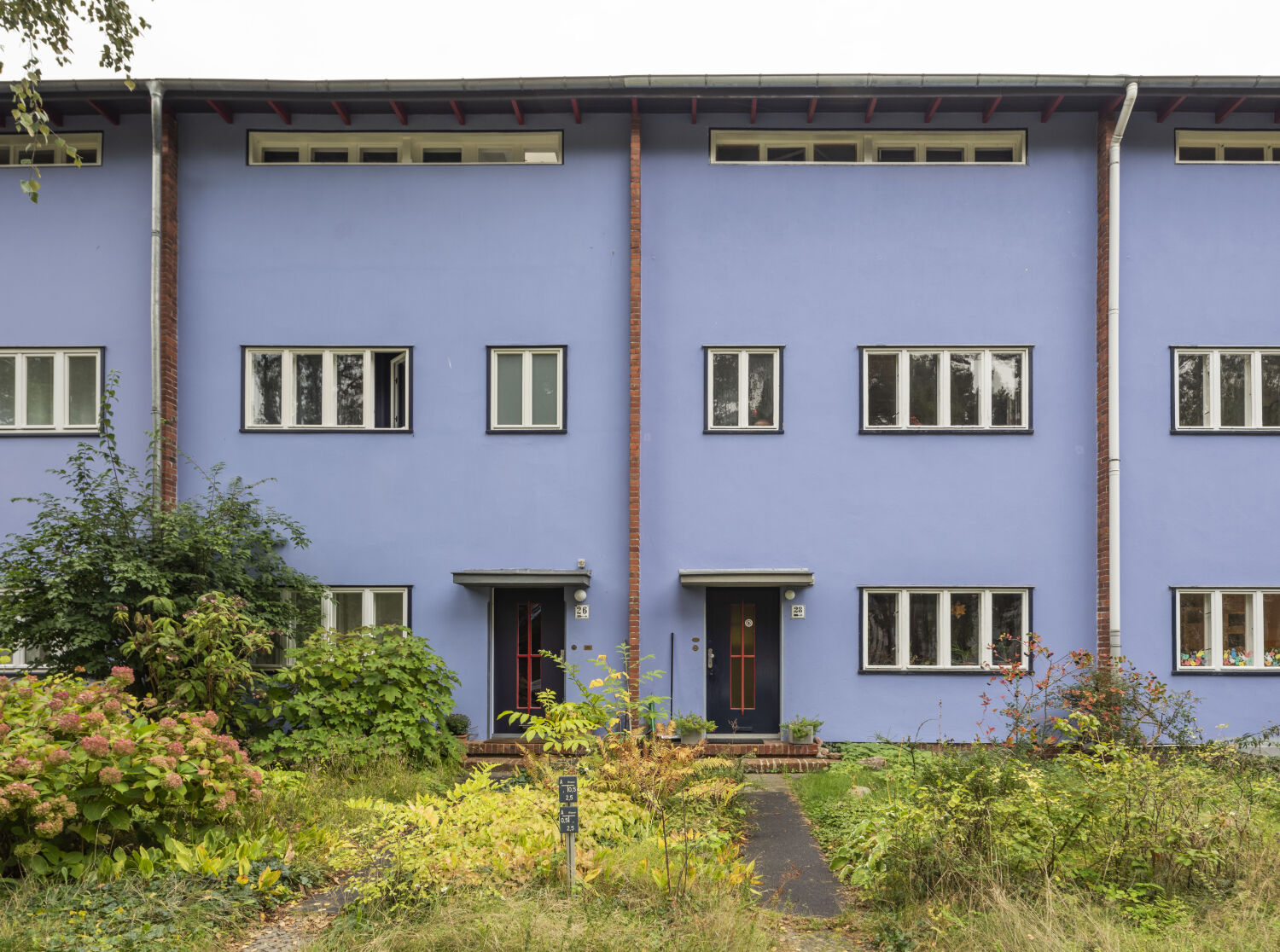
  • Waldsiedlung Zehlendorf, southern construction phase / Im Gestell 26, 28

    Waldsiedlung Zehlendorf, southern construction phase / Im Gestell 26, 28

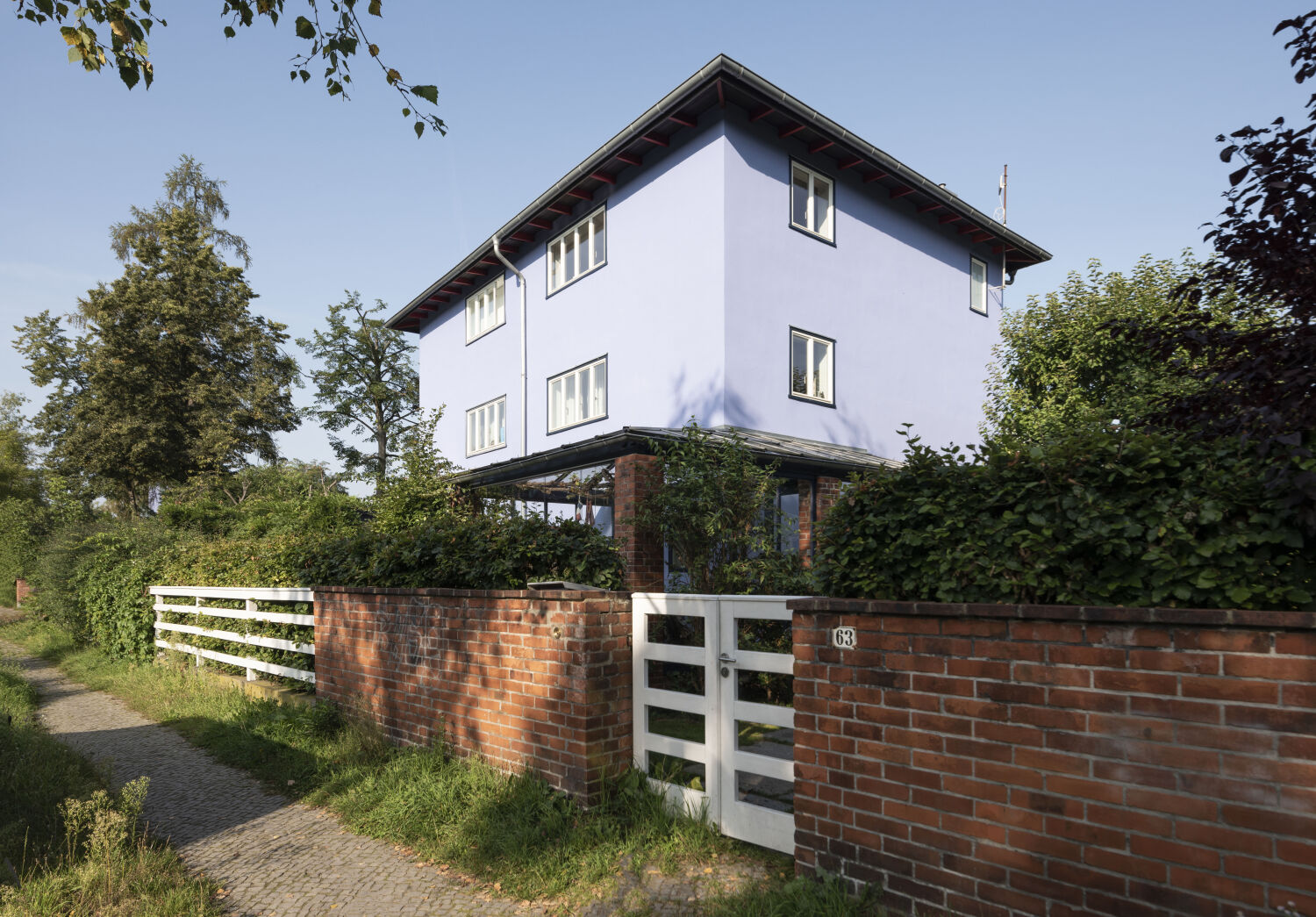
  • Waldsiedlung Zehlendorf, southern construction phase / Am Fischtal 71, 73

    Waldsiedlung Zehlendorf, southern construction phase / Am Fischtal 71, 73

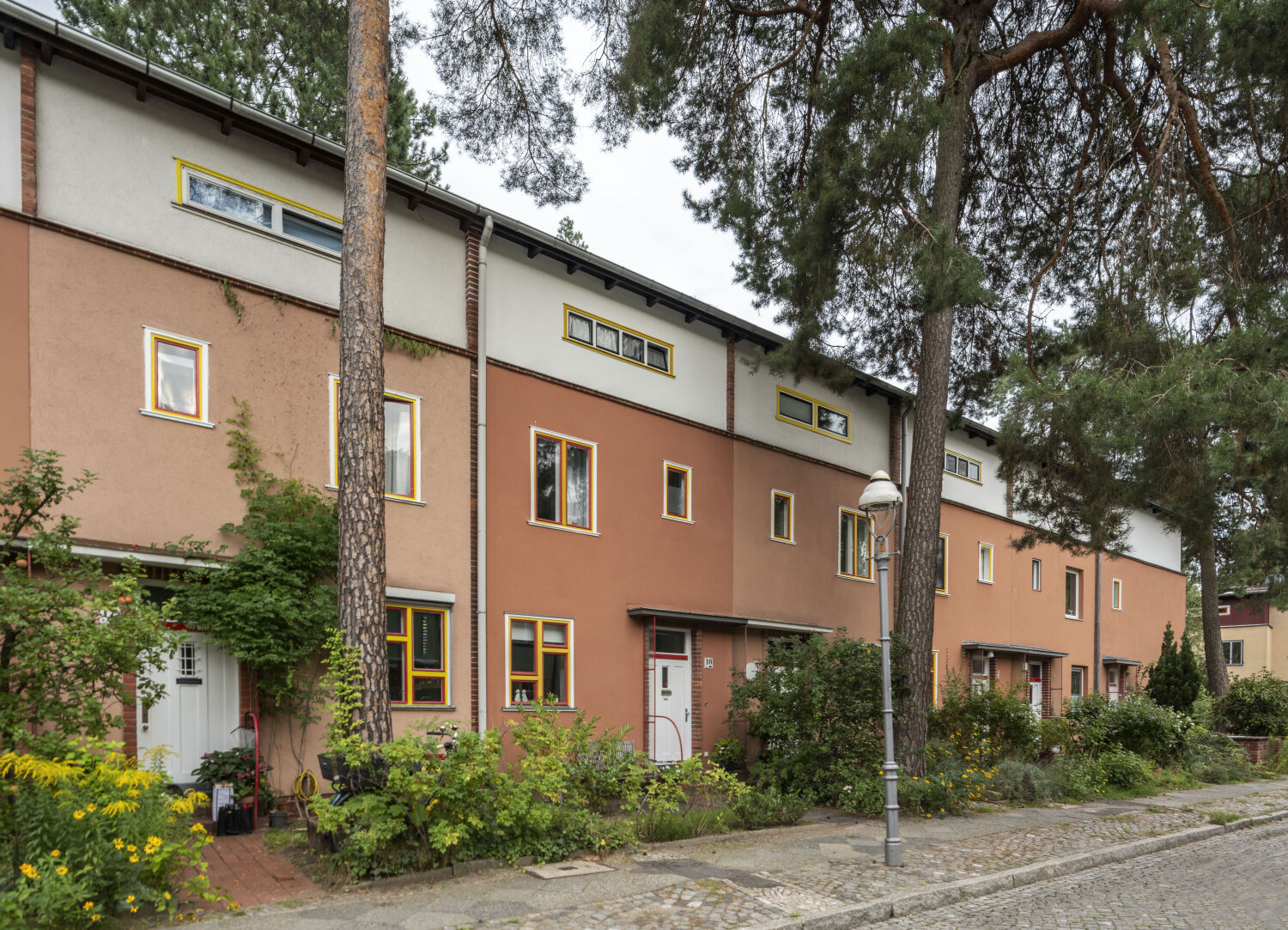
  • Waldsiedlung Zehlendorf, northern construction phase / Treibjagdweg 12, 10

    Waldsiedlung Zehlendorf, northern construction phase / Treibjagdweg 12, 10

  • Waldsiedlung Zehlendorf, southern construction phase / Wilskistraße 36

    Waldsiedlung Zehlendorf, southern construction phase / Wilskistraße 36

  • Waldsiedlung Zehlendorf, southern construction phase / Wilskistrasse corner Riemeisterstraße

    Waldsiedlung Zehlendorf, southern construction phase / Wilskistrasse corner Riemeisterstraße

  • Waldsiedlung Zehlendorf, southern construction phase / Wilskistrasse corner Eisvogelweg

    Waldsiedlung Zehlendorf, southern construction phase / Wilskistrasse corner Eisvogelweg

Press photos for current reporting

  • Waldsiedlung Zehlendorf, southern construction phase / Im Gestell 28

    JPG-Document (309.7 kB)

  • Waldsiedlung Zehlendorf, southern construction phase / Im Gestell 26, 28

    JPG-Document (363.9 kB)

  • Waldsiedlung Zehlendorf, southern construction phase / Am Fischtal 71, 73

    JPG-Document (364.6 kB)

  • Waldsiedlung Zehlendorf, northern construction phase / Treibjagdweg 12, 10

    JPG-Document (472.7 kB)

  • Waldsiedlung Zehlendorf, southern construction phase / Wilskistraße 36

    JPG-Document (416.9 kB)

  • Waldsiedlung Zehlendorf, southern construction phase / Wilskistraße corner Riemeisterstraße

    JPG-Document (574.6 kB)

  • Waldsiedlung Zehlendorf, southern construction phase / Wilskistraße corner Eisvogelweg

    JPG-Document (377.0 kB)

Kartenmaterial

  • Components of the World Heritage Site "Siedlungen der Berliner Moderne"

    PDF-Document (932.6 kB)

  • Map of Waldsiedlung Zehlendorf: Component part and buffer zone (German version)

    PDF-Document (9.1 MB)

  • Map of Waldsiedlung Zehlendorf: Component part and buffer zone (English version)

    PDF-Document (9.1 MB)

more information

Kontakt

Landesdenkmalamt Berlin
Altes Stadthaus

Nicole Hildebrandt