
This section provides an overview of events and guided tours available in English.
English-Language Tours and Events
Mitte
-
Congress hall
Between 1961 and 1964, the “Haus des Lehrers” (house of the teacher) was built on Alexanderplatz, featuring a separate domed structure for events. The part of the building that was mostly referred to as the ‘Congress Hall’ in the 1980s and 1990s (now the bcc) is notable for its clean lines and many interesting architectural details. The gleaming aluminium dome is visible from afar. From the foyers, there is an unobstructed view of Berlin’s urban landscape. The complex has been a listed building since the 1990s.
SUNDAY
Opening hours: 10 a.m. – 3 p.m.
Guided tour: Historic House Tour. 1 p.m., registration is not requiredOrganiser: bcc Berlin Congress Center GmbH
Contact: info@bcc-berlin.de
Location: Alexanderstr. 11 -
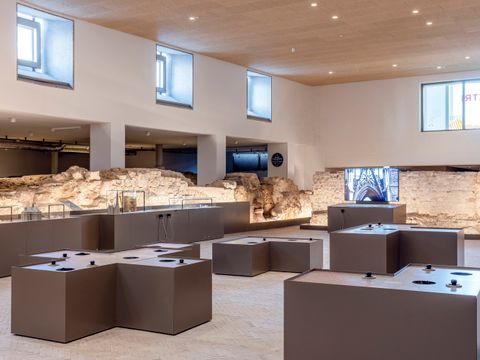
PETRI Berlin and archaeological windows at Petriplatz
Archaeological remains in the basement
Bild: PETRI Berlin, David von Becker
Archaeological windows serve as portals where strands of history converge. Join us as we descend into the excavations at Petriplatz and uncover what the discoveries reveal about the city and its origins. Gain access to areas normally closed to the public. At PETRI, you will encounter some of the oldest traces of Berlin’s history. From the loggia, enjoy sweeping views of the modern city while exploring the places where medieval Berlin remains visible today.
SUNDAY
Opening hours: 10 a.m. – 6 p.m.
Guided tour: Archaeological Windows at Petriplatz. 2.30 p.m., starting point: entrance
Guided tour: Latin school and St. Peter’s church(es). 3 p.m., starting point: entrance
registration required: https://www.petri. berlin/besuchen (to the registration via “upcoming events”)Organiser: PETRI Berlin
Contact: veranstaltungenPETRI@smb.spk-berlin.de
Location: Gertraudenstraße 8 -
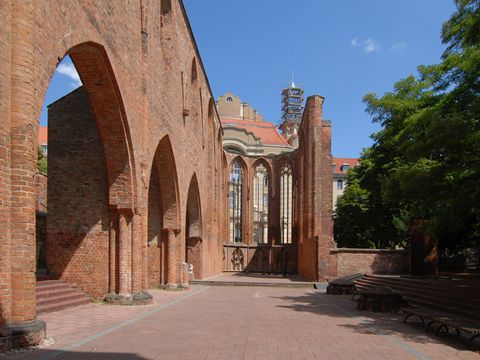
Ruins of the Franciscan monastery
Ruins of the Franciscan monastery church
Bild: Landesdenkmalamt Berlin, Wolfgang Bittner
The ruins of the Franciscan Monastery Church are among the last surviving traces of Berlin’s founding and rank among the city’s most significant architectural landmarks. Open to the public and used for cultural events, the site is located in the historic and modern center of Berlin. It is widely regarded as an outstanding example of medieval architecture. Since 2016, artists and curators have reimagined the monastery ruins through annual projects, bringing them into the spotlight of contemporary culture and offering new perspectives on their historical significance.
SATURDAY
Opening hours: 11 a.m. – 7 p.m.SUNDAY
Guided tour: The ruins of the Franciscan Monastery Church and the History of Monument Preservation. 12 p.m. and 4 p.m., starting point: entranceOrganiser: Bezirksamt Mitte, Amt für Weiterbildung und Kultur, Fachbereich Kunst, Kultur und Geschichte
Contact: alin.daghestani@ba-mitte.berlin.de
Location: Klosterstraße 73A -
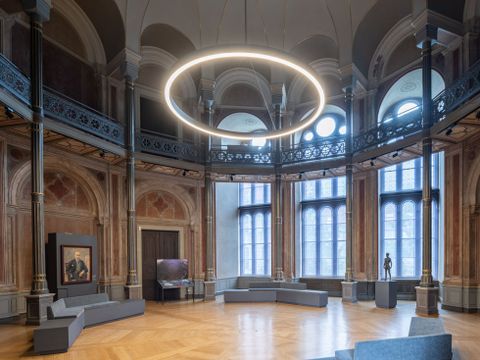
Zion Church
Zion Church
Bild: Landesdenkmalamt Berlin, Wolfgang Bittner
Consecrated in 1873 at the then highest point in Berlin, Zion Church was designed by Gustav Möller and August Orth. It was built as a votive church to mark Wilhelm I’s survival of the Baden assassination attempt. Following extensive interior renovations, the church is being fully restored to its former glory this year, complete with a brand-new organ. Today, Zion Church serves a vibrant congregation. Its rich history is marked by influential figures, including pastor and anti-Nazi dissident Dietrich Bonhoeffer and the GDR-era Environmental Library.
SUNDAY
Guided Tour: 2 p.m., starting point: foyerOrganiser: Ev. Kirchengemeinde am Weinberg
Contact: beckmann@gemeinde-am-weinberg.de
Location: Zionskirchplatz -
New Synagogue Berlin – Centrum Judaicum
New Synagogue Berlin – Centrum Judaicum
Bild: Landesdenkmalamt Berlin, Foto: Anne Herdin
Built between 1859 and 1866 by Eduard Knoblauch and Friedrich August Stüler in the Moorish-Byzantine style, the New Synagogue was the largest place of worship in Germany. Although only slightly damaged during the November Progroms in 1938, it was severely destroyed during the Second World War; reconstruction of the front section, which had survived, began in 1988 under the auspices of the Neue Synagoge Berlin – Centrum Judaicum Foundation. Today, on the site of the New Synagogue, which was inaugurated in 1866, there is a museum and meeting place for Jews, other Berliners, and visitors from around the world.
SUNDAY
Guided Tour: Tohuwabohu under the Dome! A Journey Through the Synagogue and Jewish Berlin from 1866 to Today. 12.30 p.m., starting point: at the cash desk in the museum, registration required by Sep 12: info@centrumjudaicum.deOrganiser: New Synagoge Berlin Foundation
Contact: henry.lucke@centrumjudaicum.de
Location: Oranienburger Str. 28-30 -
Berlin Museum: Nikolaikirche
Berlin Museum: Nikolaikirche
Bild: Stiftung Stadtmuseum Berlin, Michael Setzpfandt
Berlin’s oldest surviving church building is now home to a museum. Its permanent exhibition explores the church’s architectural, religious, and musical heritage, while also tracing the development of Berlin during the Middle Ages. The construction of St. Nicholas’ Church, around 1230, is closely associated with the city’s founding. Over the centuries, the church also became an important center for sacred music — a tradition that continues today through concerts and special events.
SATURDAY
Opening hours: 10 a.m. – 6 p.m.
Guided tour: A 45-minute tour of the Nikolaikirche. 4.30 p.m., starting point: ticket counterSUNDAY
Programme: as on SatOrganiser: Stiftung Stadtmuseum Berlin als Trägerin des Berlin Museums
Contact: info@stadtmuseum.de
Location: Nikolaikirchplatz


Friedrichshain-Kreuzberg
-
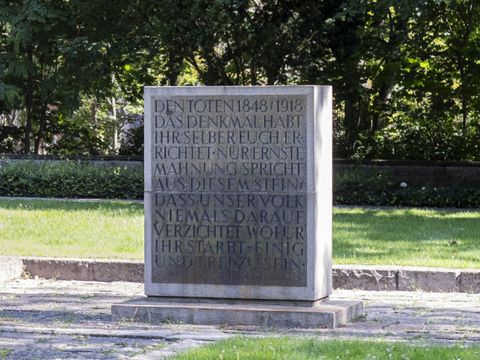
„Friedhof der Märzgefallenen“
Friedhof der Märzgefallenen
Bild: Paul-Singer-Verein, Mathias Voelzke
The Cemetery of the March Fallen was established by the insurgents of the Berlin March Revolution to honor those who lost their lives in 1848. As such, it is not only a unique memorial to that pivotal moment in history but also a direct product of the revolutionary events themselves. Today, it may appear at first glance to be a modest garden memorial on the edge of Friedrichshain Volkspark. A closer look, however, reveals a site rich in historical layers — a witness to Berlin’s turbulent past and a lasting symbol of the enduring struggle for freedom across generations.
SATURDAY
Drawing Walk with a sketchbook: Experience Volkspark Friedrichshain through drawing. 3 p.m., registration required: anmeldung@ paulsinger.deOrganiser: Paul Singer e.V.
Contact: kontakt@paulsinger.de
Location: Ernst-Zinna-Weg 1
Charlottenburg-Wilmersdorf
-
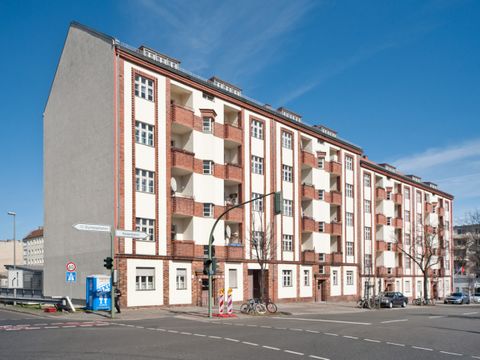
Apartment block and former multi-storey car park on Knobelsdorffstraße
Apartment block Knobelsdorffstraße
Bild: Landesdenkmalamt Berlin, Foto: Wolfgang Bittner
Completed in 1929, this Expressionist apartment block is a striking example of interwar architecture. Originally, the complex was twice its current size and included a large car park. Beyond its architectural significance, the site also reflects broader urban developments through the 1960s. The location offers a perspective on both the past and the future of this traffic-dominated area. Following the demolition of the bridge in 2025, the surroundings have become quieter. However, concerns remain about the potential return of increased traffic noise. One proposal currently under discussion is the construction of a cover over the motorway, which could significantly improve the quality of the urban environment.
SUNDAY
Guided tour: Building & History. 1 p.m., starting point: south-eastern corner (at the water pump), registration required: lubjahn. babelsberg@web.deOrganiser: Detlev Lubjahn
Contact: detlev.lubjahn@web.de
Location: Sophie-Charlotten-Straße / Knobelsdorffstraße
Steglitz-Zehlendorf
-
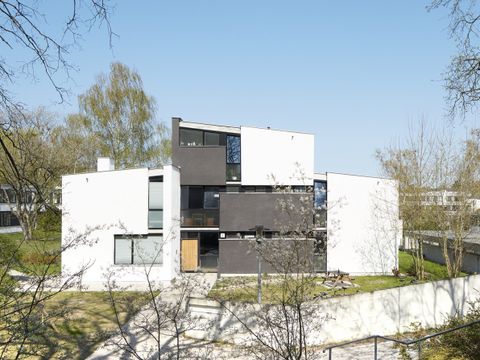
Student village Schlachtensee
Student village Schlachtensee
Bild: Mila Hacke
The student village was built 1957-64 by Hermann Fehling, Daniel Gogel and Peter Pfankuch. The landscape garden was designed by Hermann Mattern. Filigree constructions, simple building materials and a lack of technical expertise led to some structural elements requiring repair. Since 2006 the cooperative has been working on the renovation of the buildings and, together with experts like Brenne Architects, has been developing solutions to preserve the monument in the long term.
SUNDAY
Guided tour: Architecture and Everybody´s Life. 2 p.m., starting point: village square (house 11), Kexin Cheng (PhD Student + resident)Organiser: Studentendorf Schlachtensee eG
Contact: bettina.widner@studentendorf.berlin
Location: Wasgenstraße 75 / house 11 -
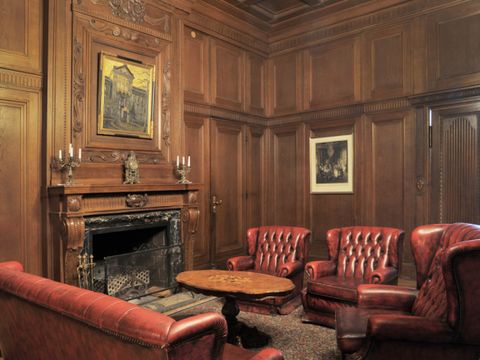
Villa Heydenreich
Villa Heydenreich
Bild: Landesdenkmalamt Berlin, Wolfgang Bittner
Built between 1914 and 1917 by the architects Paulus & Lilloe, this three-winged country house is a fine example of North German aristocratic architecture. Originally commissioned as a private villa for the merchant Adolf Heydenreich, it was acquired in 1965 by the Grand Lodge of Freemasons of Germany. The villa reflects changing social values while preserving tradition. We open up this “living monument,” and guide visitors through historic rooms and offer insights into the traditions and ideals of Freemasonry. Villa Heydenreich also invites guests to linger and enjoy its terrace.
SATURDAY
Guided tour: From a family home to a religious house. 2 p.m., starting point: foyerSUNDAY
Guided tour: as on SatOrganiser: Große Landesloge der Freimaurer von Deutschland – Freimaurerorden
Contact: sekretariat@freimaurerorden.org
Location: Peter-Lenné-Straße 1-3
Neukölln
-
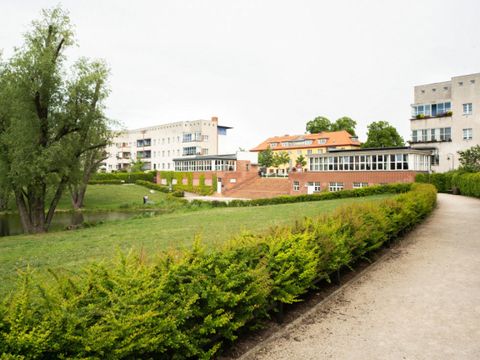
Large housing estate Britz (UNESCO-World Heritage)
Large housing estate Britz
Bild: Landesdenkmalamt Berlin, Anne Herdin
The Hufeisensiedlung designed by Bruno Taut 1925-30 is a key piece of modernism. It was built in a time of severe housing shortage and established new standards in urban planning. Its mix of Bauhaus-style apartment blocks and colorful row houses bridges the gap between garden city movement and virtuously varied serial construction. In 1998, the listed ensemble of ca. 2,000 units was privatized. In 2008 it was designated a UNESCO World Heritage Site. This gave birth to various civil projects and networks.
SUNDAY
Guided tour: Showcase, lab and colorful icon of 1920s modernism. 2 p.m., starting point: Infostation Hufeisensiedlung, Fritz-Reuter Allee 44; the tour includes a visit of the Infostation Hufeisensiedlung, for which the guide contributed the design and content of the exhibition.Organiser: Ben Buschfeld
Contact: tours@buschfeld.com
Location: Fritz-Reuter-Allee 44
Treptow-Köpenick
-
Eierhäuschen
Eierhäuschen
Bild: Landesdenkmalamt Berlin, Anne Herdin
As early as the nineteenth century, the Eierhäuschen was a popular destiantion for day trippers. Visitors enjoyed an outdoor skittle alley, hundreds of riverside seats along the Spree, a dedicated ferry service, and a lively venue for music and dancing. After years of neglect, the building has been carefully restored in accordance with conservation guidelines. In March 2024, the Eierhäuschen reopened its doors. Today, alongside a beer garden and restaurant, it it is now at the Spreepark Art Space — a place for exhibitions, artistic creation and reflection.
SUNDAY
Opening hours: 11 a.m. – 7 p.m.
Guided tour: History and architecture. 2 p.m., starting point: entrance Spreepark Art Space, Helena Ommert, online registration required at https://gstoo.de/tdod_am_eierhaeuschen
Introduction to the exhibition: DOOM SNOOZERS. 4 p.m.Organiser: Spreepark Art Space Eierhäuschen im Spreepark / Grün Berlin GmbH
Contact: jennifer.sreter@spreepark-artspace.berlin
Location: Kiehnwerderallee 2 -
Nazi Forced Labour Documentation Centre
Nazi forced labor camp 75/76
Bild: Landesdenkmalamt Berlin, Wolfgang Bittner
The Documentation Centre occupies the site of one of more than 3,000 forced-labour camps that once existed in Berlin. Between 1943 and 1945, thirteen stone barracks for forced labourers were built here on the orders of the General Building Inspector for Berlin, based on plans by the architect Hans Freese. Today, it stands as an almost completely surviving example of a forced-labour camp in its original locaiton, situated in the midst of a residential neighborhood. Since 2006, the Documentation Centre has shed light on the long-overlooked fate of more than 26 million men, women, and children who were exploited as forced labourers by the German Reich during the Second World War.
SATURDAY
Opening hours: 10 a.m. – 6 p.m.
Guided tour of the site and exhibitions: Everyday Life of Forced Labourers in National Socialism. 1 p.m., starting point: Baracke 2SUNDAY
Guided tour of the site and exhibitions: Everyday Life of Forced Labourers in National Socialism. 4 p.m., starting point: Baracke 2Organiser: Dokumentationszentrum NS-Zwangsarbeit
Contact: felleiter@topographie.de
Location: Britzer Straße 5


Lichtenberg
-
Stasi prison Hohenschönhausen
Stasi prison Hohenschönhausen
Bild: Landesdenkmalamt Berlin, Wolfgang Bittner
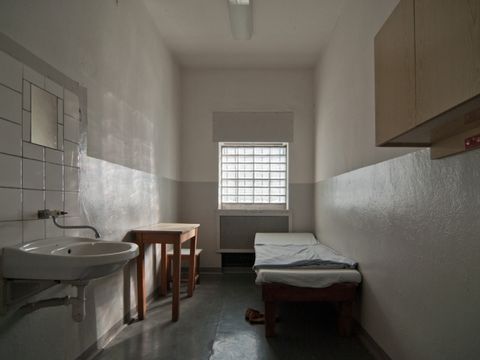
The buildings of the former Ministry for State Security remand centre have been listed as historic monuments since 1992. Since 1994, the site has been a memorial providing information on the forms and consequences of political repression and imprisonment in the former GDR. Former prisoners also act as “eyewitnesses to history”, guiding visitors through the basement prison known as the “U-Boot”, the new prison building and the interrogation wing, as well as offering special tours of the prison hospital and the prison kitchen.
SATURDAY
Opening hours: 10 a.m. – 6 p.m.
Guided tour: Stasi Prison. 10.40 a.m., 11.40 a.m., 12.40 p.m., 1.40 p.m. and 2.40 p.m., registration required: https://ticket.stiftung-hsh.de/#/products/ eventsSUNDAY
Programme: as on SaOrganiser: Stiftung Gedenkstätte Berlin-Hohenschönhausen
Contact: pressestelle@stiftung-hsh.de
Location: Genslerstraße 66
Kontakt
Landesdenkmalamt Berlin
Altes Stadthaus
- Tel.: (030) 90259-3600
- Fax: (030) 90259-3700
- E-Mail landesdenkmalamt@lda.berlin.de
Verkehrsanbindungen
-
U-Bahn
-
Bus
-
Jüdenstr.
- 248
- 300
-
Nikolaiviertel
- N8
- N40
- N60
- N65
-
Jüdenstr.