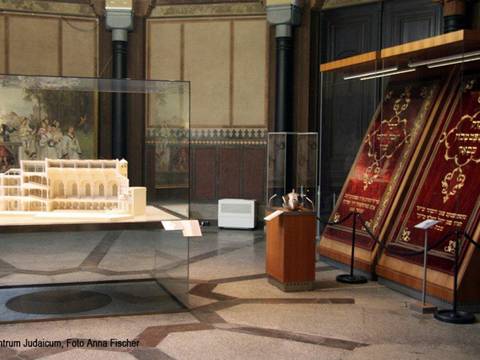
Until the infamous Kristallnacht pogrom of November 1938 when the Synagogue was attacked by Nazi thugs and heavily damaged, Jewish citizens had enjoyed full equality and civic rights, enshrined in the 1850 Prussian constitution. The official founding of a Jewish community in Berlin dates back to 1671 under the Great Elector Friedrich Wilhelm (1640-1688) and it thrived until the Weimar Republic. By and large in the 19th century belief in Jewish assimilation remained strong and Jewish citizens enjoyed civic rights. As the centre of the so-called Jewish enlightenment or Haskalah which advocated equality and secularism Berlin was home to personalities such as Max Reinha, Arnold Schoneberg Kurt Weill, Albert Einstein and Max Liebermann who enjoyed social prestige and acclaim. Liturgically, social assimilation was reflected in the relaxing of religious rites and a more liberal approach to religious practices which included the installation of an organ, a choir and services in German in the New Synagogue. Services were held here until 1940 when the building was confiscated by the Nazis and almost completely destroyed by Allied bombings in 1943.