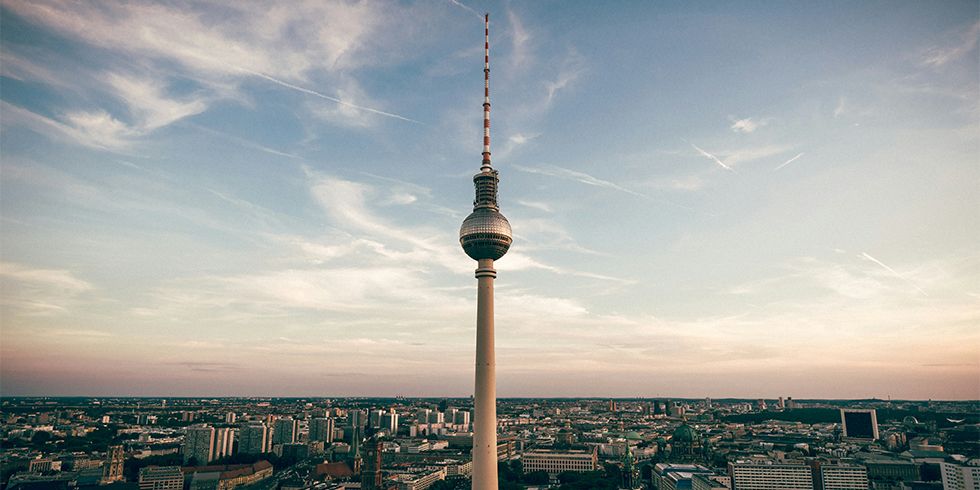
Berlin Skyline

Deep Tech Berlin – a hub of innovation with international appeal

Here, an exceptionally vibrant science and research landscape meets a dynamic start-up scene, technology-focused companies, international talent and specialised innovation infrastructures.

Berlin is one of Europe’s leading centres of innovation: in the EU’s Regional Innovation Scoreboard, Berlin ranks amongst the top five per cent of European regions in terms of innovation. Berlin excels particularly where scientific findings, new technologies and practical applications converge. From basic research through to testing and commercial application, this approach generates solutions to key challenges for the future – for example in health, industry, mobility, energy, security and digital sovereignty.

Deep Tech Berlin in numbers

  • Top 5 per cent of Europe’s most innovative regions
  • 4 universities, 39 higher education institutions and over 70 non-university research organisations
  • around 4,000 professorships
  • €6.2 billion spent on innovation* by Berlin-based companies in 2023
  • €2.1 billion in venture capital* in 2024 – just under 30 per cent of Germany’s total VC volume
  • more than 4,000 start-ups founded within ten years
  • over 400 supported R&D projects with a total value of more than €1.7 billion

Five areas of technology in which we excel

The Deep Tech Berlin Agenda, drawn up by the Senate Department for Economics, Energy and Public Enterprises, which sets out the strategic framework for Berlin’s technology-oriented innovation policy over the next ten years, brings together the city’s particular strengths in five technology fields:

  • Artificial Intelligence: From trustworthy AI to intelligent applications for healthcare, industry, mobility and public administration.
  • * Biotechnology: Biomedical research, diagnostics and therapies combined with new applications in environmental, water and production technologies.
  • Microelectronics, Photonics & Quantum Technologies: Key technologies for semiconductors, sensor technology, communications, laser technology, as well as quantum computing and quantum sensor technology.
  • Advanced Materials & Manufacturing: New materials, additive manufacturing, robotics and digital production systems for the industry of the future.
  • Software Technologies: Cybersecurity, blockchain, Web3 and distributed ledger technologies for secure and resilient digital systems.

Research meets business

One of Berlin’s key strengths is the geographical and institutional proximity of academia, start-ups and established companies. Universities, research institutes, technology parks, innovation hubs, real-world laboratories and specialised networks create numerous opportunities to jointly develop new technologies and test them under real-world conditions.

Initiatives such as the JUNI Startup Factory and the Transfer Bridge are designed to further accelerate science-based start-ups, collaborations and the transformation of research findings into marketable applications.


Funding for innovation and growth

Berlin is one of the most important hubs for venture capital in Germany: in 2024, around 2.1 billion euros were invested in Berlin-based companies – just under 30 per cent of the nationwide VC volume.

Deep-tech innovations, in particular, often require long development times and substantial investment. Berlin is therefore focusing on linking public funding and private capital more closely and better coordinating funding options from research and development through to market launch and scaling up.

Further information & resources