Hero_Finalists Deep Tech Berlin Bio tech EN

Healing From Within: Meet the Finalists in the Bio & Health Tech Category

Berlin has long been home to world-class life sciences research. But translating a laboratory breakthrough into a therapy that actually reaches patients is a different challenge entirely. It requires not only scientific rigor, but the courage to spin out of academia, navigate clinical development, and build companies around some of medicine’s most complex and stubborn problems. The three finalists in the Bio & Health Tech category of the Deep Tech Award 2026 are doing exactly that: each one working at the frontier of regenerative medicine and cell therapy, each one with a clear-eyed sense of what is at stake for the patients they are trying to reach.

Blueprint BioMed

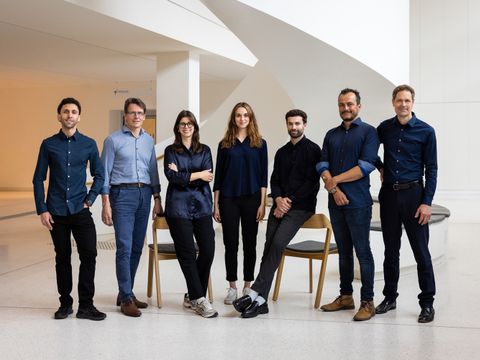
The team of Blueprint BioMed

Blueprint BioMed: Giving the Body the Tools to Heal Itself

Bone repair sounds like a solved problem. It is not. The current gold standard – combining a material carrier with bone harvested from the patient’s own body – too often fails, leaving patients with chronic pain, extended recovery, and in many cases the need for repeated surgery. For the German healthcare system alone, the annual burden runs to €1.8 billion. Blueprint Biomed, founded out of the Berlin Institute of Health at Charité, was built to replace that standard with something better.

The founding impulse was a frustration shared by surgeons and patients alike and a conviction that scientific excellence is only meaningful if it is accessible. As the team describes it, they were driven by the mission to move “beyond the bench”, uniting experts in natural sciences, engineering, and medical devices to bridge the gap between the laboratory and the operating table.

What they have developed is a patented, bio-instructive scaffold that eliminates the need for bone harvesting entirely. Unlike traditional materials, which act as passive fillers, the Blueprint Biomed technology uses structural and mechanical cues to recruit the patient’s own cells and guide them to regenerate bone naturally. It is fully resorbable, meaning it does its job and then disappears, leaving only healthy bone behind. The practical result is a transformation of what was previously a complex, two-site surgical procedure into a single, efficient operation: 30% less operating time, no second surgical site, less pain, and faster recovery for the patient.

The team’s philosophy reflects the scale of the ambition: “We believe that medical innovation is a failure if it remains a luxury.” That conviction extends to their broader view of where deep tech is heading – toward solutions that embed complexity into the material or the tool itself, so that the highest standard of care becomes accessible not just in well-resourced hospitals, but globally.

Being nominated for the award, the team says, confirms that Blueprint Biomed is more than an advanced research project: “It recognizes that Blueprint Biomed isn’t just an advanced research project, but a scalable solution ready to represent Berlin’s innovation on the global stage.”

CARTemis

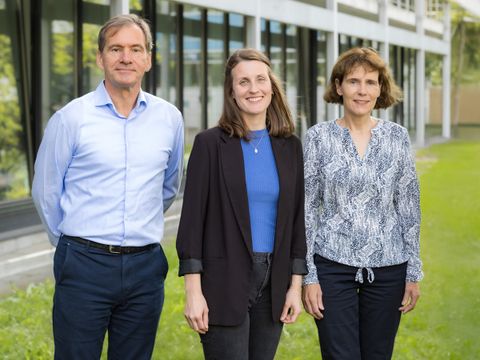
CARTemis co-founders Dr. med. Armin Rehm, Dr. Anthea Wirges and Dr. Uta Höpken

CARTemis: Targeting Cancer at Its Root

Blood cancers are notoriously difficult to treat sustainably. Even when existing therapies work initially, relapse remains a defining challenge — and for patients who have already exhausted approved options, the choices narrow fast. CARTemis, a spin-off from the Max Delbrück Center for Molecular Medicine, is working to change that with a CAR-T cell therapy built around a target that has been two decades in the making.

The receptor CXCR5 was first described at the MDC around twenty years ago, and co-founder PD Dr. Uta Höpken has spent much of that time studying its biological function. With the rise of CAR-T cell technology, it became possible to translate that knowledge into something therapeutic. What makes the CARTemis approach technically distinctive is its dual mechanism of action: CXCR5 is expressed not only on the tumor itself but also on the tumor microenvironment – the supporting structure that helps cancer survive and evade treatment. By targeting both simultaneously, CARTemis aims to cut off the relapse pathways that have limited the effectiveness of currently approved therapies.

As the team puts it: “With CXCR5, we are modifying the CAR T’s antenna and simultaneously disrupting the tumors support system.”

The societal ambition is equally clear. By targeting CXCR5, CARTemis aims to break the cycle of relapse for patients who have run out of alternatives — reducing the burden of recurring oncological care and improving long-term quality of life. Looking further ahead, the team is developing a hybrid in vivo CAR T approach in partnership with Munich-based TQ Therapeutics, with the goal of making the therapy accessible to a far broader population of patients than complex manufacturing currently allows.

Berlin plays a central role in this story. CARTemis is embedded in the city’s growing cell and gene therapy ecosystem, benefiting from the MDC’s strong track record of supporting translational science and spin-offs, its longstanding partnership with the Charité, and the emerging Berlin Center for Cell and Gene Therapy. “We are at the right place at the right time,” the team says while also recognizing that cross-connections within Germany, Europe, and the US will be essential to carry the innovation forward.

MyoPax Team

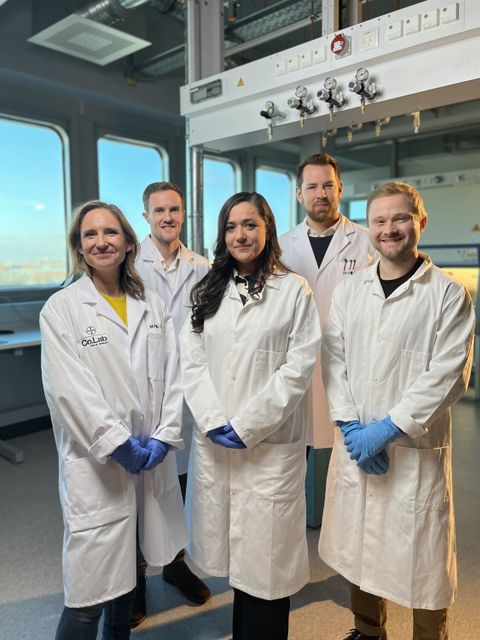
The MyoPax team

MyoPax: Restoring Muscle, Restoring Life

For patients with progressive muscle disease, the experience of illness is one of relentless loss. Every month, function disappears permanently. For decades, there has been no therapy capable of halting that progression, let alone reversing it. MyoPax exists to change that.

The company grew directly from the work of Professor Simone Spuler, who spent over thirty years at the Charité diagnosing and caring for muscle-diseased patients while leading the scientific team that developed a way to manufacture highly regenerative muscle stem cells. That work eventually produced a technology capable of something previously out of reach: preserving the regenerative potency of these cells during manufacturing-scale expansion. Combined with precise correction of disease-causing genetic alterations, the platform opens a pathway to actually rebuilding healthy muscle – not just managing symptoms, but eliminating the root cause.

“Science must reach the patient, not in theory, but in practice,” the founders write. “Thus, the question was not whether to found a company, but when.”

MyoPax was co-founded by Professor Spuler together with Dr. Verena Schöwel and Dr. Diane Seimetz, and has established entities at both the BioInnovation Institute in Copenhagen and the Berlin Bayer Co.Lab. The team’s vision is unambiguous: “Our goal is to make ‘incurable muscle disease’ a phrase that no longer applies.”

The company operates with a dual commitment: to move with urgency, because every month of delay means real function loss for real patients, and to maintain the highest standards of scientific and regulatory rigor, because therapies must be not only groundbreaking but viable and sustainably accessible. The convergence of precision gene editing and AI-driven bioprocess optimization, the team notes, is now filling the missing pieces that will make this possible at scale.

Being named a finalist for the Deep Tech Award carries particular meaning for a field that does not always receive the recognition it deserves. As the MyoPax team reflects: “Muscle disease research and muscle-diseased patients not too often get the spotlight. The recognition emphasizes that rigorous, deeply technical science, grounded in real unmet need, is highly valued in the overall innovation agenda and start-up scenery.”

Berlin as a Biotech Force

What unites these three finalists is not just scientific ambition, but a shared geography and what that geography now makes possible. The Charité-BIH-MDC axis, the Bayer Co.Lab, the Helmholtz funding structures, and the emerging cell and gene therapy infrastructure have given Berlin many of the ingredients that deep biotech requires. Blueprint Biomed, CARTemis, and MyoPax are among the clearest evidence of what that ecosystem can produce when the conditions are right – each one turning decades of foundational research into therapies and technologies with the potential to change how medicine treats some of its hardest problems.

The Deep Tech Award 2026 recognizes not only the science behind their work, but the determination it takes to move that science out of the lab and toward the patients who need it most.