

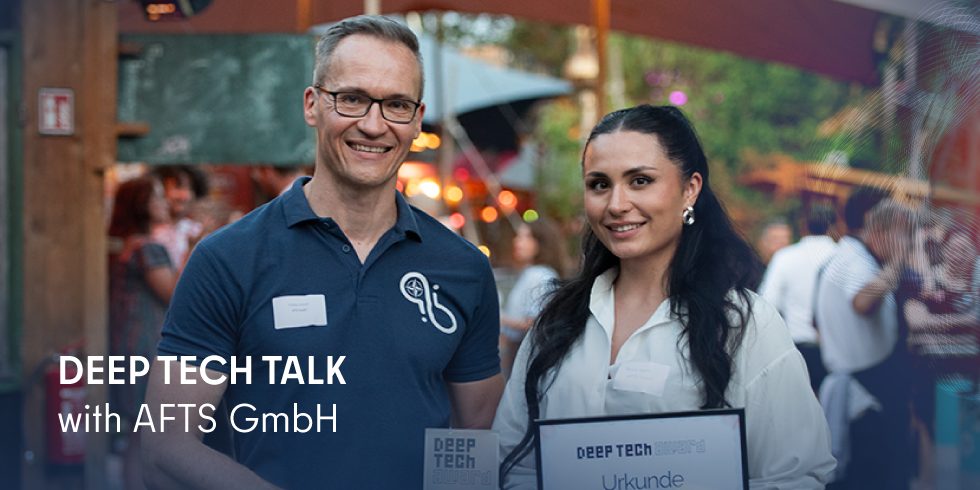
AFTS GmbH leverages Web3 technology to digitize NATO military supply chains, replacing outdated paper-based systems with encrypted, real-time transactions. Their work enhances the security and resilience of democratic infrastructures. At the crossroads of defense and blockchain innovation, they are bringing transparency and efficiency to critical logistics. Berlin’s unique deep tech landscape supports their mission to modernize defense infrastructure.
What inspired the founding of your company – and what personal story is behind your idea?
AFTS emerged from the intersection of blockchain expertise and critical supply chain challenges. As founders, Christoph Langewisch and I, Andreas Hofmann, witnessed how paper-based processes were failing in complex global operations. My 16+ years at companies like Symrise and Beiersdorf revealed urgent needs for transparency and security.
The turning point came when we discovered NATO’s weeks-long paper-based Form 302 customs processes for military goods. We realized our blockchain expertise could transform defense logistics security. This wasn’t just about efficiency – it was about strengthening the infrastructure that protects democratic values across the alliance.
How would you describe your company’s philosophy – what drives your team and what is your long-term vision?
Our philosophy centers on “trust through transparency.” We believe blockchain technology creates unbreakable trust in critical processes that protect society’s security. Every line of code serves a purpose beyond profit: strengthening democratic institutions’ technological backbone.
Our team is driven by knowing our work directly contributes to NATO’s operational effectiveness. Our long-term vision is becoming the leading blockchain infrastructure provider for defense applications, creating new standards for transparency and interoperability in military logistics across NATO member nations. We envision real-time, cryptographically secured transactions replacing outdated paper processes.
What makes your solution particularly innovative from a technical perspective – and where do you see its greatest societal impact?
Our innovation lies in creating decentralized blockchain architecture ensuring highest security, complete traceability, and interoperability across NATO member nations. We transform NATO’s weeks-long paper-based Form 302 customs processes into real-time transparent transactions with cryptographic protection.
Our solution addresses unique military logistics challenges: multi-national interoperability, tamper-proof documentation, and real-time visibility. The decentralized nature eliminates single points of failure while maintaining required security standards.
The greatest societal impact is strengthening democratic security infrastructure. By digitalizing NATO’s customs processes, we enable faster deployment capabilities and enhanced operational readiness. Our solution delivers 90%+ time savings, 100% traceability, and enhanced security – directly improving defense capabilities protecting democratic values.
Why is Berlin the right place for you and what do you appreciate most about the local deep tech ecosystem – also with regard to their field of technology?
Berlin provides the perfect environment for defense-focused blockchain development. The city’s position at the intersection of European politics, technology innovation, and NATO partnership makes it ideal for developing alliance-serving solutions. Proximity to EU institutions and NATO coordination centers gives us direct stakeholder access.
The local deep tech ecosystem offers unparalleled blockchain expertise and regulatory knowledge essential for defense applications. Berlin’s startup community, combined with strong security technology traditions, provides both technical talent and understanding of complex regulatory requirements. The city’s commitment to democratic values perfectly aligns with our mission to strengthen NATO’s technological capabilities.
Which technological or societal developments do you currently find most exciting – and why?
We’re most excited by blockchain technology’s convergence with defense digitalization. NATO’s 2024 Digital Transformation Implementation Strategy represents a paradigm shift toward digital technology for multi-domain operations, creating unprecedented opportunities for blockchain solutions to become integral to alliance operations.
From a societal perspective, renewed focus on democratic resilience and defense capabilities creates perfect conditions for solutions strengthening democratic institutions through technology. The recognition that cybersecurity and operational transparency are fundamental to national security validates our core mission. As paper-based processes become recognized security vulnerabilities, blockchain approaches become essential.