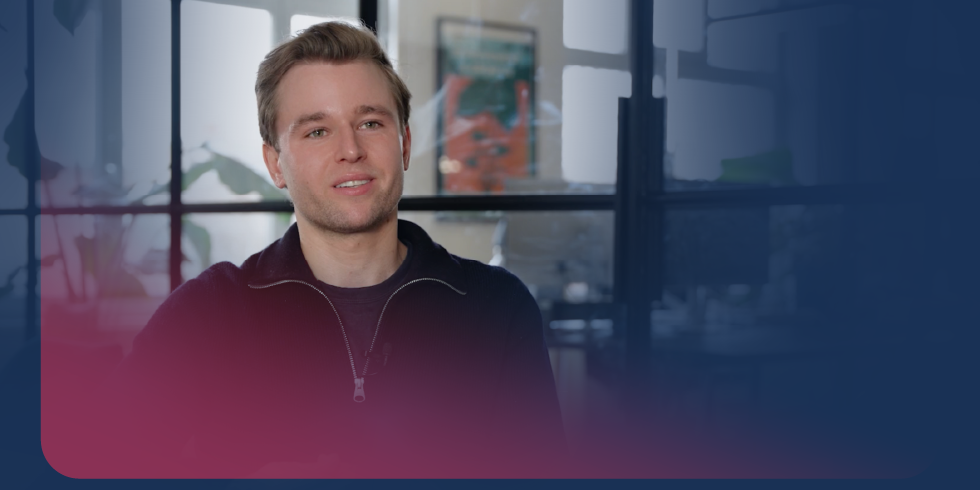
Noah Labs’ groundbreaking AI technology – capable of detecting worsening heart failure simply from a patient’s voice – has earned the team the Deep Tech Award 2025 in the AI category. The innovation marks a significant leap in remote diagnostics, offering a low-barrier, smartphone-based tool that can help prevent hospitalizations and enable earlier clinical intervention. In our Deep Tech Star Talk, CEO Oliver Piepenstock and Chief Medical Officer Dr. Leonhard Riehle share how the award has accelerated their momentum, what it means for clinical validation and adoption, and how Berlin’s AI ecosystem supports their mission to transform patient care.
Hello Oliver, hello Leonhard. Could you please introduce yourselves?
Oliver: My name is Oliver, and I’m one of the three founders and the CEO of the company, which we founded in 2021. Within the founding team, I’m responsible for the business side of things. This includes HR and all hiring-related topics, as well as sales, commercial strategy, and business development—essentially everything that is non-medical and non-technical, which my two co-founders cover.
Leonhard: Hello, I’m Leo, also one of the three founders. I’m a physician by training and previously worked in cardiology. At Noah Labs, I serve as Chief Medical Officer. I’m responsible for all clinical trials and studies and for ensuring that what we develop ultimately provides real benefits for patients.
What does Noah Labs do exactly?
Oliver: Noah Labs has developed the world’s first technology that can detect heart failure from a patient’s voice. We analyze voice samples recorded via a smartphone or other smart devices and screen them for signs of worsening heart failure, which is essentially a weakening of the heart muscle. When our system detects something concerning, we send an alert to the physician, indicating that a specific patient may be at risk so that timely action can be taken.
Was there a specific moment or problem that inspired you to found and develop your technology?
Leonhard: We are currently focused on heart failure as a key disease because—something many people don’t realize—it is actually the leading cause of hospitalization in Germany. Around four million people in Germany live with heart failure, and it is a highly debilitating condition.
The prognosis is also much worse than for many cancers. Within five years, about 50% of patients die. Each hospitalization significantly reduces life expectancy, which is why our mission is to keep patients out of the hospital and prevent these downward spirals.
Can you explain what makes your solution special?
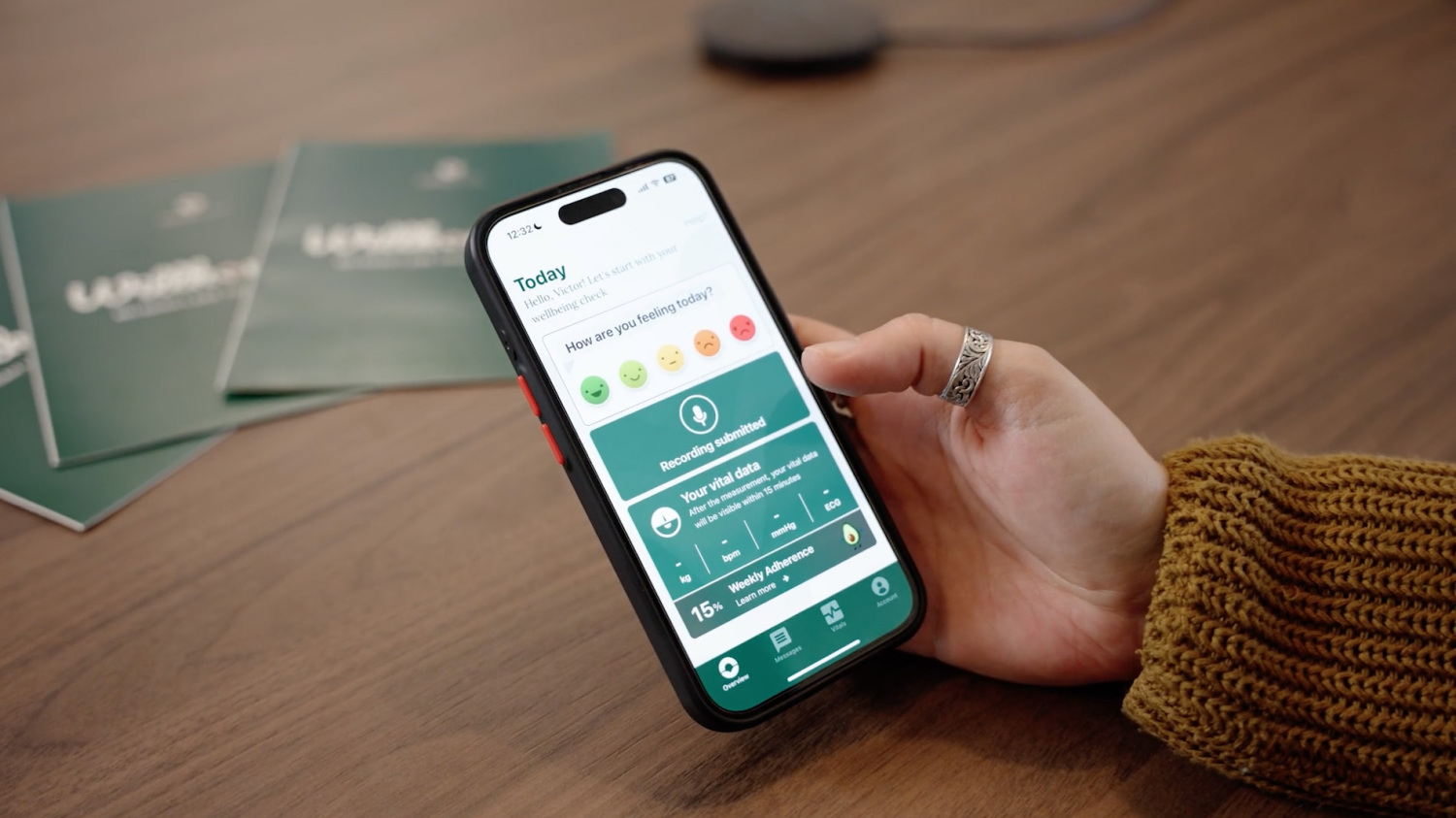
Leonhard: We have developed a voice biomarker that works with nothing more than a simple smartphone. Patients speak into their phone at home, reading a few sentences and recording a single vowel. This data is then analyzed by our algorithm, which examines different parameters and features in the human voice that are indicative of worsening heart failure.
Can you elaborate?
Leonhard: You can think of heart failure as a problem of fluid overload. When the heart, acting as a pump, no longer works properly, it struggles to maintain fluid balance in the body. Heart failure patients often accumulate excess fluid, which can impair breathing.
We can detect this in the voice. Too much fluid in the lungs changes how a person sounds, and the vocal folds can swell. Similar to how a guitar string behaves, this swelling dampens the sound and alters the frequency, typically resulting in a lower voice. Our algorithm captures several hundred of these characteristics and uses them to alert clinicians. This allows physicians to intervene early – for example, by adjusting medication.
Winning the Deep Tech Award 2025 is a great recognition of your work. What new opportunities, collaborations, or visibility might this have created?
Leonhard: The award ceremony itself was an amazing experience, with a great deal of energy and many fellow entrepreneurs and companies present. Sometimes this strength goes unnoticed, but Berlin truly has a strong ecosystem with many brilliant minds.
Oliver: Absolutely. Since winning the Deep Tech Award 2025, we’ve reached two major milestones. First, we completed our validation trial, demonstrating that our voice analysis technology actually works. This type of validation is essential, and the results are currently undergoing publication in a scientific journal, where they will soon be available for public review.
Second, we have moved into the interventional phase. Initially, you typically analyze data retrospectively to see whether hospitalizations could have been predicted. Now, we are actively signaling to physicians or healthcare providers when a patient is at risk, enabling them to take action. In heart failure care, this often means adjusting medication dosages to prevent hospitalization.
What’s so special about Berlin’s AI and med tech ecosystem?
Oliver: For me, three main factors make Berlin stand out. First, the city has an exceptionally strong AI ecosystem, particularly in medical applications. Very few places in the world combine this with the scientific rigor provided by institutions like Charité and other hospitals, while also attracting so much international talent.
Finally, there’s the business aspect. Access to funding is crucial for a startup like ours. We rely on financial resources to bring our technology to patients. Berlin offers access to both non-dilutive funding, such as European Union and local government grants, as well as dilutive funding through venture capital investments. At Noah Labs, we have deliberately focused on combining both approaches.
How do you ensure that your technology is used ethically and transparently? What principles or guidelines shape your approach to AI?
Oliver: Protecting patient data is a top priority for Noah Labs. We handle highly sensitive information, including health data and voice recordings, which are deeply personal. We take extensive precautions to ensure data security and to make sure patients understand what happens to their data.
Transparency is the first step. We clearly explain how and where data is stored—in our case, on servers located in Germany—and how it is processed. For example, we segment voice samples and annotate them to indicate whether a patient was in a stable or unstable condition at a given time. This allows our machine learning models to learn effectively, and it’s something patients need to understand from the outset.
This openness helps build trust, which in turn encourages more patient participation and data sharing. Patients develop a relationship with us and understand that our work ultimately serves others who suffer from the same condition.
Artificial intelligence is developing rapidly. What opportunities do you currently see—and where are the biggest challenges in the responsible use of AI?
Oliver: Until recently, AI developments were visible across many industries, but healthcare faced significant barriers—on the patient side, the physician side, and from a regulatory perspective. That is now changing. Authorities have recognized the potential of AI and have introduced processes that allow improvements to existing medical devices without requiring full recertification.
Whether under the European MDR or through the FDA in the US, these changes have opened the door for more AI applications in medicine. Over the past one or two years, we’ve seen much higher adoption rates among both doctors and patients.
Radiology is a prime example. Today, almost every radiologist uses AI, as the software excels at identifying patterns in MRI or X-ray data and supporting diagnosis. Physicians still make the final decisions, but AI significantly enhances productivity. That is also our goal at Noah Labs – to help physicians work more efficiently so they can deliver better care and ultimately enable patients to live healthier lives.
What motivates you personally and as a team to work on the further development of AI every day?
Leonhard: What motivates me is the reason I went into medicine in the first place: making a difference. Helping people who suffer from severe diseases with limited quality of life and life expectancy is what unites everyone here.