Current language: English

Museum Berlin-Karlshorst

  • Museum Berlin-Karlshorst

    View of the Kapitulationssaal (surrender hall) of what is now the Museum Berlin-Karlshorst. It was here that the document of unconditional surrender of the Wehrmacht was signed.

  • Museum Berlin-Karlshorst

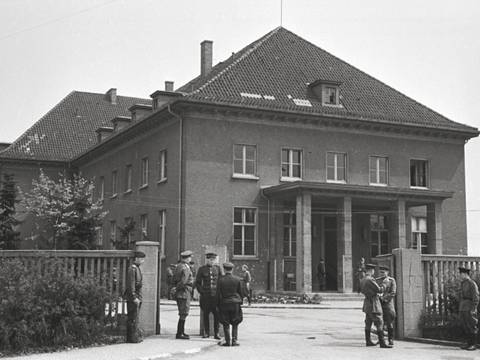
    View of the Museum Berlin-Karlshorst.

  • Museum Berlin-Karlshorst

    A woman stands at the Museum Berlin-Karlshorst in the so-called Gedenkflur (memorial corridor).

  • Museum Berlin-Karlshorst

    The tank memorial in front of the Berlin-Karlshorst Museum is decorated with flowers during the celebration of the 70th anniversary of the end of World War II.

  • Museum Berlin-Karlshorst

    A man looks at historic military vehicles on the grounds of the Museum Berlin-Karlshorst. Following Russia's attack on Ukraine, the original name "German-Russian Museum" has now been changed to "Place of Surrender May 1945."

On May 8, 1945 the end of World War II in Europe was decided in the building of the Museum Karlshorst (formerly the German-Russian Museum) with the surrender of the German Wehrmacht. This historic event is commemorated at the museum.

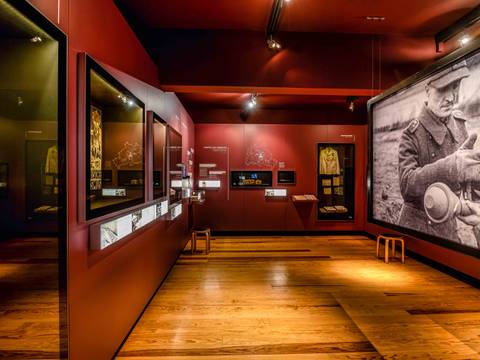
The museum's permanent exhibition focuses on the war of conquest and extermination waged by the German Reich against the Soviet Union from June 1941. Both sides of the historical events - i.e. both the German warfare and the Soviet defense - are presented. The museum also holds regular special exhibitions and educational events, including lectures, panel discussions, readings and more.

Historical Objects, Photographs and Film Documents

Numerous photographs, documents and original objects illustrate the relationship between the German Reich and the Soviet Union during World War II. Over 50,000 photographs and prints document the German-Soviet war and the presence of Russian soldiers in Germany. A larger time span is covered by the museum's document collection, which reflects the relations between the two states from World War I to the present day in historical documents, letters and maps. The museum's collection of objects shows mainly militaria from the Second World War.

Museum Berlin-Karlshorst: Current events and exhibitions

The German Surrender in May 1945

On 8 May 1945 World War II ended in Europe with the surrender of the German Wehrmacht in Berlin-Karlshorst. more

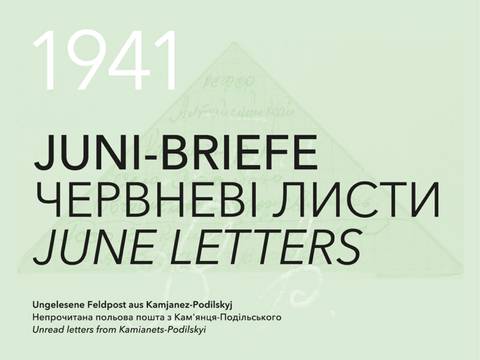
Germany and the Soviet Union in the Second World War 1941-1945

The Second World War began on 1 September 1939 with the German invasion of Poland. It ended in Europe on May 8, 1945, and in Asia on September 2, 1945. Never before were more people killed and greater destruction wrought in a war. This applies in particular... more

Polyphony in border regions: Bukovina

In the novel "Tango in Czernowitz", Oleg Serebrian focuses on the Ukrainian-Romanian border region of northern Bukovina, which is characterized by cultural diversity, changing state affiliations and drastic political upheavals. Annexed by the Soviet Union... more

Address, Opening Hours and Contact Information

Map view

A map view follows. Skip map

City map

End of map view

 Address
Zwieseler Str. 4
10318 Berlin
Phone
+49 (0)30 501 508 10
Internet
www.museum-karlshorst.de
Opening Hours
Tuesday to Sunday 10 a.m. to 6 p.m.
Accessibility
Wheelchair accessible. A rental wheelchair is available for visitors.
Admission Fee
Free

Public transportation

Related Content

Bode-Museum

Berlin Museum Guide

Berlin's top museums with adresses, informations, opening hours and public transport.  more

Berlin Mauer

History of Berlin

History of the city of Berlin: eras, history of the districts, museums and monuments, National Socialism and the Berlin Wall.  more

Source: Museum Karlshorst/Berlin.de

Last edited: 14 November 2025