A new exhibition at Spandau Citadel sheds light on the history of the war crimes prison.
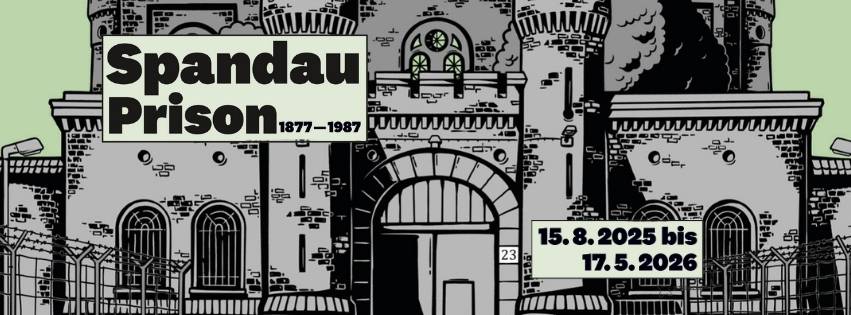
Spandau Prison. 1877 – 1987 – Comiczeichnung vom Spandauer Prison mit dem Schriftzug "Spandau Prison" und den Jahreszahlen 1877 - 1987
© Wiktor Dubnow (@inktor_art) und Björn Stäbe (@ghoollustration)
"And where was Rudolf Hess imprisoned here?" is a common question asked by visitors to Spandau Citadel. The answer is: "Nowhere." The so-called war crimes prison, where Hess was the last prisoner, was located in Wilhelmstadt in Spandau: work began there in 1877 on a new "Central Fortress Prison", where soldiers and prisoners of war who had committed crimes were imprisoned from 1881. After a spectacular liberation operation during the November Revolution in 1918, the building, designed for 300 prisoners, served as a prison for civilians until 1933. Immediately after the Reichstag fire, the National Socialist government used the prison as a place of "preventive protective custody". A large number of political prisoners were held here until 1945, most of whom were sentenced to death - including women for the first time, particularly those from the Polish resistance.
However, it is above all the prison known internationally as "Spandau Prison" for the seven war criminals sentenced to prison in Nuremberg that remains in our memories today - although it was demolished immediately after Hess' suicide in 1987. To mark 80 years since the end of the war, the exhibition in the citadel's armory tells the entire story of the prison. In addition to a number of objects and pictures, some of which have never been shown before, interviews with contemporary witnesses in particular provide new perspectives - and the idea of translating some events into the visual language of comics provides food for discussion. The history of the prison also triggers discussions about contemporary issues: What should be the aim of prison sentences in a democratic society? What are the consequences of international arrest warrants against state leaders today? How do conspiracy narratives come about? Is the demolition of buildings from the Nazi era effective in preventing right-wing extremist marches on the ground, for example?
You are cordially invited to inform yourself in the exhibition and the accompanying program and to participate in the discussion!Translated with DeepL
Runtime: Fri, 15/08/2025 to Sun, 17/05/2026
Price info: Every 1st Sunday of the month is Citadel Sunday and admission is free .
Price: €4.50
Reduced price: €2.50
Reduced price info: Pupils - children aged 6-14 - students - trainees - people who receive transfer benefits (ALG II, social welfare, benefits under the Asylum Seekers Benefits Act) - GdB 50, MdE on presentation of the relevant ID.
Public guided tours of Spandau Citadel
every Saturday and Sunday at 2 pm
€4.50 per person plus Citadel ticket
(on the last Saturday of the month, the tour goes through the exhibition "Unveiled. Berlin and its monuments")
Takes place here: