Search
Dates, information and advance booking of tickets for almost all events in Berlin. For many performances you can choose your seat in the seating plan.
100+ events
© (c) SIMPK/Anne-Katrin Breitenborn
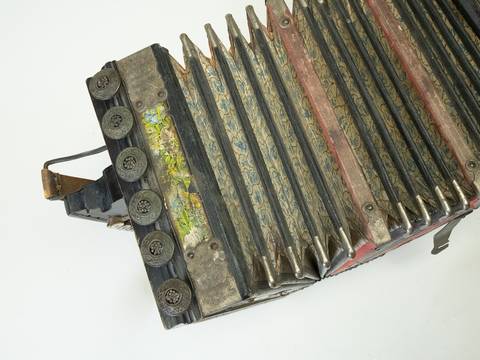
The accordion is a well-known instrument in many genres: folk and popular music, jazz and dance music, as well as contemporary music. Yann Tiersen's soundtrack for the film Amélie made its sound familiar to millions of listeners.
The notes are produced...
moreabout: The Accordion
© SDTB / Foto: C. Kirchner
How do information and communication networks work? How do they change our everyday lives? And: Why do we actually network? With many exhibits, the exhibition shows how we realize our desire for networking. These include, for example, the desk telephones...
moreabout: The network
© Sammlung Stiftung Stadtmuseum Berlin
Female artists in Berlin around 1800
This compact exhibition showcases female students and the daughters of the artist – their lives, works and personal stories.
The graphic artist Daniel Chodowiecki (1726–1801) was one of the best-known artists of his...
moreabout: Chodowiecki 300
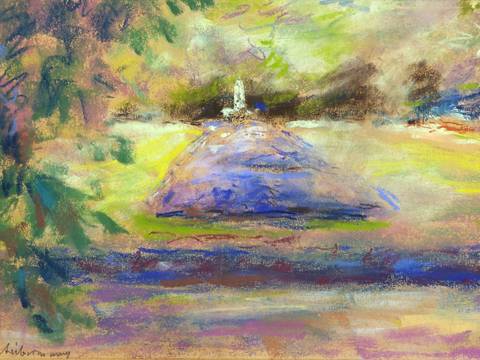
We dedicate the summer of 2026 to pastel art: Over the years, Max Liebermann (1847–1935) created more than a hundred pastel works. These drawings were initially exhibited as an independent series of artworks by the publisher and art dealer Bruno Cassirer...
moreabout: In Focus: Liebermann's Pastels
© Nationalgalerie, Staatliche Museen zu Berlin
In the special presentation at the Alte Nationalgalerie, works by artists from the 19th and late 20th centuries are brought together in select locations throughout the building.
In 1876, the National Gallery opened as a home for contemporary art. Today,...
moreabout: Across Epochs
© Prof. Dr. Wolfgang Ernst (Medienarchäologischer Fundus), © Foto: Felix Sattler
80 things. 26 collections. 1 multimedia guide. ∞ Links.
VISIT ONLINE NOW at
What connects a photograph of St. Mary's Church in Prenzlau with a rock sample of glacial till? Is there a common tool for understanding a crystallographic model and pottery...
moreabout: Meshwork of Things
With the end of the GDR, its symbols also lost their validity. In the weeks and months leading up to October 3, 1990, public spaces had already undergone visible changes. Signs of SED rule were removed, much of it ending up in bulk waste containers or...
moreabout: A country in a container
The permanent exhibition "Detained in Hohenschönhausen: Evidence of political persecution 1945 to 1989" shows around 500 rare exhibits and more than 300 historical photographs on 700 square metres.
moreabout: Imprisoned in Hohenschönhausen
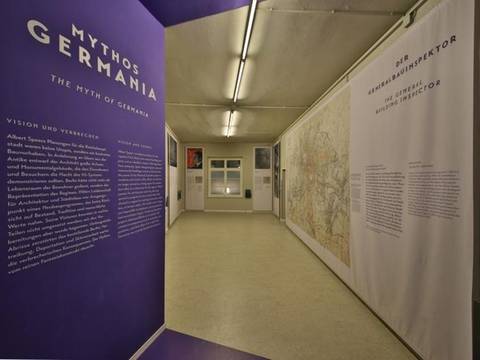
Albert Speer's plans for Berlin were not a utopia, but a concrete building project. As general building inspector, the architect designed broad axes and monumental buildings of enormous dimensions that were intended to demonstrate the Nazi system's claim...
moreabout: Myth Germania: Hitler's Plans for Berlin
How will we live in the city of the future? "SuperCity 3000: Our city of the future" is dedicated to a highly topical, socially relevant issue, because the design of cities is an urgent challenge of the present that affects all areas of people's lives....
moreabout: SuperCity 3000.
© Stiftung Humboldt Forum im Berliner Schloss / Alexander Schippel
Netta Weiser (born 1991 in Israel) works across sound installation, performance, and experimental radio. The Humboldt Forum Listening Space presents the artist's first sound exhibition in Berlin. In her interdisciplinary practice, Weiser develops choreographic...
moreabout: fuga
© Gedenkstätte Deutscher Widerstand
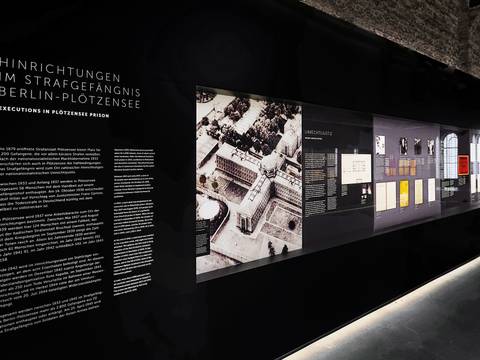
The Plötzensee Memorial for victims of National Socialism from Germany and abroad is a European place of silent remembrance. Between 1933 and 1945, more than 2,800 people were executed here following unjust sentences handed down by the Nazi judiciary....
moreabout: Plötzensee Memorial
The help page for the event calendar answers common questions..
Information about coperations and imprint can be found on our page about partners and terms and conditions.