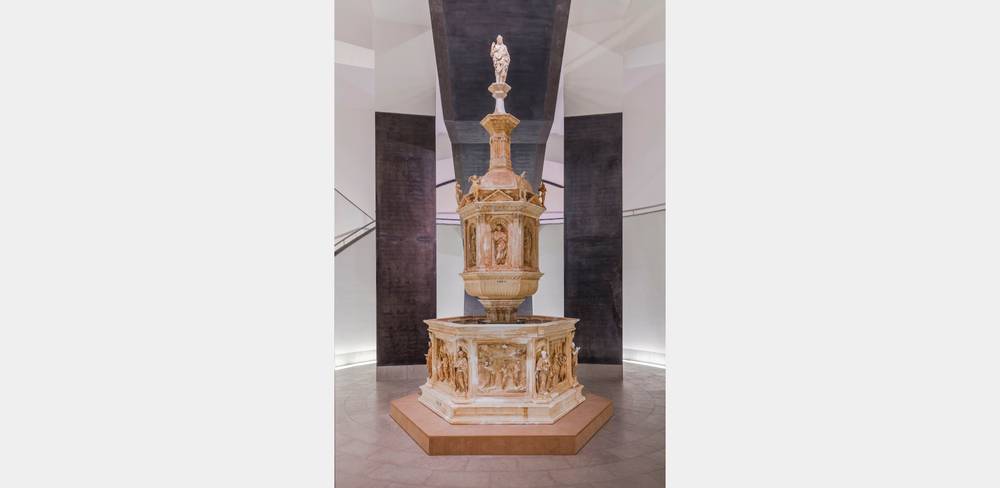
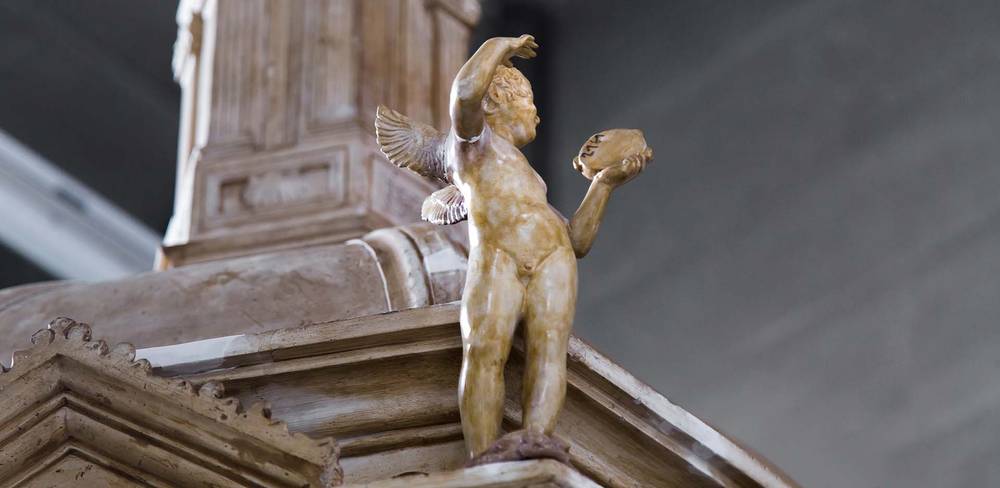
In the crypt of the Bode Museum, the room under the Small Dome that will form the transition to the Archaeological Promenade in a few years' time, the Sculpture Collection and the Gipsformerei will be showing a joint permanent presentation from fall 2024. Only one object from each of the collections of the two museums will form the exhibits of this small exhibition: the bronze statuette "Putto with Tambourine" (1429) by Donatello from the Sculpture Collection, which is almost forty centimetres tall, and the plaster model of the baptismal font of Siena, which is over five meters high and was created in the workshop of the Gipsformerei in 1876. In addition to the shared history of the two pieces, a research panorama also reveals their connections to the history of the Staatliche Museen zu Berlin.
The baptismal font in the Baptistery of San Giovanni in Siena is a masterpiece of the Italian Renaissance. It was created between 1416 and 1434 by six sculptors, including Donatello. Several bronzes can be traced back to him, including a putto that has been in the sculpture collection of the Staatliche Museen zu Berlin since 1902. Wilhelm Bode discovered it on the London art market after it had been missing from Siena for centuries.
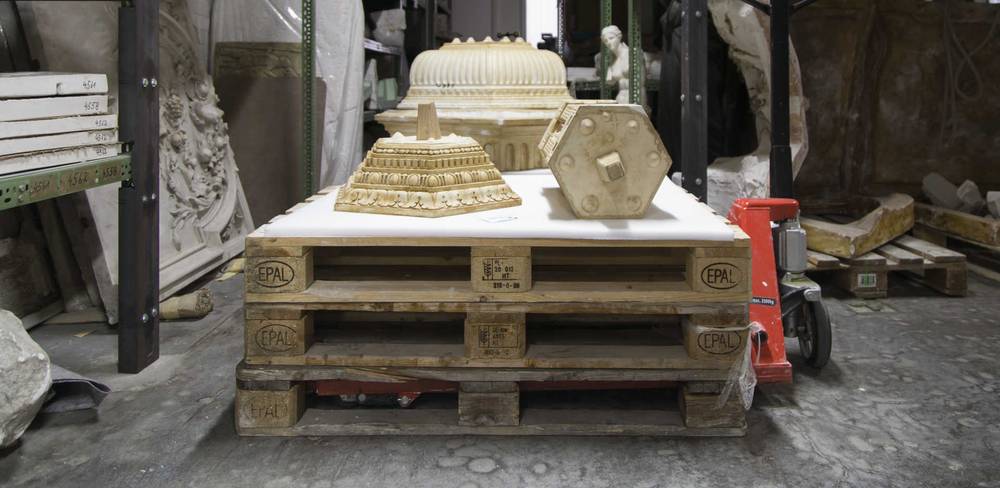
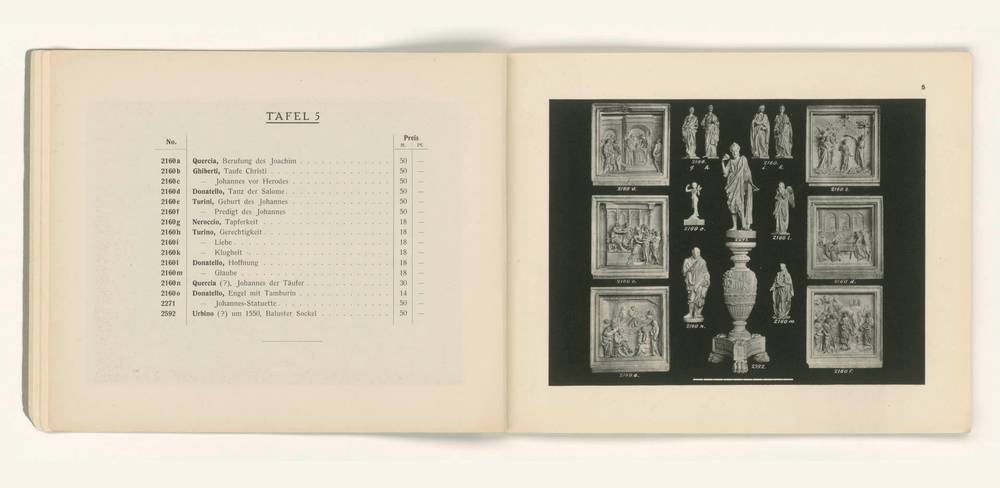
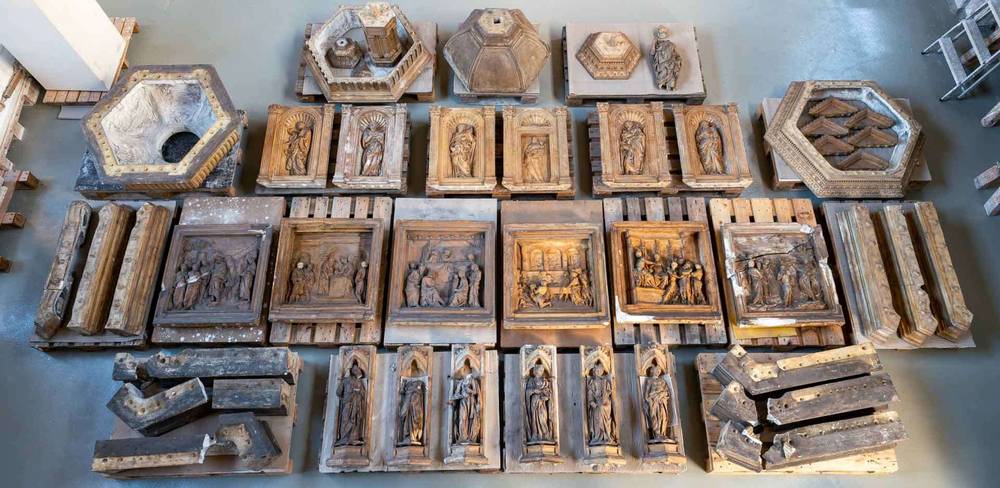
In addition to the bronze statuette, however, the baptismal font has also left its mark on Berlin in other ways: The collection of the Gipsformerei includes a 59-part plaster model of the monument, which was cast in 1876. Shortly before this, an Italian plaster casterer had spent months making plaster molds directly from the Sienese baptismal font and sent them to Berlin. In this way, the Berlin museums acquired plaster casts of over 150 Italian Renaissance works in the 1870s and 1880s - and the Gipsformerei acquired a significant stock of molds that are still used today in the production of casts.
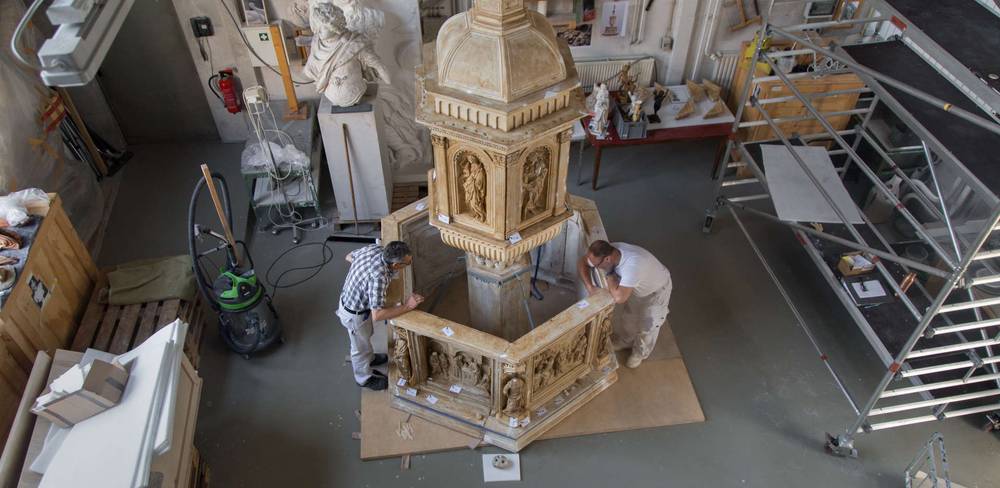
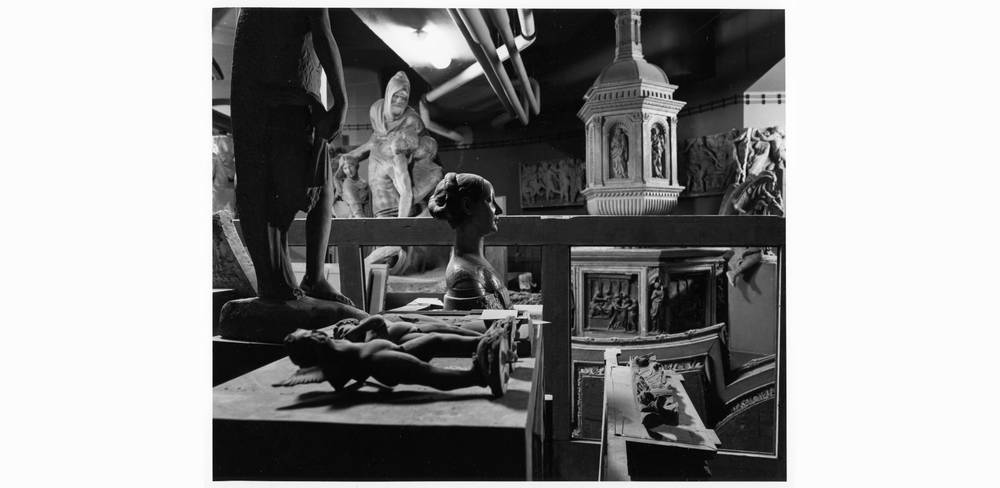
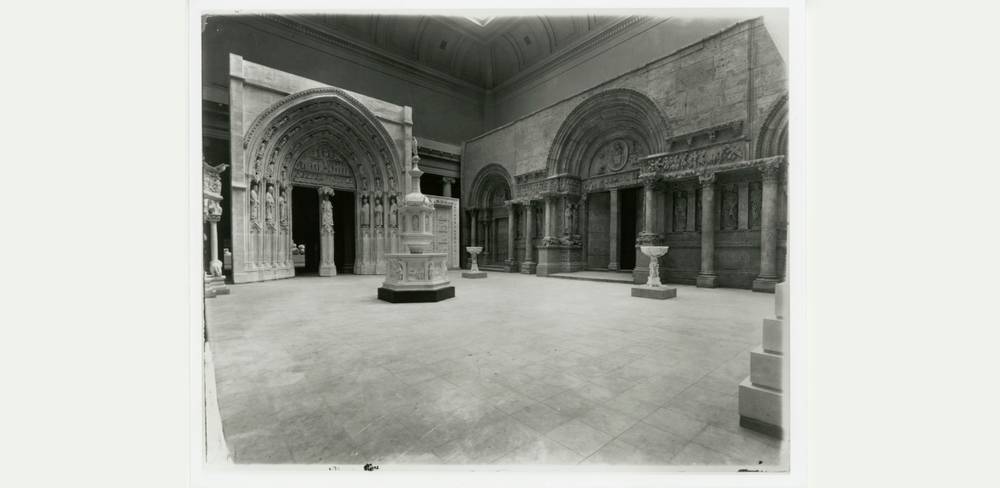
In the second half of the 19th century and the first half of the 20th century, plaster casts played an important role in museum presentation. From the 1850s, casts of Italian Renaissance paintings were presented in the Neues Museum and from 1911 in five exhibition rooms in the Bode Museum. Today they are in storage and have been forgotten - unjustly, as this exhibition aims to show. Donatello's bronze "Putto with Tambourine" and the monumental plaster model of the baptismal font, which was extensively restored in 2023, meet in the chapel-like crypt of the Bode-Museum. Not only the art-historical context of the putto is made tangible, but also a piece of Berlin museum history. The plaster model in particular is honored: the exhibition traces the various facets of the object's biography and sheds light on the original cast in Siena as well as the history of the model's creation and use in Berlin. The plaster model appears as a historical work in its own right and makes it clear that casts are always originals themselves.
Publication accompanying the exhibition
The exhibition is accompanied by a publication published by Schnell + Steiner with contributions by Aurelia Badde, Eckart Marchand, Ricardo Mendonça, Neville Rowley and Veronika Tocha as well as photographs by Fabian Fröhlich, which illustrate the restoration of the plaster model and its very own characteristics.
Curatorial team
The exhibition is curated by Neville Rowley and Veronika Tocha.
The restoration and reconstruction of the model was carried out by Aurelia Badde in collaboration with Judith Kauffeldt and the Gipsformerei, in particular Günter Fromme, Stefan Kramer and Thomas Schelper with the assistance of Lothar Bogdanski, Isabelle Irrgang, Daniel Meyer and Robin Schulz.
The restoration was generously supported by the Ernst von Siemens Kunststiftung.
The exhibition was made possible by the Kaiser Friedrich Museumsverein, with the support of Museum & Location.
The publication was made possible by the Ernst von Siemens Kunststiftung and the Kaiser Friedrich Museumsverein.
A permanent exhibition of the Gipsformerei and the Skulpturensammlung of the Staatliche Museen zu BerlinTranslated with DeepL