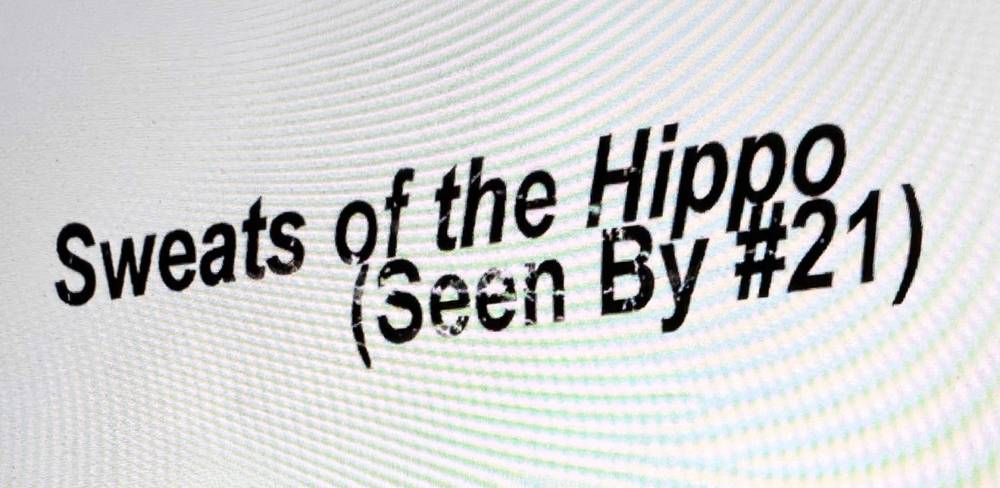
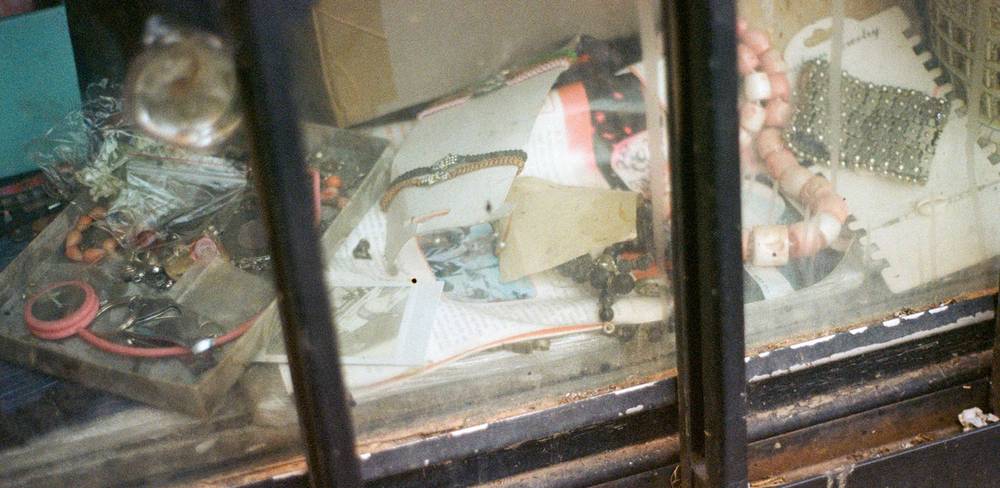
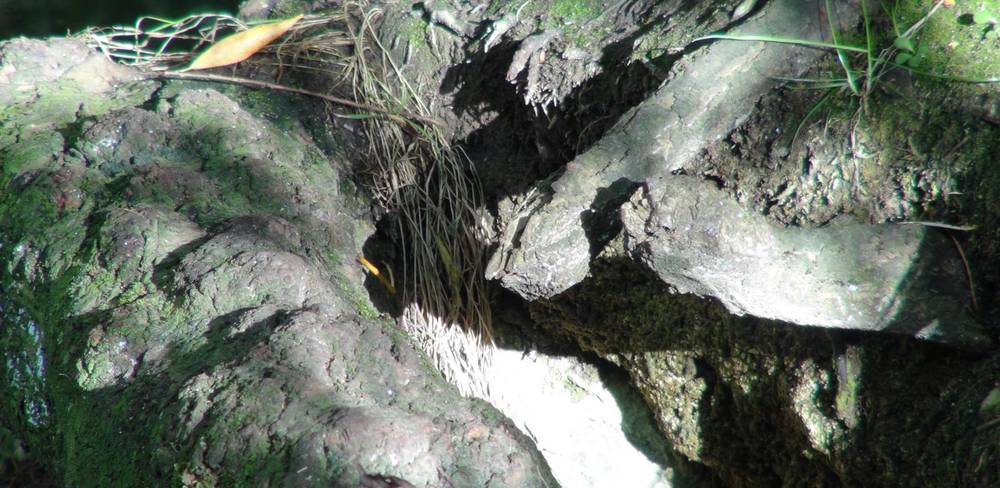
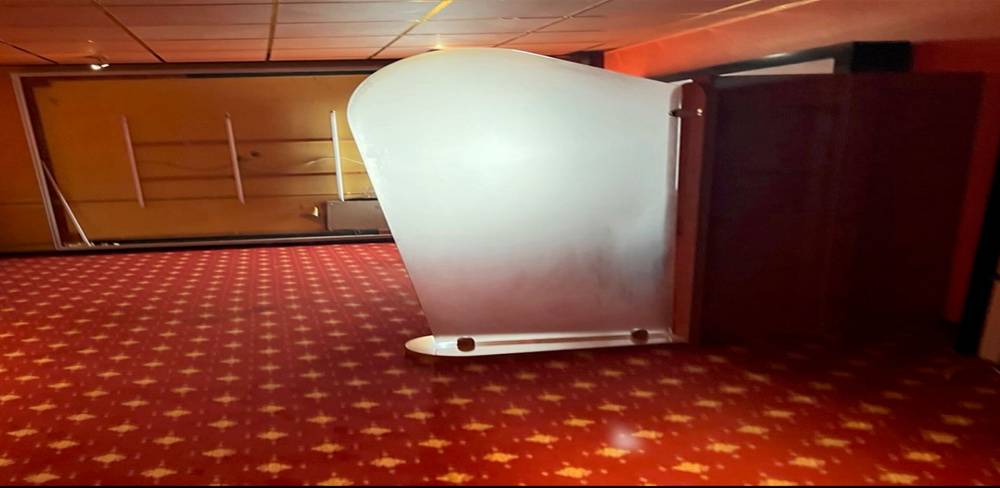
Can materials and tools such as paper, paint, emulsion, lenses or data be understood as the infrastructures of artworks? Particularly with photography, they tend to remain in the background. At the same time, materials respond to light, temperature and time: they age, change colour and consistency, become brittle or begin to glitch, and in doing so shape how we perceive what we see. Often they only come to our attention when they stop working as they should. When this happens, they resemble the infrastructures that surround us every day: architecture, landscapes, networks, economies and language. Sweats of the Hippo brings together works by seven artists who trace these relationships.
When Images Sweat
Hippo sweat is a thick, resinous secretion that seeps from the animal’s pores as soon as it leaves the water. Colourless at first, it turns reddish orange within minutes of contact with air. Its pigments absorb UV radiation, act as an antibiotic and help regulate body temperature. At once an organic film, filter and tint, it calls to mind a photographic emulsion.
The exhibition takes its title from an essay of the same name by art historian Yve-Alain Bois. In it, Bois revisits a juxtapositional comparison drawn by Georges Bataille: on the one hand, the noble horse as depicted on Greek coins, the very embodiment of the Classical ideal and of Platonic philosophy; on the other, the monstrous creatures of the Gaulish imitations, which Bataille likens to the hippopotamus. Even linguistically, playing on the Greek root of the word, Bois observes that the hippopotamus is the grotesque caricature of the all-too-dignified hippos (horse). The hippopotamus is fat, it sweats, it threatens to melt, just as Jean Dubuffet’s asphalt paintings did in 1944. For Bois, this melting stands for formlessness, which is not simply the opposite of form but an operation that destabilises form, debases it, makes it sweat, and thereby challenges the notion that every medium possesses a pure form of its own. But what happens when the sweating itself becomes the work? Bois’ answer leads to photography: he cites Raoul Ubac, who in 1939 heated the emulsion of his negatives for his brûlages until the images literally liquefied, and Gordon Matta-Clark, who in 1969 fried photographic prints with gold leaf in a frying pan.
Following the Material
These examples reveal an artistic stance that regards material not as a mere vehicle for content but recognises it as an agent. It grants the material its own logic and endures the fact that processes and changes inscribe themselves into the work in ways that elude human control. At the same time, it understands the medium not as given but as made. But made from what, by whom and under what conditions? The emulsion that melts in Ubac’s work consists of silver extracted from mines and of gelatine obtained from animal hides and bones. Paper comes from forests and plantations; digital images reside on servers that require electricity and cooling. Even what is considered immaterial depends on rare earths, supply chains and precarious labour. Follow the material long enough, and you arrive at the infrastructures that produce it.
Making Infrastructures Visible
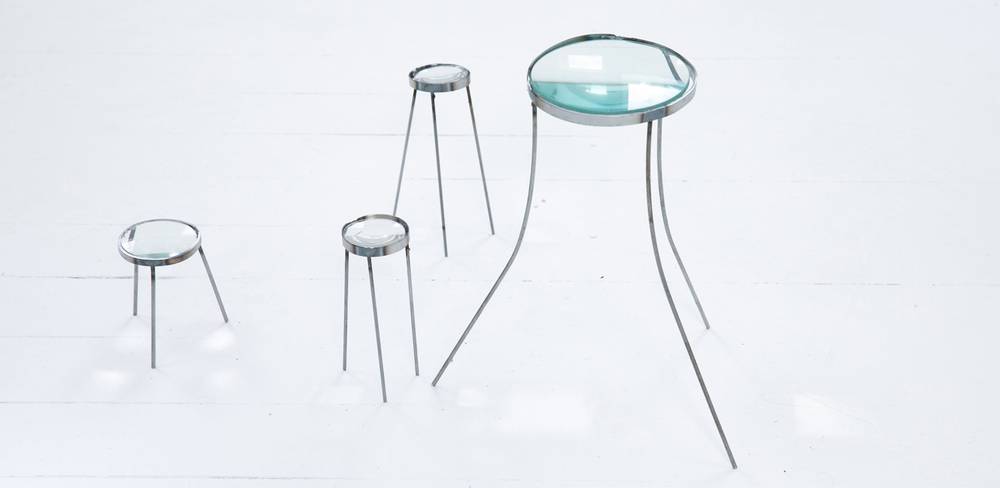
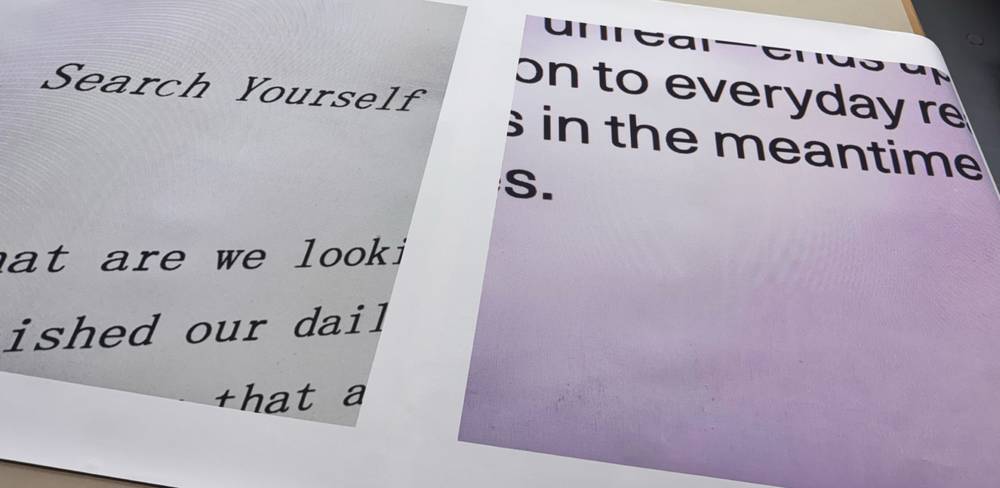
The works in the exhibition operate in this interplay between infrastructures and the materiality of their media: the artists take how their materials are implicated in questions of origin and availability as seriously as the materials’ own agency in the making of the work. Some incorporate the institution’s history and architecture into their works, making subtle interventions that unsettle habitual ways of seeing and behaving. Others work with the remnants of obsolete infrastructures, which bear the traces of time and use, and with glass and lenses, which we look through without noticing. Still others turn their gaze to landscapes transformed by infrastructure projects, allowing animals, plants and tremors to become collaborators in the image. The shifting of language and meaning, as a load-bearing structure of how we live together and of our collective memory, also comes under scrutiny. Not least, the artists negotiate their own desires as cultural producers in a capitalist attention economy.
Participating artists
With works by Linda Enseroth, Luka Naujoks, Jana Pressler, Maximilian Schmitt, Paula Schierholt, Sarah Schroth, and Aylin Derya Stahl.
Pia-Marie Remmers curated the exhibition.
The “Seen By” Exhibition Series
Seen By #21 is part of the “Seen By” exhibition collaboration at the Museum für Fotografie between the Kunstbibliothek (Art Library) ‒ Staatliche Museen zu Berlin and the Berlin University of the Arts. It aims to rethink curatorial and artistic strategies for engaging with contemporary photography.
A special exhibition of the Kunstbibliothek, Staatliche Museen zu Berlin, in collaboration with the Berlin University of the Arts
Runtime: Fri, 11/12/2026 to Sun, 10/01/2027