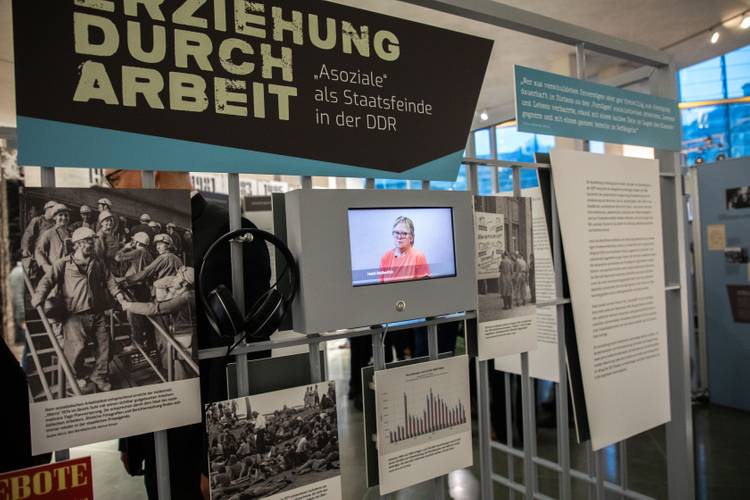
"Education through work. 'Asocials' as enemies of the state in the GDR" is dedicated to a largely forgotten chapter of GDR history: the systematic exclusion, disciplining and criminalization of people who were considered "asocial".
Anyone who did not conform to the ideal image of the "socialist person" - for example, due to their supposed work shyness, deviant lifestyle or political stance - was declared an enemy of the state. The media, authorities and judiciary shaped the image of "antisocial elements" as a threat to order, labor productivity and collective morality. "Education through work" shows the politically and ideologically motivated criminalization with the help of the "asocial paragraph".
The vague definition of "antisocial behavior" in the law made Section 249 a versatile tool for criminal prosecution. This is shown by the lives of the fourteen men and women portrayed in the exhibition. The spectrum of those affected ranges from punks to prostitutes, from people applying to leave the country to opposition activists.
The rigid approach of the SED regime produced "antisocial enemies of the state" in large numbers: between 1969 and 1989, around 146,000 convictions were handed down under Section 249, 125,600 of which resulted in imprisonment. Many of those affected would have needed help, but were criminalized instead. Those who were prosecuted and convicted under Section 249 experienced stigmatization and exclusion beyond their time in prison.
To this day, those affected only receive criminal rehabilitation and financial compensation for a conviction under Section 249 in individual cases
Translated with DeepL
Runtime: Mon, 16/03/2026 to Thu, 30/04/2026