The family is often seen as the smallest but most important building block of society, no matter where in the world you look. Family and kinship define social relationships and belonging through birth, marriage, or adoption, and set expectations regarding roles and responsibilities. Kinship creates social connections that help families and communities cooperate, share resources, and support each other. These relationships guide how people belong to groups, how inheritance works, and how social duties are shared.
The family is also the setting in which children first learn how to communicate, speak their language and understand the norms and values that guide daily life. Within the family, language and ways of living are passed on from one generation to the next, whether through stories, celebrations, admonitions and rules, or simple everyday habits. In this way, the family keeps language and culture alive.
State policies and political pressure — such as forced assimilation or discriminatory laws —can prevent family members to transmit their cultural heritage. Migration and displacement weaken family and community networks and the transmission of language and knowledge between generations. Globalization intensifies these dynamics through powerful external influences. As dominant global languages become common in education, work, and the media, local and minority languages often lose prominence. Economic pressures and labour migration reshape daily life and roles within the family. These processes combine and challenge cultural identity, making it difficult for many communities to maintain their languages and cultures in a rapidly globalising world.
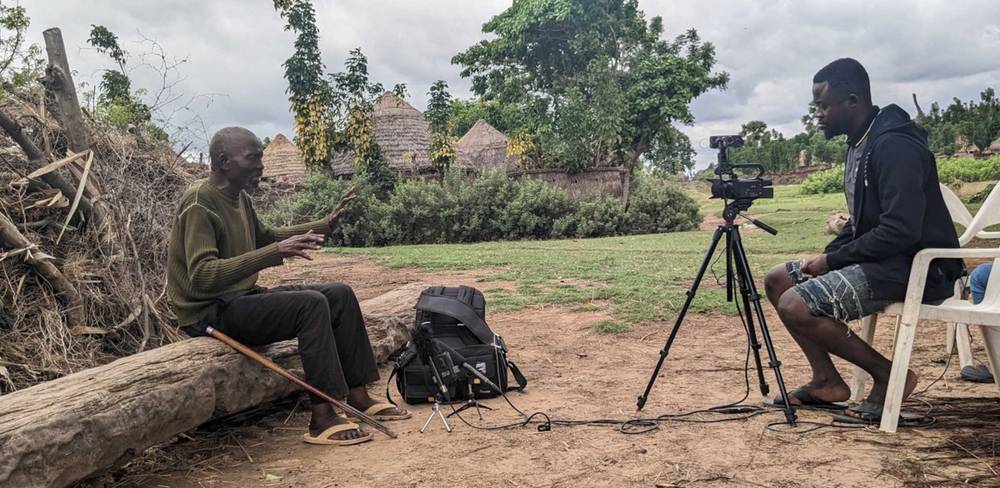
In the films, you will meet people from Indigenous communities who are documenting their language and culture before it is too late. In collaboration with the Endangered Languages Documentation Programme and the Endangered Languages Archive, they archive the materials and use them to create storybooks and learning and teaching materials for their communities. For this exhibition, they have recorded their views on the role of family and the importance of kin relationships. They describe their ways of life and the changes they are currently experiencing in their communities.
Curators
The exhibition was curated by Ute Schüren, Curator American Archaeology, Mesoamerica Collections, Ethnologisches Museum, Staatliche Museen zu Berlin, Stiftung Preußischer Kulturbesitz and Mandana Seyfeddinipur, Director Endangered Languages Archive & Endangered Languages Documentation Programme, Berlin-Brandenburgische Akademie der Wissenschaften.
The exhibition is part of the cluster Family Matters at the Humboldt Forum.
A temporary exhibition by Stiftung Humboldt Forum (SHF) im Berliner Schloss and the Ethnologisches Museum, Staatliche Museen zu Berlin, Stiftung Preußischer Kulturbesitz in cooperation with the Endangered Languages Archive & Endangered Languages Documentation Programme at the Berlin-Brandenburgische Akademie der Wissenschaften.