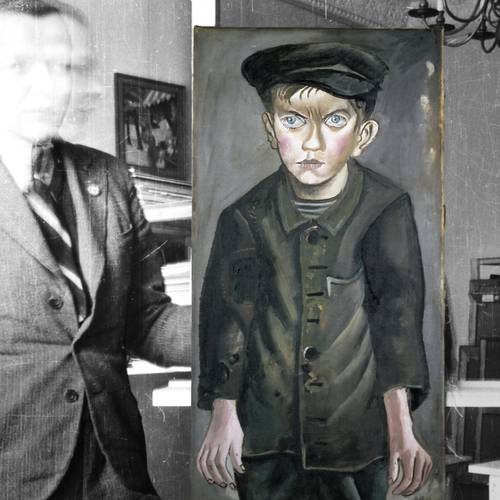
From late summer 1938 onward, approximately 3,750 artworks that had previously been confiscated from German museums as part of the "Degenerate Art" campaign were stored at Schönhausen House. From the beginning of their rule in Germany, the Nazis denounced modern art as "degenerate" or as "art of decay." In July 1937, they had numerous artworks transported from German museums to Munich, where they were displayed in the exhibition "Degenerate Art" in a deliberately mocking and disparaging manner. Subsequently, in a further campaign, more than 20,000 artworks were confiscated from around one hundred museums and brought to Berlin. Beginning in August 1938, a selection of approximately 3,750 artworks arrived at Schönhausen House. From there, they were to be sold abroad in exchange for foreign currency.
The expanded permanent exhibition provides insight into the cultural policies of National Socialism and presents Schönhausen House as an important site within this policy framework. By doing so, it fills a gap in the existing permanent exhibition, which covers the history of the House from its use as the summer residence of Queen Elisabeth Christine to its role as the guest house of the East German (GDR) government.
In five rooms, visitors can explore the events that took place at the House. They are introduced to selected individuals involved in the "disposal" of the artworks and learn how their sale was organized and carried out. The exhibition offers insight into the biographies, motivations, and scope of action of the people involved: employees of the Nazi administration, art dealers who facilitated the sales, and collectors who purchased the artworks stored at the House. One room is dedicated to the affected artists. Through selected examples, it presents the fates of several artists and makes their diverse experiences accessible through diaries and letters. Selected original artworks, together with accounts of their journeys up to the present day, illustrate the many facets of National Socialist art policy and its lasting consequences.
Price info: The Pankow Art Festival will take place on 13 and 14 June in the grounds of Schönhausen Palace. On both days, a €3.00 admission fee for the art festival must be paid to access the palace grounds.
To visit the palace itself this weekend, visitors will only pay the reduced admission price. There will also be amended opening hours: the palace will be open from 12 noon to 7.30 pm on both 13 and 14 June.
Due to these special arrangements, online tickets cannot be offered for these two days. Tickets are available on site only. We apologise for any inconvenience.
Price: €8.00
Reduced price: €6.00