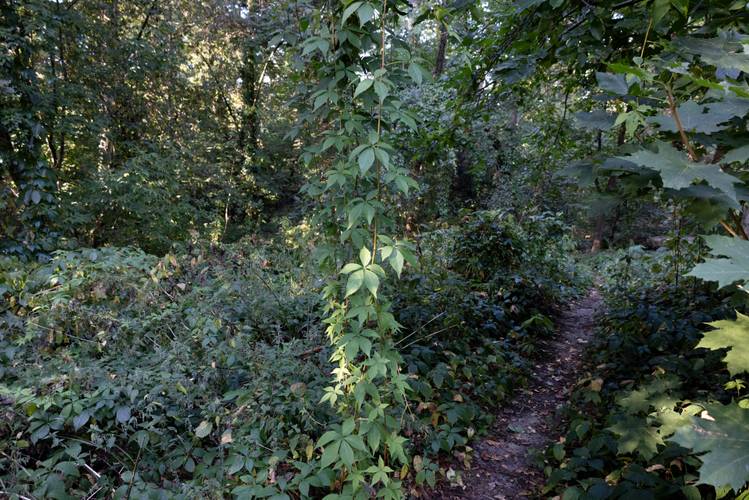
In the early 20th century, Ernst Ludwig Kirchner, Max Pechstein, Karl Schmidt-Rottluff and Erich Heckel left the cities behind to surround themselves with nature. Through their paintings, drawings, prints and woodcuts, they celebrated nature as a living force and the human body as a dynamic entity. A hundred years later, these works – many of which were painted outdoors – are exhibited in museums where they are protected from all natural influences. Museums ensure that temperature and humidity remain constant in order to preserve the exhibits. However, this preservation of artworks also leads to significant resource consumption.
How can a new relationship be forged between art and nature, between representation and reality? The Brücke-Museum is exploring this idea by creating an artistic nature trail on its forested grounds, where visitors can observe, experience and learn about the wonders of nature. How is the beauty of life perceived? What value is attributed to transience? And what happens during the cycle of the seasons?
Seven contemporary artists and collectives were invited to take part in the project, which aims to convey a new sense of coexistence between species. The works they have created broaden our perception of nature, address the coexistence of all living beings and visualise natural decay as an artistic process. As few resources and as little CO₂ as possible were used in the production of the new pieces. Unlike in a museum, the works are exposed to the elements in the natural environment, where they are tended by bees and guarded by foxes.
The forest trail invites you to explore – please note that it is in its natural state and not fully accessible. It is entered at your own risk.
At the same time inside the museum an exhibition focuses the central concern of the Brücke artists of rethinking the relationship between human beings and nature.