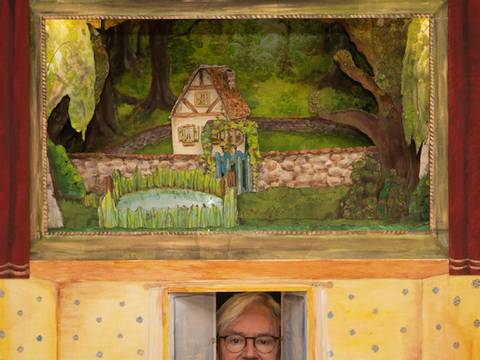
Hamed & Sherifa
What would it be like if there were no more injustice in the world? If we were to overcome the power structures that suppress people? If nobody were to destroy the Earth, and if peace finally prevailed? If everybody could live and love as they wished?
The fairytale of King Hamed and Princess Sherifa tells of another time. Men and women were usually placed in strict boxes, where they were to remain, thank you very much. Most people thought that all women loved pink and soft fabrics and gossiped all day, while men liked war and strong spices and never bathed. Only when Princess Sherifa disguised herself as a man and visited King Hamed, who had banned all women from his kingdom out of rage, did these certainties suddenly come undone. King Hamed began to wonder: Are all men truly strong and love football? Could bravery and honour also be women’s virtues? Could men, too, have soft skin and lips? Can love truly be placed in a neat box? Are there more than two genders? Why do we have to package everything in two categories, and who even decided all of this anyway? Exceptional artist Heinrich Horwitz narrates the family opera Hamed & Sherifa by Lebanese composer Zad Moultaka as a look back from a utopian future – a time when all forms of life and love are possible and accepted. It is also a time when all barriers have been overcome, including those between the audience and the stage: When the performance is over, audience members big and small become part of one vibrant community.
April 24 to 26, 2026: Events, festivals, exhibitions and more things to do for your perfect weekend in Berlin.
more

9 more dates
Part of:
Hamed & Sherifa
What would it be like if there were no more injustice in the world? If we were to overcome the power structures that suppress people? If nobody were to destroy the Earth, and if peace finally prevailed? If everybody could live and love as they wished?
The fairytale of King Hamed and Princess Sherifa tells of another time. Men and women were usually placed in strict boxes, where they were to remain, thank you very much. Most people thought that all women loved pink and soft fabrics and gossiped all day, while men liked war and strong spices and never bathed. Only when Princess Sherifa disguised herself as a man and visited King Hamed, who had banned all women from his kingdom out of rage, did these certainties suddenly come undone. King Hamed began to wonder: Are all men truly strong and love football? Could bravery and honour also be women’s virtues? Could men, too, have soft skin and lips? Can love truly be placed in a neat box? Are there more than two genders? Why do we have to package everything in two categories, and who even decided all of this anyway? Exceptional artist Heinrich Horwitz narrates the family opera Hamed & Sherifa by Lebanese composer Zad Moultaka as a look back from a utopian future – a time when all forms of life and love are possible and accepted. It is also a time when all barriers have been overcome, including those between the audience and the stage: When the performance is over, audience members big and small become part of one vibrant community.
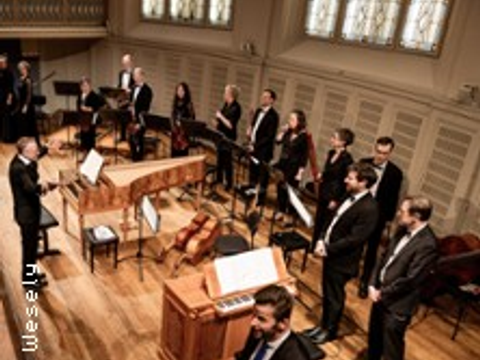
Artists/Collaborators: Heinrich Horwitz (Regie), Miguel Pérez Iñesta (Musikalische Leitung), Magdalena Emmerig (Bühnenbild und Kostüme), Raquel Rosildete (Lichtdesign), Beate Breidenbach (Dramaturgie), Edu Rojas (Countertenor), Tom Nicholson (Bariton), N. N. (Tenor), Musiker*innen des Orchesters der Deutschen Oper Berlin (Orchester)
For the school performances on 10 / 11 / 12 and 13 May 2027, we offer workshops for school groups to help them prepare for or follow up on their visit to the opera.
Alternative events
©drubig-photo - stock.adobe.com
© Staatliche Museen zu Berlin, Museum Europäischer Kulturen / Ute Franz-Scarcigalia; CC NC-BY-SA
© Staatliche Museen zu Berlin, Museumfür Vor- und Frühgeschichte / Juliane Eirich
On the upper floor, the 'Museum of Prehistory and Early History' takes visitors on a tour through the oldest eras of human history. With its unique collections on the prehistory and ancient history of Europe and near-lying regions of Asia, the museum...
moreabout: Back! Stone Age. Bronze Age. Iron Age
© Römisch-Germanisches Museum/Rheinisches Bildarchiv Köln
Gold jewellery from the migration period found near the Black Sea, silver brooches and magnificent belts from early medieval graves in France, Italy, Spain, and Germany: selections from the collection of Johannes von Diergardt will be on view again in...
moreabout: The Crown of Kerch
Show more events in the category "Kinder"…
The help page for the event calendar answers common questions..
Information about coperations and imprint can be found on our page about partners and terms and conditions.