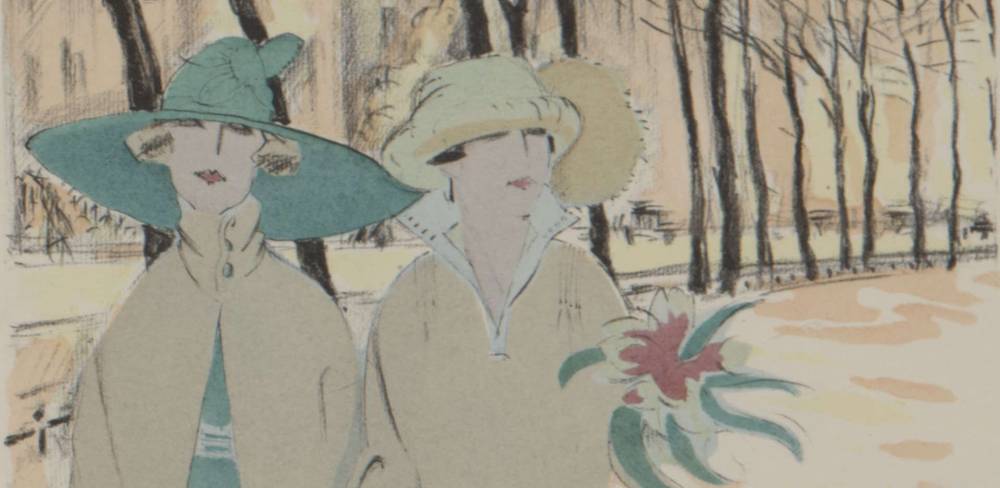
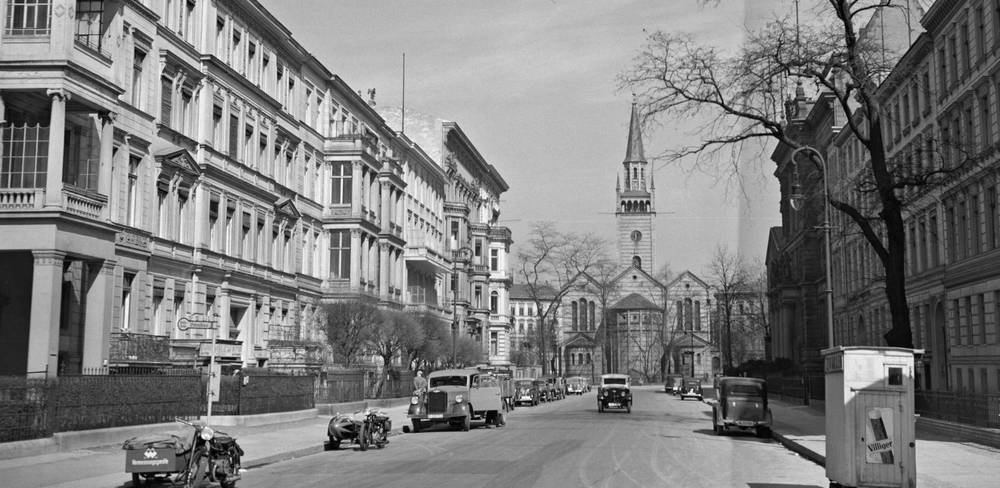
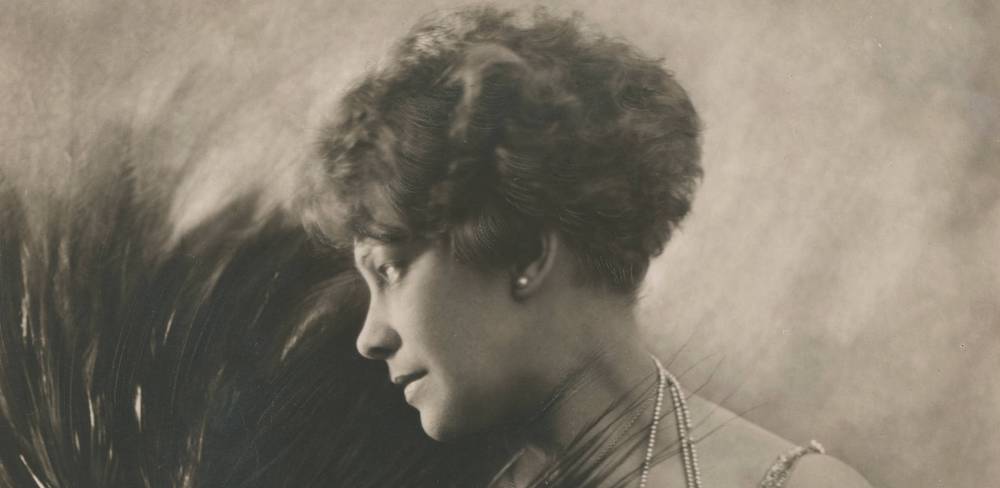
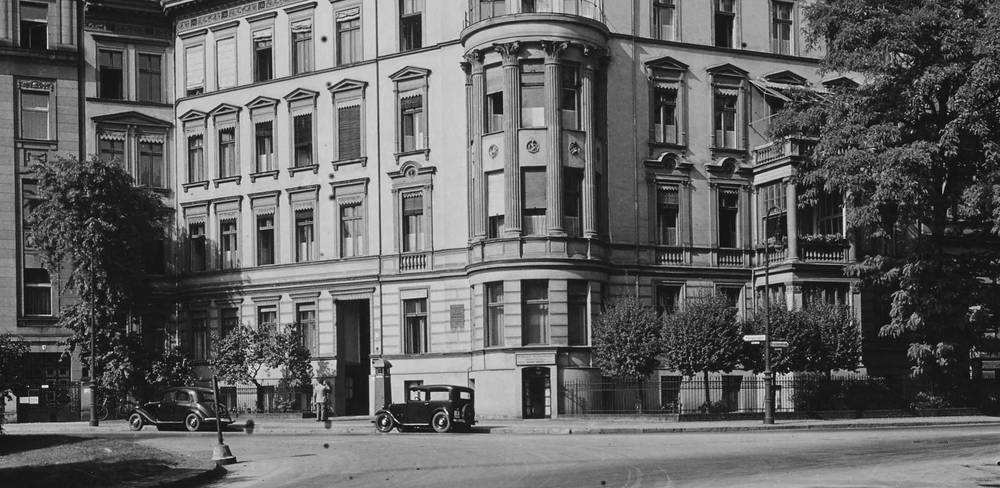
A presentation with free admission by the Kunstbibliothek (Art Library) recollects the creative, art-loving populace of the area around the former Matthäikirchplatz (St. Matthew’s Church Square) a century ago. Images and texts about the lives and activities of famous residents recall a glamorous era brutally ended in 1933 by the National Socialist regime.
Remembering the Historical Tiergarten District
Today’s Kulturforum is home to a unique modernist architectural ensemble of museums, libraries and the Philharmonic Hall – soon to be complemented by the berlin modern: Museum des 20. Jahrhunderts (Museum of the 20th Century) presently under construction. Few people know that the current Kulturforum and its surroundings were already the site of a thriving cultural scene and an emerging modernism one hundred years ago. The neighbourhood, however, looked quite different back then when the Tiergarten district was one of Berlin’s most elegant residential and commercial areas. Wealthy entrepreneurs, members of the cultural scene and intellectuals lived in magnificent houses in the vicinity of the Matthäikirche. Joining them all was their passion for art, literature, music and fashion.
The Kunstbibliothek, which has been intensively researching this sunken Atlantis, invites you on a fascinating journey back through time into the Kulturforum’s past. Memories suddenly return of long-forgotten people, who lived for and with the arts, and whose enthusiasm we owe so much to. With this presentation, the Kunstbibliothek is responding to the tremendous public response to its lecture series Kunstgeschichte(n) des Tiergartenviertels (The Tiergarten District: Its Art History and Its Stories), which continues in 2025. During the series, scholars from various disciplines will present their current research on the area’s history.
The Tiergarten District – A Forgotten World
From the 1860s onwards, the Tiergarten district was considered one of the loveliest parts of Berlin. From being a place to enjoy the summer breezes, with vacation houses and huge gardens, it soon became a desirable residential area. During the 1910s and 1920s, the area was then the “place to be” for artists, art dealers, interior designers, fashion couturiers and photographers. Very little of that glamour survived the radical rupture of the National Socialist era, wartime destruction, and post-war demolitions. The district is now but a myth, with a mere 17 of its more than 529 former stately residences remaining.
The Kulturforum: A Centre of the International Art Scene Over A Century Ago
The presentation focuses on the Tiergarten district’s heydey during the early 20th century, when the neighbourhood, with its cultural networks, emerged as a centre of modernism, art dealing and collecting, fashion, photography and interior design. The origins of the Matthäikirche environs as a cultural hub go back more than a hundred years.
The narrative focuses on a selected group of people who contributed to the area’s renown in various ways. Fashion journalist Julie Elias invited her artist friend Max Liebermann and many other prominent guests to dinner and “tango cocktails” at Matthäikirchplatz. Julius Elias and gallerist Paul Cassirer enthralled the neighbourhood for Van Gogh and the French Impressionists. Eduard and Johanna Arnhold, Oscar Huldschinsky and many other art collectors transformed their private homes into museums for masterpieces from all eras. Interior designers such as Leni Michels-Fougner or Paul Huldschinsky planned living and commercial spaces, while fashion designer Erna Becker created Marlene Dietrich’s iconic outfit. Julie Elias is also remembered as a chronicler of the Tiergarten district, offering insight into Berlin’s creative haute couture scene at the time.
The Tiergarten District’s Past and Kulturforum’s Future
This unique cultural flourishing with its art-loving networks ended in 1933 with the disenfranchisement, robbery and murder of many residents persecuted as Jews or democrats. The Second World War largely destroyed the district, obliterating the memory of its once prominent residents, their extraordinary art collections and their creative achievements.
With this presentation, the Kunstbibliothek is preparing for its future at the Kulturforum site, when the new berlin modern building will provide it with space to exhibit its museum collection on graphic design, photography, and book and media art. The history of the Tiergarten district as a hot spot of European modernism will play an important role at this branch.
“The Tiergarten District: Its Art History and Its Stories” was funded in 2022–23 by the Federal Government Commissioner for Culture and the Media.
Research team: Dr Gesa Kessemeier, Dr Joachim Brand
A presentation of the Kunstbibliothek – Staatliche Museen zu Berlin
Runtime: Fri, 16/05/2025 to Sun, 31/12/2028
Price info: Admission free.