Current language: English

The Ziguangge: Hall of Purple Splendor

Event Venue, Heroes’ Gallery and Theatre of War

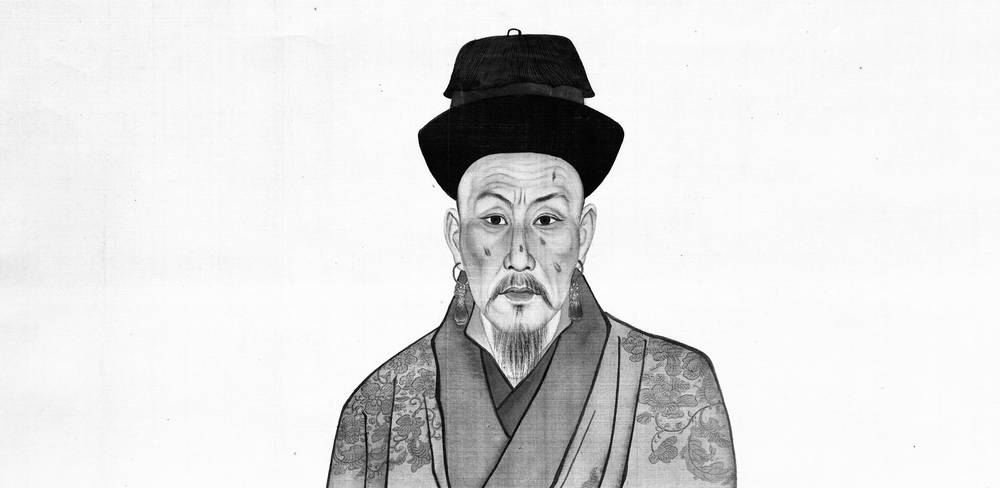
  • Porträt des Fürsten Corgiyamz‘an (Kriegsverlust), Detail, Qing-Dynastie (1644 – 1911), 1776, Detail, Originalbild: Hängerolle, Reproduktion von Glasplatten

    Porträt des Fürsten Corgiyamz‘an (Kriegsverlust), Detail, Qing-Dynastie (1644 – 1911), 1776, Detail, Originalbild: Hängerolle, Reproduktion von Glasplatten

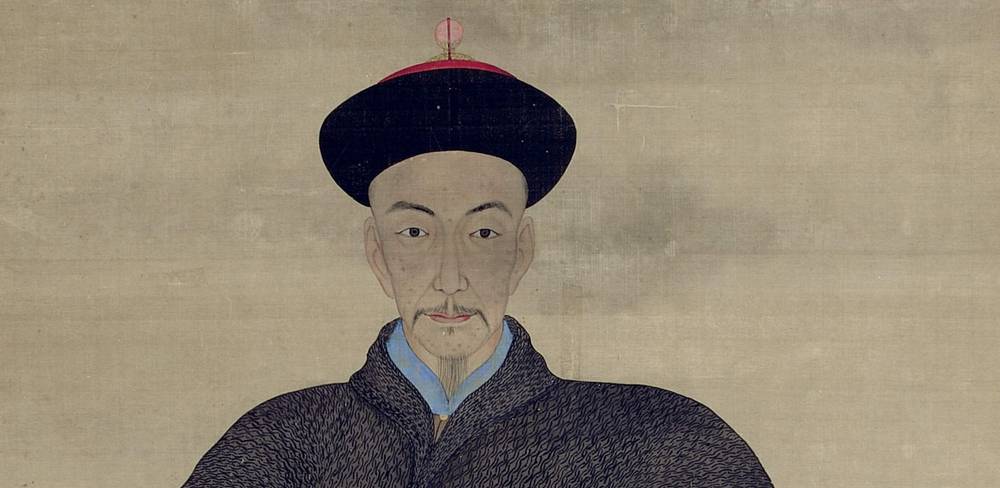
  • Unbekannte(r) Hofmaler, Porträt des Baktambu, Qing-Dynastie (1644 – 1911), 1776, Detail einer Hängerolle

    Unbekannte(r) Hofmaler, Porträt des Baktambu, Qing-Dynastie (1644 – 1911), 1776, Detail einer Hängerolle

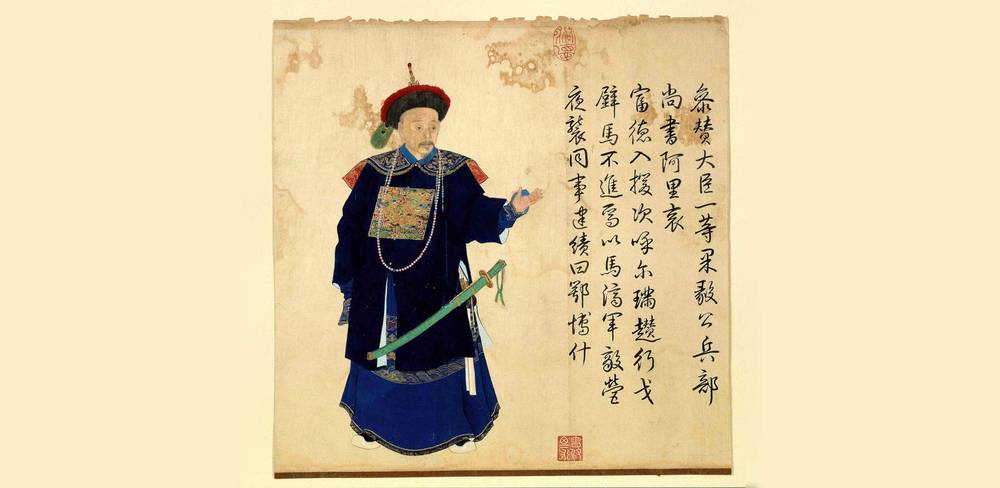
  • Jin Tingbiao (? – 1767), Porträt des Kriegsministers Arigun (gest. 1770), Qing-Dynastie (1644 – 1911), 1760, Fragment einer Querrolle

    Jin Tingbiao (? – 1767), Porträt des Kriegsministers Arigun (gest. 1770), Qing-Dynastie (1644 – 1911), 1760, Fragment einer Querrolle

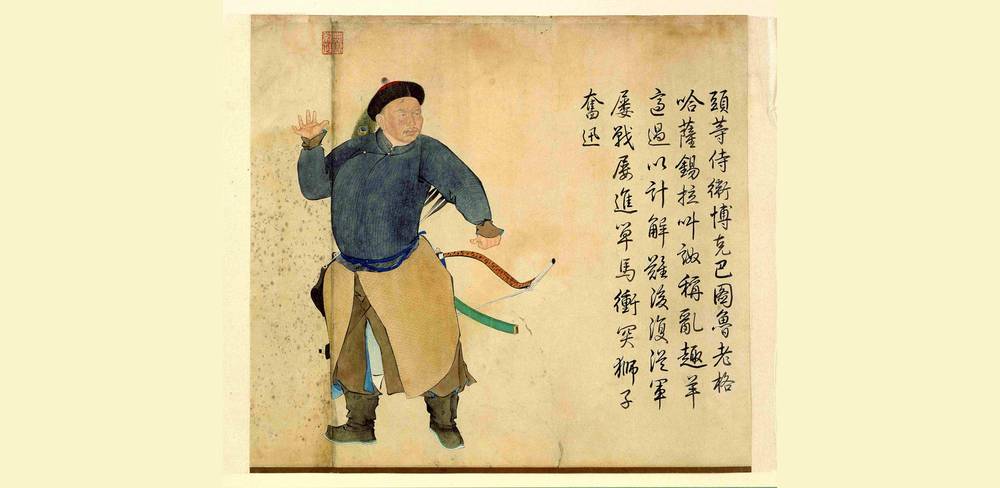
  • Jin Tingbiao (? – 1767), Porträt des kaiserlichen Gardeoffiziers erster Klasse Looge, Qing-Dynastie (1644 – 1911), 1760, Fragment einer Querrolle

    Jin Tingbiao (? – 1767), Porträt des kaiserlichen Gardeoffiziers erster Klasse Looge, Qing-Dynastie (1644 – 1911), 1760, Fragment einer Querrolle

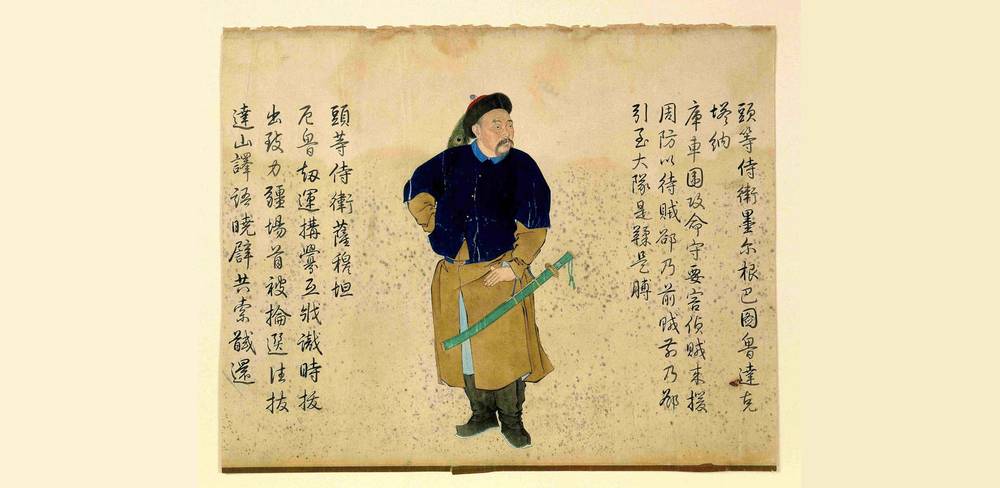
  • Jin Tingbiao (? – 1767), Porträt des kaiserlichen Gardeoffiziers erster Klasse Daktana, Qing-Dynastie (1644 – 1911), 1760, Fragment einer Querrolle

    Jin Tingbiao (? – 1767), Porträt des kaiserlichen Gardeoffiziers erster Klasse Daktana, Qing-Dynastie (1644 – 1911), 1760, Fragment einer Querrolle

Already 2,000 years ago, the emperors of China had portraits of loyal officials and generals made in order to display them in their palaces. This presentation features depictions of meritorious officers that the Qianlong Emperor (r. 1736–1795) had commissioned for their display in the hall of fame Ziguangge to demonstrate his power and legitimacy. In the 20th century they became spoils of war not one but two times.

Located adjacent to the Forbidden City in Beijing, the Ziguangge is a two-storey pavilion. During the reign of the Qianlong Emperor (r. 1736 – 1795), the building was a venue for military rituals and banquets and housed paintings with battle scenes of the imperial military campaigns and portraits of meritorious officers.

In 1900/01 the hall was plundered during the brutal suppression of the Boxer Movement (Yihetuan) by a multinational coalition, the Eight-Nation Alliance, to which also the Prussian military belonged. All 280 portraits were looted. Many of the paintings ended up also in German collections. In 1945, the USSR administration took the paintings in the Berlin collection, some of which are represented here by black-and-white prints, as war booty; the original works remain in museums in Russia to this day.

Curator

The exhibition is curated by Birgitta Augustin.

Presentation as part of the project “Traces of the ‘Boxer War’ in German Museum Collections – A Joint Approach” (2021–2024), project management: Christine Howald, Zentralarchiv, Prussian Cultural Heritage Foundation and with the support of the Palace Museum, Beijing

A temporary presentation by the Museum für Asiatische Kunst of the Staatliche Museen zu Berlin in the Humboldt Forum, Room 320, “China and Europe”

Runtime: Wed, 28/08/2024 to Mon, 31/08/2026

Price info: from 13.7.2026: regular 9 EUR, Note: An exhibition ticket for the Ethnologische Sammlungen und Asiatische Kunst is required.

Price: €14.00

Reduced price: €7.00

Takes place here:

The help page for the event calendar answers common questions.. Information about coperations and imprint can be found on our page about partners and terms and conditions.