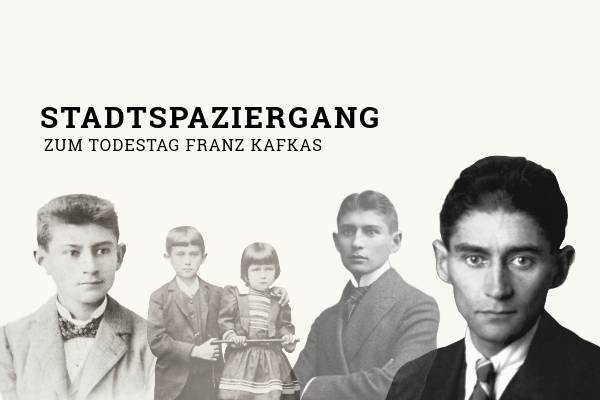
Franz Kafka's relationship with Berlin was characterized by fascination, curiosity and ultimately love. It was his first engagement to Felice Bauer that inspired him to make several visits to Berlin in the 1910s. He later fell in love with Dora Diamant, who worked at the Jewish People's Home in Berlin's Scheunenviertel. Dora was a Jewish woman from Poland, from a Hasidic family, who had moved to Berlin because of her dream of a career as an actress. Kafka moved to Berlin for her in September 1923, already seriously ill with tuberculosis, and spent part of the last year of his life there. Together they attended courses at the renowned Hochschule für die Wissenschaft des Judentums, just around the corner from the New Synagogue. Kafka described the college as "a place of peace in the wild Berlin and in the wild areas of the interior". The "wild Berlin" that Kafka got to know was plagued by political and economic crises. Anti-Semitism was spreading in many parts of society; the inflation crisis reached its peak. The pogrom against the Jewish population in the Scheunenviertel broke out on November 5, 1923. But this Berlin was also home to a dynamic Jewish civil society which, despite (or perhaps because of) its own political and religious divisions, was able to boast an enormous cultural output, including Yiddish theaters, academic colleges, Hasidic prayer houses and numerous political and cultural associations.
To mark the anniversary of Franz Kafka's death, we will go in search of traces of Jewish Berlin in the 1920s, which was also Kafka's home for a short time.
Meeting point:In front of the entrance to the New Synagogue - Oranienburger Str. 28-30, 10117 BerlinTranslated with DeepL
Meeting point: In front of the entrance to the New Synagogue - Oranienburger Str. 28-30, 10117 Berlin
Booking: RegistrationEvening city walk Franz Kafka