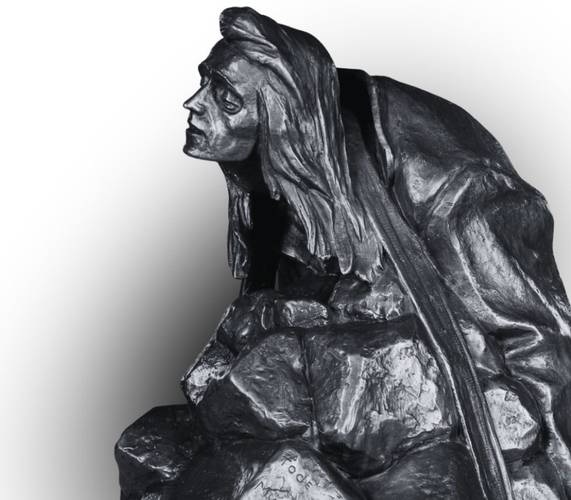
August 28 is the main day of remembrance for the deportation of the Russian Germans in 1941. The date marks the Soviet decree dissolving the Volga Republic and ordering the forced resettlement of the German population—numbering around 900,000 people—within the Soviet Union. Approximately 200,000 of them lost their lives as a result of deportation and forced labor. At the same time, the day symbolizes the fate of the German minority under the Soviet dictatorship in the wake of the war. This commemorative and discussion event aims to remember these events while also looking toward the future: How can the experiences of the Russian Germans be incorporated into the historical memory of society as a whole? And how can they be kept alive in the long term?
An event organized by the Federal Institute for Culture and History of the Germans in Eastern Europe, the Museum of Russian-German Cultural History, the Cultural Office for Russian-Germans, and the Documentation Center for Flight, Expulsion, and Reconciliation, Berlin.
PROGRAM
Opening Remarks
Dr. Roland Borchers (Documentation Center for Flight, Expulsion, and Reconciliation)
Dr. Bernd Fabritius (Federal Government Commissioner for Matters Related to Ethnic German Resettlers and National Minorities)
Dr. Dr. Gerald Volkmer (Federal Institute for the Culture and History of Germans in Eastern Europe, BKGE)
Music
Dr. Matthias Lang (guitar)
Keynote
Prof. Dr. Irina Scherbakova (Memorial International. Nobel Peace Prize 2022)
Panel
Panel Kornelius Ens (Museum of Russian-German Cultural History)
Irene Langemann (Director and Author)
PD Dr. Hans-Christian Petersen (Federal Institute for the Culture and History of Germans in Eastern Europe)
Johann Thießen (Presidium of the Federation of Expellees, Association of Germans from Russia)
Moderator: Katharina Heinrich (journalist)
Closing
Edwin Warkentin (Cultural Affairs Officer for Russian Germans)
Following the event, we invite you to a small reception.Translated with DeepL