© dpa
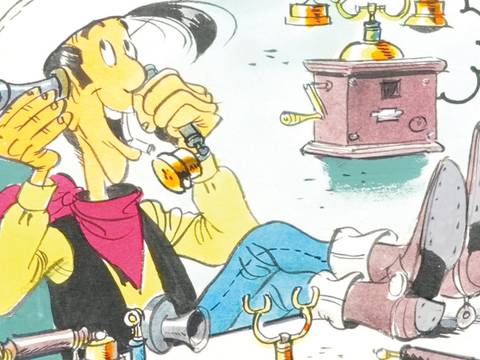
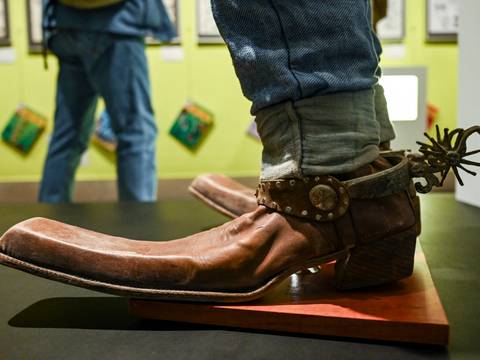
Lucky Luke: Morris's Lonely Western Hero
To mark the anniversary of the legendary comic cowboy, the Museum for Communication in Berlin is paying a major tribute to the creator, Maurice de Bevere, alias Morris. more

© Yves Sucksdorff
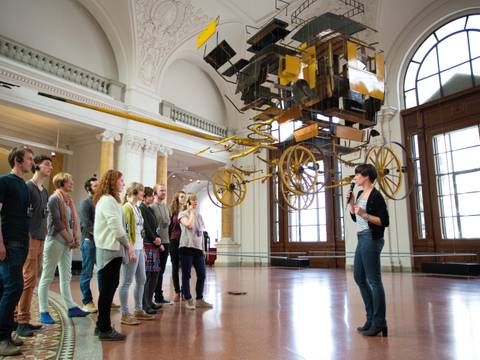
Deconstructed stagecoach in the Museum for Communication Berlin.
© Yves Sucksdorff
View into the Museum for Communication Berlin.
© Yves Sucksdorff
View of the Museum für Kommunikation (Museum of Communication) in Berlin.
The Museum für Kommunikation Berlin (Museum of Communication Berlin) sheds light on the current and past information society.
Over 2000 years of communication history are documented in the museum. In the permanent exhibition "Experience: Communication!", visitors can follow the most important stages of human communication - from the Stone Age hand axe to the establishment of the postal system and the modern smartphone. As the basis of social coexistence, changes in communication culture and possibilities sometimes entail far-reaching social changes.
Famous exhibits await visitors in the museum's treasure chamber. The Red and Blue Mauritius are particularly well-known. Only 15 and 12 examples of these rare stamps still exist. The "Mauritius Tableau" with a total of 8 precious stamps has been on display at the Museum of Communication since 1996. Another highlight can be experienced from the outside: the blue neon light show on the historic façade of the building is accompanied by a sound collage.
As early as 1872, Postmaster General Heinrich von Stephan pushed for the establishment of a postal museum. In order to give the Imperial Postal Museum a dignified setting, a new, prestigious building was constructed in Leipziger Straße. The opening followed in 1898. Large parts of the collection were removed during the Second World War. After reunification, the West Berlin Federal Postal Museum and the East Berlin Post and Telecommunications Museum merged: the former's holdings also moved to Leipziger Straße.
The Museum of Communication has an interactive design and offers children and young people the opportunity to discover and understand new and old media all year round. The regular family Sundays focus on specific aspects of communication.
© dpa
The Institute for Museum Research of the Prussian Cultural Heritage Foundation annually publishes a list of the most visited museums. These are the the Top 10 museums in Berlin. more
© David von Becker / Staatliche Museen von Berlin
Berlin's top museums with adresses, informations, opening hours and public transport. more