Current language: English

Pelléas et Mélisande

ca. 3:15 h inklusive einer Pause nach dem 3. Akt

Date details

Book tickets for this date

Map

A visual map representation follows.Skip map

Show on map

End of map.

Public transportation

3 more dates

Part of:

Pelléas et Mélisande

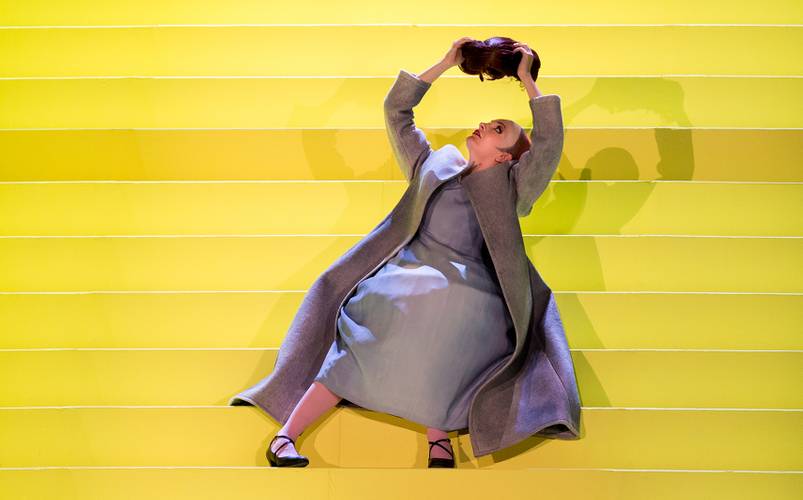
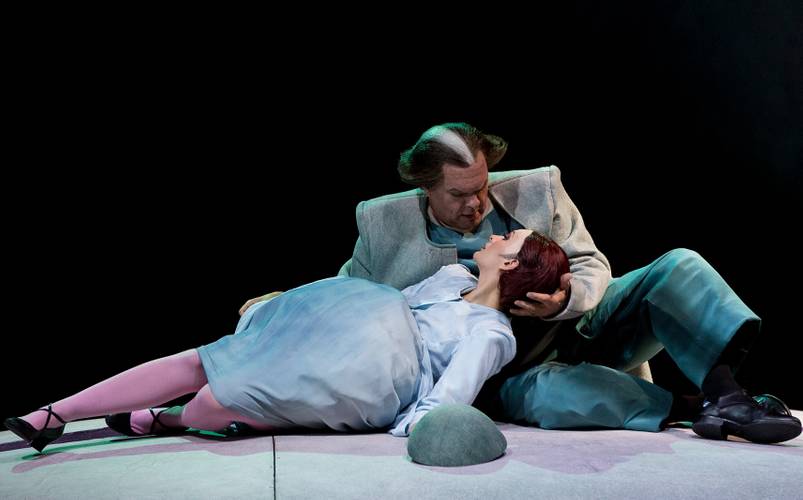
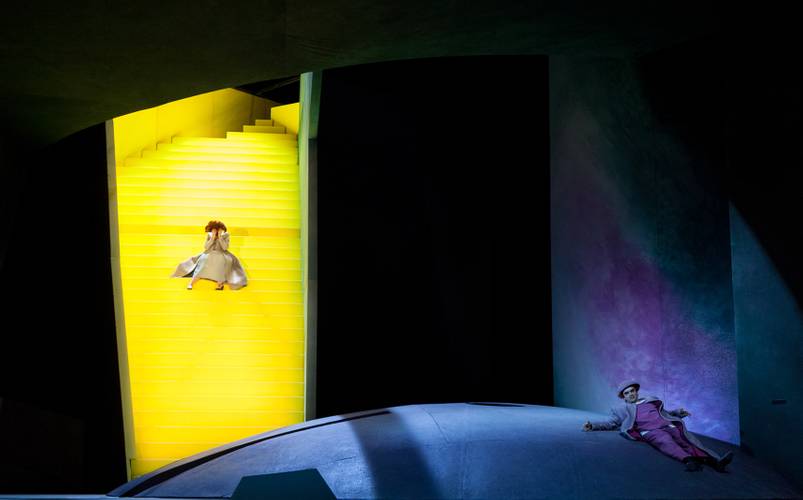
  • Pelléas et Mélisande – Tatjana Dachsel

    Pelléas et Mélisande – Tatjana Dachsel

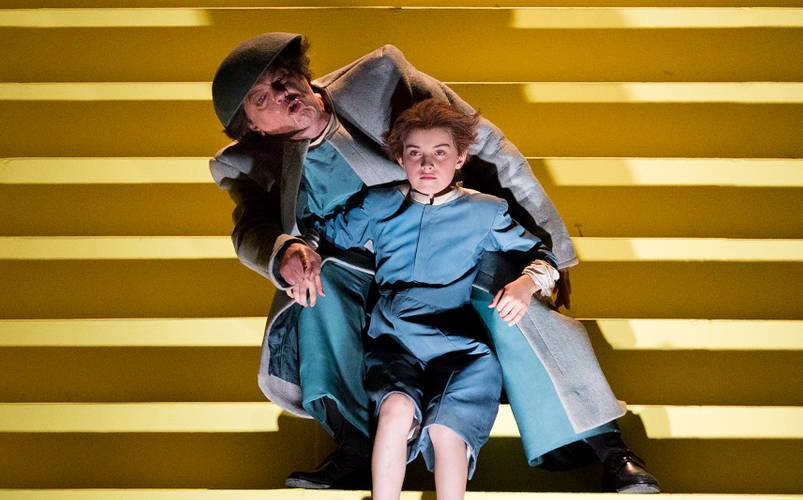
  • Pelléas et Mélisande – Tatjana Dachsel

    Pelléas et Mélisande – Tatjana Dachsel

  • Pelléas et Mélisande – Tatjana Dachsel

    Pelléas et Mélisande – Tatjana Dachsel

  • Pelléas et Mélisande – Tatjana Dachsel

    Pelléas et Mélisande – Tatjana Dachsel

  • Pelléas et Mélisande – Tatjana Dachsel

    Pelléas et Mélisande – Tatjana Dachsel

  • Pelléas et Mélisande – Tatjana Dachsel

    Pelléas et Mélisande – Tatjana Dachsel

  • Pelléas et Mélisande – Tatjana Dachsel

    Pelléas et Mélisande – Tatjana Dachsel

  • Pelléas et Mélisande – Tatjana Dachsel

    Pelléas et Mélisande – Tatjana Dachsel

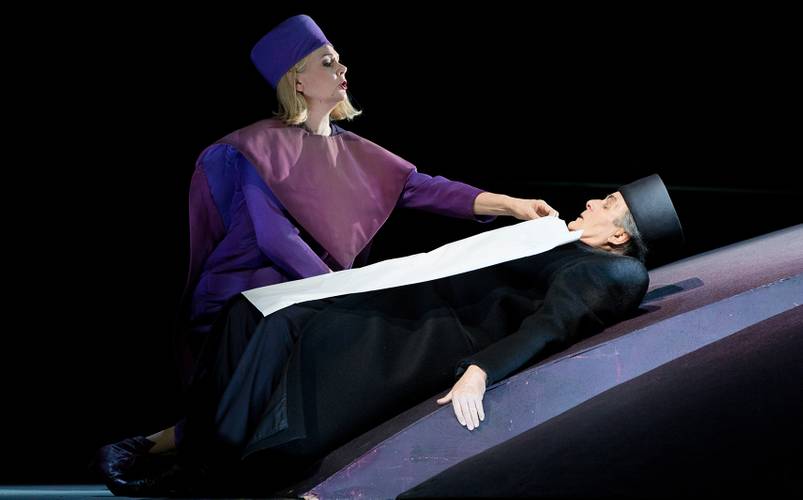
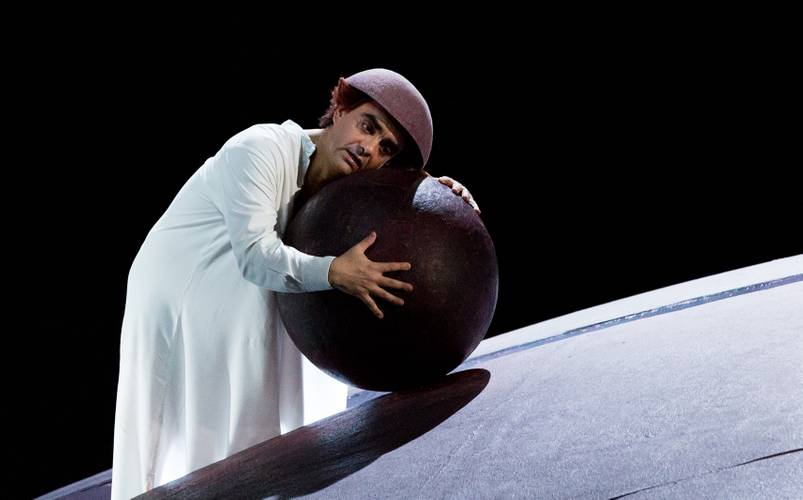
  • Pelléas et Mélisande – Monika Rittershaus

    Pelléas et Mélisande – Monika Rittershaus

With the world premiere of Pelléas et Mélisande in 1902, Claude Debussy challenged his contemporaries to listen to music in a new way. His instrumentation was without precedent. He transposed the Wagnerian leitmotif technique into a subtle tone painting and described atmospheres and dispositions of the soul that elude description and that even music is often only able to gesture towards.

The opera is based on a drama of the same name by the Flemish symbolist Maurice Maeterlinck that tells the tragic, fairytale-like story of a love triangle between the stepbrothers Golaud and Pelléas and the mysterious Mélisande. The plot is sketched in vague terms, with the main emphasis on exploring the depths of the characters’ psyches. The tragedy takes the form not of open conflict but of subliminal mental processes. Debussy’s music remains equally restrained, often approaching silence. Myriad colours shimmer beneath the monochrome surface, however, and Debussy manages to perfectly translate the enigmatic, morbid atmosphere into music. In 1991, Ruth Berghaus, one of the greatest directors of the 20th century, staged Pelléas et Mélisande at the Staatsoper Unter den Linden.

approx. 3:15 h including one interval after act three

Artists/Collaborators: (Komponist/in), (Autor/in)

Runtime: Sun, 21/06/2026 to Thu, 09/07/2026

Act one

Golaud, having wandered astray while hunting, comes upon the mysterious Mélisande. He questions her, but learns only that she has fled the company of mankind. Golaud convinces her to follow him. Geneviève reads King Arkel a letter, which Golaud has written to his brother Pelléas. In the letter, Golaud tells of his marriage to Mélisande, and asks Pelléas to ask Arkel whether he is prepared to honour this stranger as his own daughter. A particular fire signal is to indicate Arkel’s willingness to accept Mélisande, who complains to Geneviève about the gloominess of the park and the castle. Pelléas and Mélisande find the ship that brought Mélisande to this place.

Act two

Mélisande loses the ring she received from Golaud in the fountain. In the instant the ring falls into the fountain, Golaud’s horse rears up. Golaud notices that the ring is missing from Mélisande’s finger, and sends her into the dark night to look for the ring. Pelléas is to accompany her. In a cave, Pelléas and Mélisande discover three sleeping old troglodytes. Mélisande flees in horror.

Act three

Pelléas amuses himself, playing with Mélisande’s hair. Golaud arrives, rebukes their "child’s play", and leads Pelléas to the Cistern of Death, advising his brother to avoid Mélisande in future. Golaud increasingly doubts Mélisande’s faithfulness. After ordering his son Yniold to observe them, he learns that the two have kissed.

Act four

Mélisande promises Pelléas that she will come, when evening falls, to the fountain where she has lost the ring. It is to be their final meeting. Arkel tries to convey to Mélisande his own affection for her. After Golaud humiliates Mélisande, she and Pelléas meet in secret. Golaud, jealous, then murders his brother. Mélisande flees again.

Act five

Mélisande has now given birth to a child, and fallen very ill. Golaud demands to know from her whether her love for Pelléas was unchaste. Mélisande dies. Arkel words of eulogy over her: "Oh, she was such a dear small creature, so timid, so quiet and so tender. Yes, this poor small creature was full of mystery, as are we all …".

Pre-performance lecture, 45 minutes prior to each performance (in german)Age recommendation: as of 14 years

Alternative events

Samson et Dalila

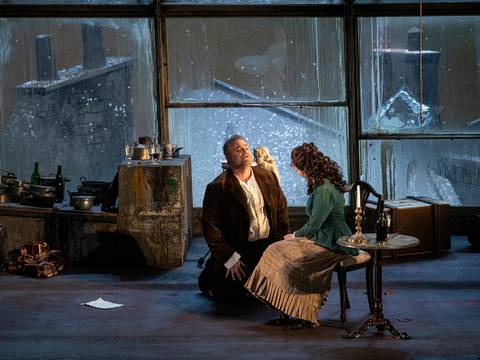
Hostility, hatred and religious wars, power, helplessness and desire: in the Hebrew struggle for freedom, Samson, as God’s chosen one, rebukes the hostile Philistines. Samson seems invincible until his love for the Philistine Dalila exposes him. She finds... moreabout: Samson et Dalila
Date:
Saturday, 04/July/2026 19:00 (3 more dates)
Venue:
Staatsoper Unter den Linden
Address:
Unter den Linden 7, 10117 Berlin-Mitte
Price:
from €19.30

Giulio Cesare in Egitto

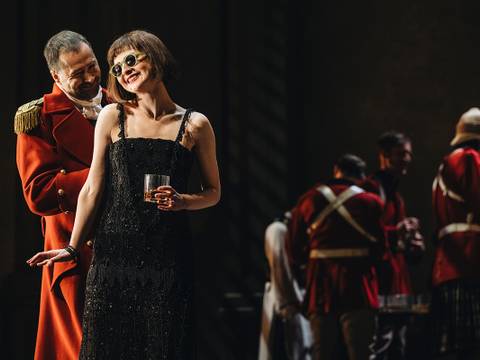
With its immense richness of musical colour, this is arguably Handel's most famous opera. The fact that the plot draws on a well-known love story – the liaison between Julius Caesar and Cleopatra, overshadowed by intrigue and civil war – was and is conducive... moreabout: Giulio Cesare in Egitto

Date:
Sunday, 05/July/2026 17:00 (1 more date)
Venue:
Deutsche Oper Berlin
Address:
Bismarckstraße 35, 10627 Berlin-Charlottenburg
Price:
from €32.60

Die Entführung aus dem Serail

In the summer of 1782, in his twenties, Wolfgang Amadeus Mozart celebrated his greatest opera success yet. With Die Entführung aus dem Serail (The Abduction from the Seraglio), he composed an enormously significant, pioneering work for the Deutsches Nationalsingspiel... moreabout: Die Entführung aus dem Serail

Date:
Sunday, 05/July/2026 19:00 (2 more dates)
Venue:
Staatsoper Unter den Linden
Address:
Unter den Linden 7, 10117 Berlin-Mitte
Price:
from €14.82

Csar and Carpenter

Thirty years ago, Lortzing's works were still part of the repertoire, but now they have almost completely disappeared from the programme. This also applies to ZAR UND ZIMMERMANN. Yet the story of Tsar Peter the Great is undoubtedly one of the most successful... moreabout: Csar and Carpenter

Next date:
Zar und Zimmermann
Date:
Thursday, 09/July/2026 19:30 (1 more date)
Venue:
Deutsche Oper Berlin
Address:
Bismarckstraße 35, 10627 Berlin-Charlottenburg
Price:
from €41.40

Show more events in the category "Oper"…

The help page for the event calendar answers common questions.. Information about coperations and imprint can be found on our page about partners and terms and conditions.