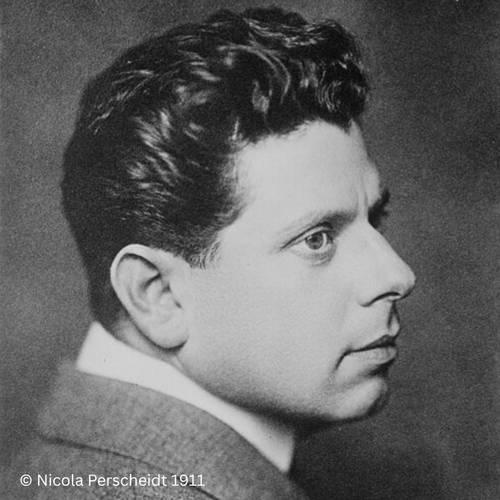
Reinhardt, Max – Männlich gelesene Person im Profil, lockiges Haar, Anzug. Text: Nicola Perscheidt 1911.
© Nicola Perscheidt 1911
Max Reinhardt was one of the most influential German-speaking theater producers of the early 20th century. The Austrian pioneer of director-led theater was not only a co-founder of the Salzburg Festival, but also laid the groundwork in Berlin for the German capital to become one of the leading theater metropolises more than 100 years ago: Reinhardt’s theaters included the Deutsches Theater, the Neues Theater am Schiffbauerdamm (today: Berliner Ensemble), the Volksbühne, the Kleine Theater (which no longer exists), the Theater am Kurfürstendamm, and the Großes Schauspielhaus—the predecessor of the Friedrichstadt-Palast.
Its artistic director, Dr. Berndt Schmidt, kicked off the 100th-anniversary celebrations in 2019 with a recorded speech by Reinhardt. In front of the theater, a flag flew bearing the Star of David and the declaration: “Jewish Roots Since 1919.” Reinhardt was initially stigmatized by the Nazis and lost all his theaters in 1933. Schmidt commissioned meticulous research into the history of his theater, shedding light on the role of the Großes Schauspielhaus during the Nazi era: the unsparing account was published under the title “Dein Tänzer ist der Tod” (Your Dancer Is Death).
Together with Dr. Berndt Schmidt and the directors of other former Reinhardt theaters, the panel will explore how Max Reinhardt’s artistic legacy continues to resonate today—and what responsibility theaters bear in dealing with their own history.