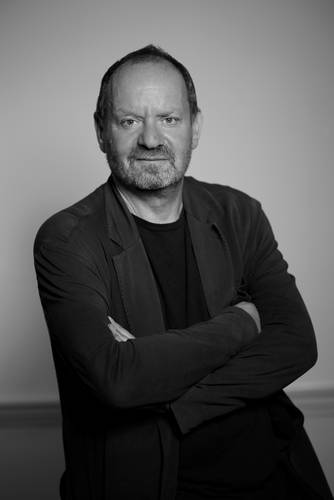
– Person mit Bart, gekreuzte Arme, dunkles Oberteil und Blazer vor neutralem Hintergrund. Schwarzweiß-Fotografie.
© Promo
Against the backdrop of the 20th century’s violent history, the idea of a universal system of international criminal law emerged in response to genocide and crimes against humanity. Although they could not heal wounds or undo the suffering endured, the Nuremberg Trials marked a decisive moment: they established the truth and assigned responsibility – an indispensable step for the affected societies and the survivors of mass crimes.Today, authoritarian governments and other powerful actors are undermining the hard-won international legal order in order to secure impunity for wars waged abroad and oppression at home. How can civil society actors defend international law under these circumstances? And how can human rights be effectively enforced?The 2026 winner of the Peace Prize of the German Book Trade and lawyer Philippe Sands, former Federal Minister of Justice Herta Däubler-Gmelin, and human rights lawyer Wolfgang Kaleck discuss these issues in issue #11 of On Justice. Drawing on Philippe Sands’ latest book, “38 Londres Street. On Impunity, Pinochet in England and a Nazi in Patagonia”, they discuss the relationship between literature and law, the possibilities and limitations of international criminal law, and the significance of memory and testimony – 80 years after the verdict of the Nuremberg Trials.