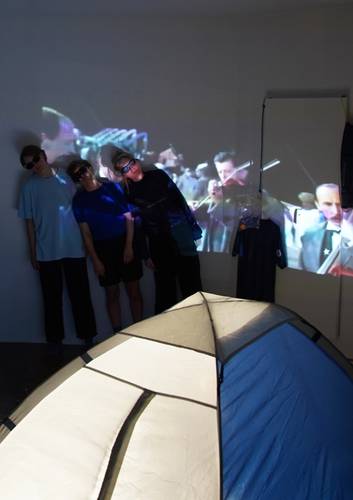
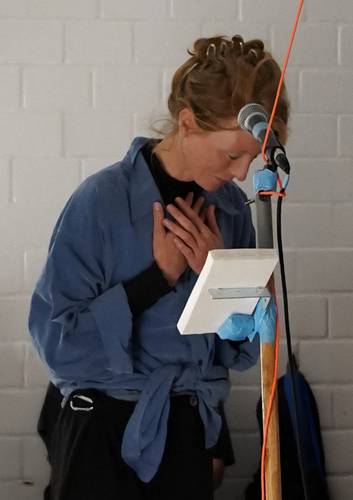
Life is an endless series of goodbyes, a perpetual mourning, an exercise in saying “ciao” that we never quite master. No sooner has one person left than the next is already gone. Goodbyes in installments. A final dance. The last polar bear. The last rain. An entire species goes extinct. The bar is empty. You’re left alone at the bar. You won’t have said the things that really matter. Damn it.
ciao²/aoap (pronounced: ciao ciao, as often as possible) is an exercise in saying goodbye. In keeping with Herbert Marcuse’s epitaph, “weitermachen!” (carry on), ciao²/aoap explores saying goodbye as a more-than lifelong—ritual and as an essential cultural technique.
For the last time, artists Johanna Ackva, Cécile Kobel, and Judith Milz explore various forms of ending and being unable to end, of successful and failed separations, and of completed and impending grief. From the act of mourning personal losses to coming to terms with irreversible global changes (the climate! the heat!), they explore different dimensions of saying goodbye through texts, scenes, and songs, asking who or what can be mourned, where it’s best to say “ciao” and why it’s good to reflect every now and then on what it might be good to say goodbye to at this moment.
A preventive measure, an exposure therapy, a space where we put roller skates on spider legs and attribute a lettertwist to Vanitas, so we can laugh together at what might be terrifying: Everything will pass.
The title ciao²/aoap refers to John Cage’s ORGAN²/ASLSP (as slow as possible), a piece for organ that has been performed since 2001 as the slowest and longest-running piece, spanning over 639 years. A bittersweet consolation for all those who, after the evening, will be sad that it’s already over: something continues, will continue, even after we’re gone.
In German, English, Swiss German and Italian language.