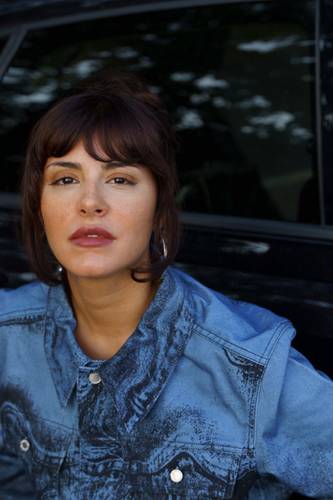
“Politics of Heartbreak” comprises three evenings at the “Vessel of Love”, combining lectures and discussions with performative interventions and music. Internationally active writers, journalists, activists and artists working on political affects, the experience of being a stranger, authoritarianism and racism, as well as feminist, anti-colonial and diasporic movements,come together at HAU1 to discuss the political dimensions of our of our present-day heartbreak.The festival’s questions around of resilience and collective care are enriched by international experiences from Afghanistan, Kurdistan, Palestine, Iran and Turkey, while being brought into the context of Berlin.The discussions are framed and expanded by music and performances, which convey in an aesthetic way what words cannot express, allowing us to feel and share in the heartbreak of others. Featuring a conversation between Şeyda Kurt and Alice Hasters – followed by queer choral singing by D-Dur Dykes* – this evening explores what sustains us when certainties shatter: tenderness, anger, vulnerability – emotions often dismissed as signs of weakness become, here, a source of political strength.Talk: Şeyda Kurt and Alice Hasters / German spoken language with simultaneous English interpretation, translation into German Sign Language (DGS)What carries and holds us when so much seems lost? In her books, the journalist and author Şeyda Kurt has repeatedly explored political emotions – tenderness, anger, hatred – not as private matters, but as starting points for social change. She distinguishes between emotions that paralyse and those that sustain us – on the path towards a more just society. In her books, the journalist and author Alice Hasters describes how vulnerability is socially negotiated, devalued or exploited – and how closely this is linked to the rise of harshness and authoritarianism. Her question is not only how to name crises, but what remains possible on the other side of hardening attitudes: What power lies in solidarity and vulnerability when both are socially despised? In conversation, Şeyda Kurt and Alice Hasters ask: What does resilience mean when certainties fall apart? What does resistance look like that focuses not on victory but on holding on – and how does shared heartbreak become a source of strength that carries and holds us?Closing performance: D-Dur Dykes* / Vocals in German and English, Deaf performanceThe evening concludes with D-Dur Dykes* performing their own arrangements of lesbian and queer pop songs. The FLINTA* choir understands collective singing as a space for visibility, solidarity and mutual support – and their own voices as a force through which community can be forged and change brought about. In this way, many individual voices become a collective sound, and vulnerability becomes collective strength.